Few businesses put their furniture through as much as a veterinary clinic. In a single day, an exam bench might hold a nervous golden retriever, a cat that would rather be anywhere else, and a rabbit that has decided to dig. The waiting room benches see muddy paws, leashes, carriers dragged across the seat, and the occasional accident. Then, at the end of the day, everything gets wiped down with disinfectant, often more than once.
Upholstery in this setting has a hard job. It needs to stay comfortable for pets and their people, look clean and professional, and survive constant cleaning without cracking or soaking up odors. When it starts to fail, it shows quickly, and it can undermine the trust a clinic works hard to build.
This guide walks through the main upholstered pieces in a veterinary practice, the materials that tend to hold up best, and how reupholstery can keep your clinic looking sharp without replacing every bench and chair.
Why Veterinary Upholstery Wears Out Faster Than Most
Veterinary clinics combine the hygiene demands of a medical office with the abuse of a busy public space, then add animals into the mix. A few factors make the wear especially tough:
- Claws and teeth. Even a well-behaved dog can puncture or scratch a soft surface when it scrambles for footing on an exam table.
- Fluids. Urine, saliva, blood, vomit and anal gland fluid all happen. Any opening in the surface becomes a place for liquid and odor to get in.
- Frequent disinfecting. Clinics clean surfaces between patients. Strong cleaners can dry out and crack lower-grade vinyl over time.
- Heavy, uneven loads. Large breeds, staff leaning on the table, and owners sitting on the edge of a bench all stress seams and foam.
Once a seam splits or the vinyl cracks, the foam underneath can absorb fluids and hold bacteria and smell. At that point, wiping the surface is no longer enough, and the piece needs attention.
The Key Upholstered Pieces in a Vet Clinic
Exam Tables and Exam Benches
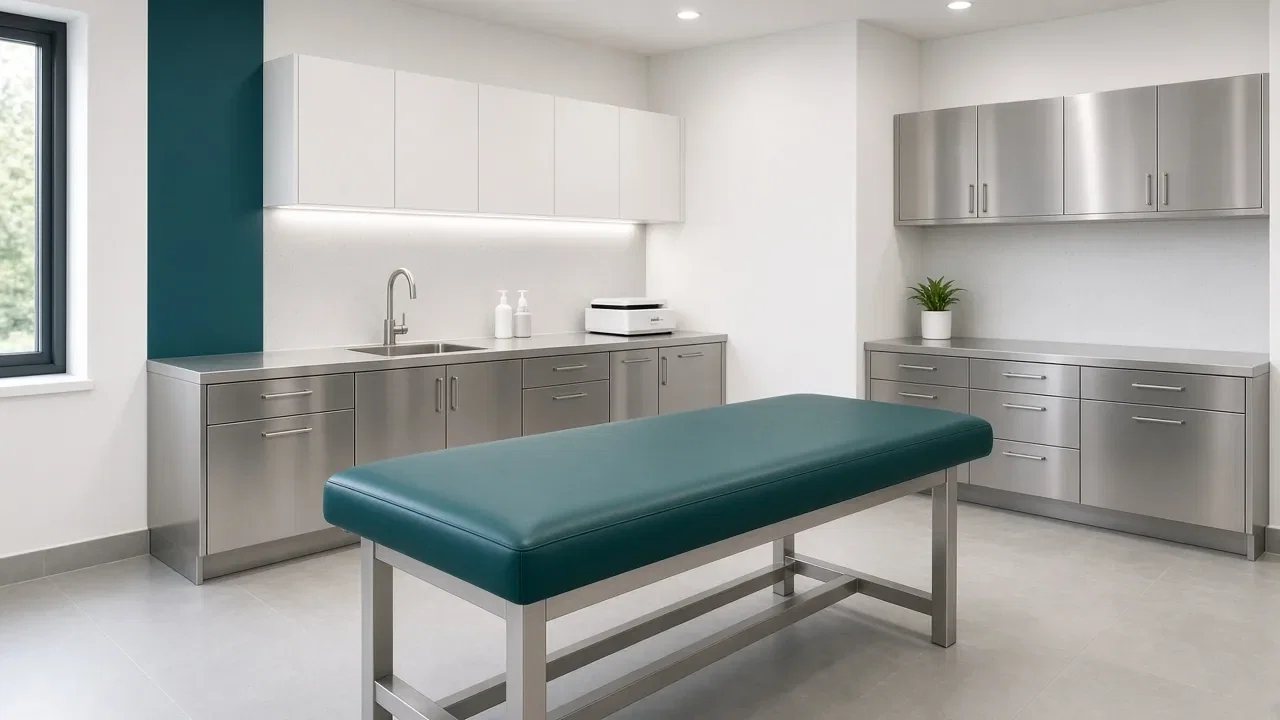
Many clinics use stainless steel exam tables, but plenty also use padded tables, benches, or table toppers, especially for comfort-focused practices, large-dog rooms, rehab areas, and euthanasia or comfort rooms. These pads take the most direct abuse.
A good exam pad usually combines dense, resilient foam with a tough, non-porous cover. The cover should be pulled tight with smooth corners and as few seams as possible on the top surface, since seams are where fluids get in first.
Waiting Room Seating
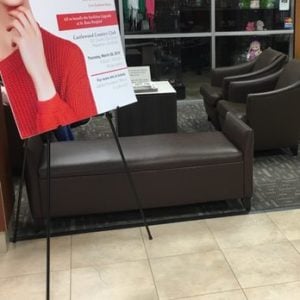
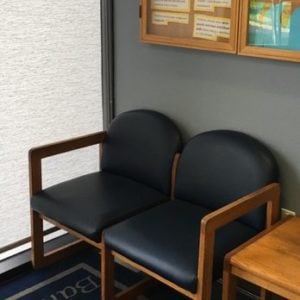
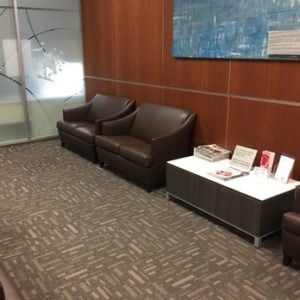
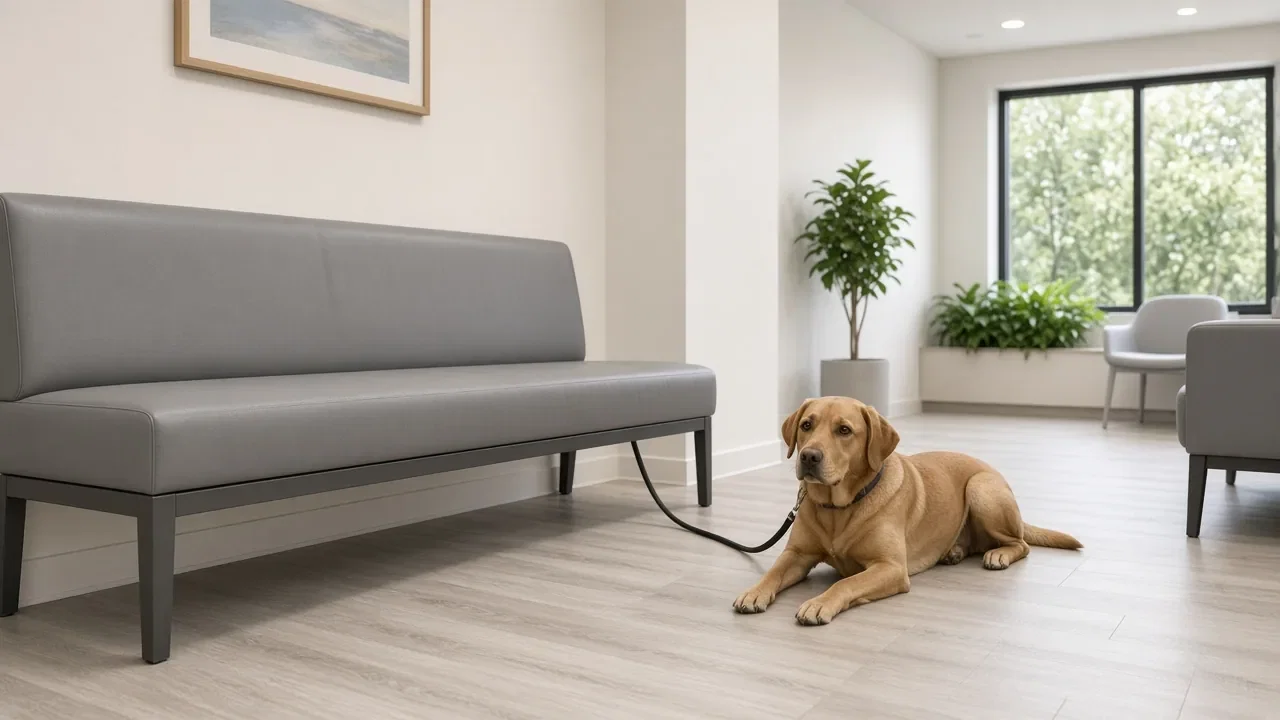
Waiting areas often use bench seating, chairs, or built-in banquettes. These pieces see the widest variety of use: people waiting with anxious pets, carriers set on the seat, dogs hopping up next to their owners. Seating here needs to be easy to wipe down and forgiving of scuffs, while still feeling welcoming rather than sterile.
Comfort Rooms and Consultation Areas
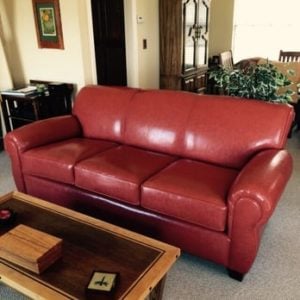
Many practices set aside a quieter room for difficult conversations and end-of-life appointments. Upholstery here is often softer and more residential in feel, such as a loveseat, a padded floor mat, or cushioned chairs, but it still needs to be cleanable. Choosing a commercial-grade material with a warmer look helps these rooms feel calm without sacrificing hygiene.
Staff Areas, Treatment Stools and Surgery Suites
Behind the scenes, technicians and veterinarians use rolling stools, treatment-area cushions, and break room seating. These pieces are easy to forget, but worn stool seats and torn break room chairs affect staff comfort every day.
Choosing Materials That Can Handle Clinic Life
The cover material makes the biggest difference in how long veterinary upholstery lasts. Here are the options we see most often in healthcare and animal care settings.
Healthcare-Grade Vinyl
Commercial vinyl designed for healthcare is the workhorse of veterinary upholstery. It is non-porous, so liquids sit on the surface instead of soaking in, and many products are made to tolerate common disinfectants. Some include antimicrobial or stain-resistant treatments.
When comparing vinyls, it helps to ask about:
- Abrasion resistance, usually expressed in double rubs. Higher-traffic seating benefits from higher ratings.
- Cleaner compatibility. Manufacturers often list which disinfectants their vinyl tolerates. Match it to what your clinic actually uses.
- Puncture and tear strength. Thicker backings and tougher constructions help with claws.
- Flame resistance, which matters for commercial interiors.
Polyurethane and Silicone-Based Coated Fabrics
Some newer coated fabrics use polyurethane or silicone instead of traditional vinyl. Many are marketed for their softness, breathability, and resistance to harsh cleaners. They can be a good choice for comfort rooms or areas where a softer feel matters, though durability against claws varies by product. Samples are your friend here.
What to Avoid
Woven fabrics, microfiber, and natural leather are popular in homes, but they tend to struggle in clinical animal care. Fabrics absorb fluids and odors. Natural leather can scratch easily and may not tolerate repeated disinfecting. For most clinic surfaces, a non-porous commercial material is the safer bet.
Foam and Construction Matter Too
The cover gets most of the attention, but what’s underneath affects comfort, hygiene and lifespan.
- High-density foam keeps its shape under heavy dogs and constant use. Soft, low-density foam breaks down quickly and leaves a dip in the middle of the bench.
- Moisture barriers wrapped around the foam add another layer of protection if the outer cover is ever punctured.
- Smooth, sealed edges with fewer staples exposed and tight corners make cleaning easier and reduce snag points.
- Seam placement matters. Keeping seams off the top working surface, or using techniques that reduce stitch holes, helps keep fluids out.
When we rebuild an exam pad or bench, we look at the whole piece, not just the cover. A new skin over crumbling foam won’t last.
Signs It’s Time to Reupholster
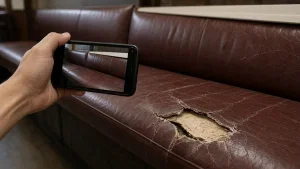
It can be tempting to stretch a few more months out of a worn bench, but damaged upholstery in a clinic is more than a cosmetic problem. Watch for:
- Cracks, splits, or peeling on the vinyl surface
- Open seams or loose piping
- Foam you can see or feel through the cover
- Lingering odors even after cleaning
- Flat, sunken spots where pets and people sit most
- Tape patches holding things together
Duct tape repairs are common in busy clinics, and they’re understandable, but they send a message to clients and can trap dirt around their edges.
Reupholstery vs. Replacement for Clinic Furniture
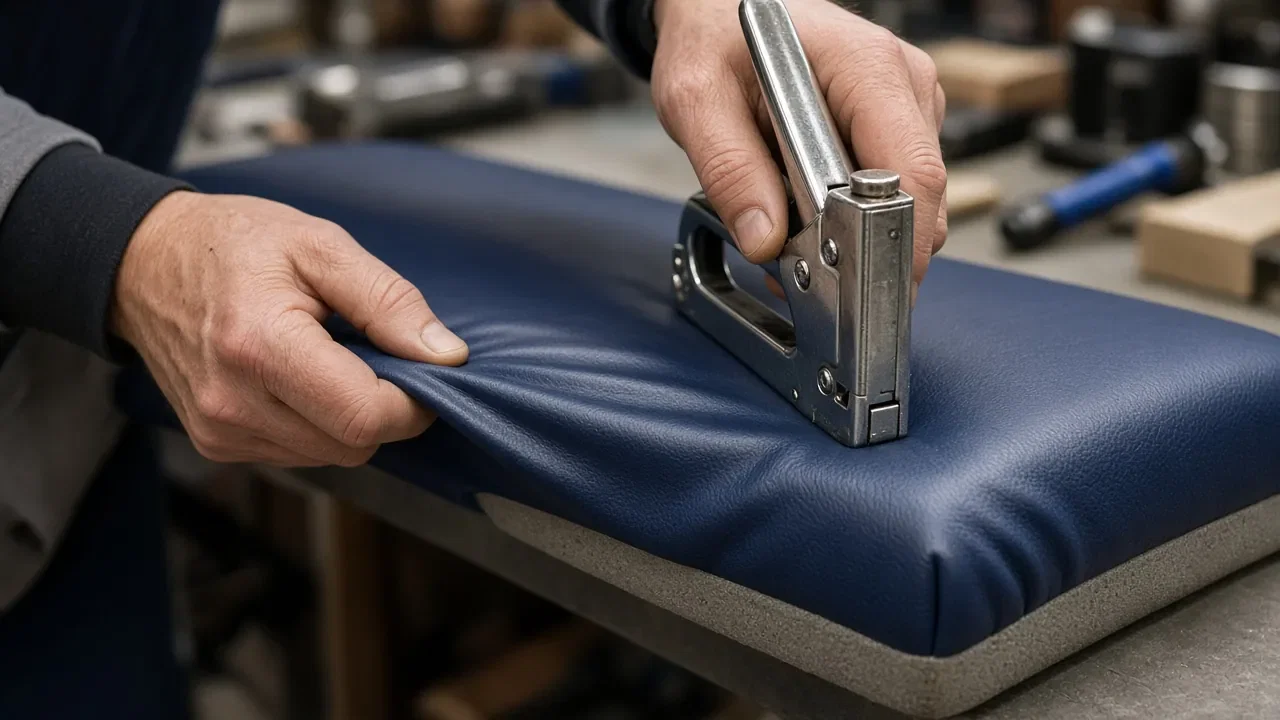
Many veterinary benches, exam pads, and waiting room chairs have sturdy steel or hardwood frames that outlast their covers by years. In those cases, reupholstering is often the practical choice. You keep a frame that already fits your space and still functions well, while getting a fresh, hygienic surface.
Reupholstery also gives you control. You can pick a vinyl color that matches your clinic’s branding, upgrade to a tougher material than the original, and add denser foam where the old padding failed. Replacement makes more sense when frames are bent, broken, rusted through, or no longer fit how your clinic works.
If you’re not sure, ask us to take a look. We’ll tell you honestly whether a piece is worth recovering.
Planning Around Your Clinic’s Schedule
Clinics can’t shut down every exam room at once, so planning matters. A few approaches help keep downtime low:
- Phase the work. Recover one room’s bench or a few waiting room chairs at a time.
- Schedule around slower days. If your clinic has lighter days or shorter weekend hours, use them for drop-off and pickup.
- Keep a spare. Some clinics keep one extra exam pad so a room is never without one.
- Bundle pieces. Grouping several items in one project can make scheduling and fabric ordering simpler.
Leo’s Upholstery works with commercial clients across the East Bay and greater Bay Area from our shop in San Leandro, and we’re used to planning projects around business hours. Learn more about our medical and healthcare upholstery and broader commercial upholstery services.
Caring for Veterinary Upholstery Between Recovers
Good habits can extend the life of new upholstery significantly:
- Follow the material manufacturer’s cleaning guidance and avoid cleaners that aren’t recommended for that surface.
- Wipe away disinfectant residue with clean water when the manufacturer suggests it, since some residues can dry out vinyl over time.
- Clean up fluids promptly rather than letting them sit.
- Trim nails on large patients when practical, or use a towel or mat on the exam surface for scramblers.
- Inspect seams regularly and address small splits early, before fluids reach the foam.
Frequently Asked Questions
What is the best upholstery material for a veterinary clinic?
For most clinical surfaces, a healthcare-grade, non-porous vinyl or coated fabric is the best fit. It resists fluids, wipes clean, and many products are made to handle common disinfectants. The right product depends on how the piece is used, so we usually recommend looking at samples together.
Can you reupholster our existing exam table pads?
In many cases, yes. If the base or frame is in good shape, we can replace worn foam and recover the pad in a tougher material. Send us photos and measurements and we can let you know what’s involved.
Will reupholstering disrupt our clinic?
We try to keep disruption to a minimum by phasing work and scheduling around your hours. Many clinics recover a few pieces at a time so every room stays usable.
Can you match our clinic’s colors?
Commercial vinyls come in a wide range of colors. We can help you choose something that fits your brand and still hides everyday wear well.
Do you work with other healthcare practices too?
Yes. Along with veterinary clinics, we work with medical offices, dental practices, chiropractic clinics and other healthcare settings.
Get a Quote for Your Veterinary Clinic
Worn exam benches and torn waiting room seats are easy to put off, but fresh, cleanable upholstery makes your clinic look as caring as your team is. Leo’s Upholstery in San Leandro helps veterinary practices and other commercial clients across the Bay Area restore their seating with durable, healthcare-appropriate materials.
Request a quote online or call us at (510) 895-3632. Send a few photos of the pieces you’d like to recover, and we’ll help you plan the next step.