If you manage a restaurant, clinic, office, hotel or other commercial space, you already know that getting a quote can be the slowest part of any project. Back-and-forth emails, missing details and site visits that could have been avoided all add time before work even starts.
The good news is that a little preparation goes a long way. When an upholsterer has clear photos, basic measurements and a few key details, they can usually give you a much more accurate estimate, flag potential issues early, and get your project on the calendar faster.
This guide explains exactly what to photograph, what to measure, and what to send when you request a commercial upholstery quote. It works whether you’re recovering a single lobby sofa or a few hundred dining chairs.
Why Good Information Makes a Better Quote
Upholstery pricing depends on many variables: the size and shape of the piece, how it’s built, how much fabric it needs, whether foam or springs need replacing, and how much labor is involved in taking it apart and putting it back together. Two chairs that look similar in a quick photo can be very different jobs once you see the back, the underside and the frame.
When information is incomplete, an upholsterer has two choices. They can give a wide range and refine it later, or they can ask for more details or a site visit. Sending complete information up front helps you:
- Get a tighter, more reliable estimate
- Avoid surprises once the furniture is in the shop
- Reduce the number of emails and calls
- Compare quotes more fairly between shops
- Move to scheduling sooner
Step 1: Take an Inventory
Before you take a single photo, make a simple list of what you want reupholstered. A spreadsheet or even a handwritten list works fine. For each type of piece, note:
- What it is (dining chair, booth, banquette, lobby sofa, exam table, bar stool, bench)
- How many of that type you have
- Where it is (dining room, patio, lobby, exam room 3, second-floor lounge)
- Whether it’s fixed or movable (bolted booths and built-in benches are handled differently from loose chairs)
- Any known issues (torn seats, wobbly frames, broken springs)
Grouping identical pieces together makes everything simpler. “Forty matching dining chairs, two styles of booth, and six bar stools” is much easier to quote than a pile of unlabeled photos.
Step 2: Photograph Each Type of Piece
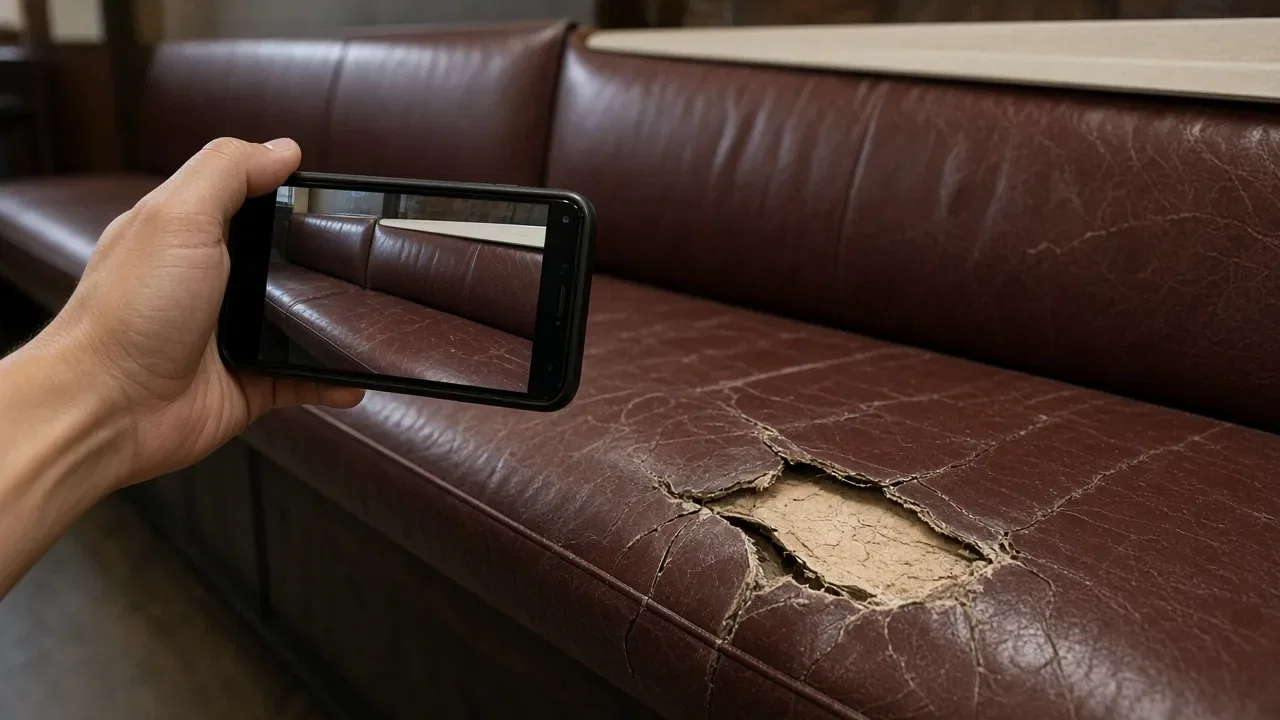
You don’t need professional photos. A modern phone camera is perfect. What matters is covering the right angles and having good light.
The Essential Angles
For each type of furniture, try to capture:
- Front view, straight on, showing the whole piece
- Side view, which shows depth and the profile of the seat and back
- Back view, since many chairs and booths have upholstered backs that add work
- Close-ups of damage, like tears, cracks, stains or worn spots
- Close-ups of details, such as piping, tufting, buttons, channels, nailhead trim or decorative stitching
- Underside, if you can safely flip a chair or look under a seat, to show how it’s built and attached
For Booths and Banquettes
Fixed seating has a few extra things to capture:
- A wide shot showing the full run of booths and how they connect
- The ends of each booth, including any end panels or caps
- Where the booth meets the wall and floor
- Any channels, tufting or vertical seams on the backs
- Single-sided versus double-sided booths
Photo Tips
- Use natural light or turn on all the room lights; avoid heavy shadows.
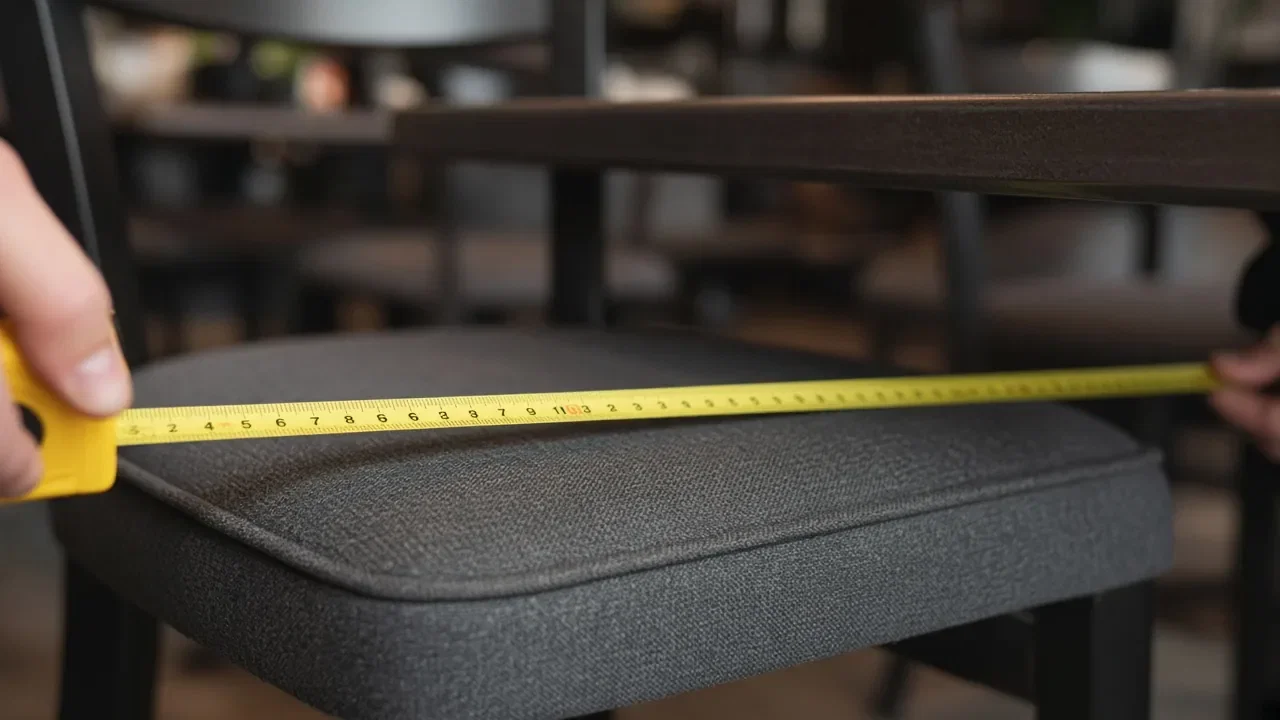
- Include something for scale, or better yet, a tape measure in the shot.
- Take more photos than you think you need. Extra photos cost nothing.
- Label photos or organize them in folders by furniture type, so they match your inventory list.
Step 3: Take Basic Measurements
Exact pattern measurements are the upholsterer’s job, but rough dimensions help a lot with fabric estimates and pricing. Measure in inches and round to the nearest half inch.
For Chairs and Stools
- Overall width, at the widest point
- Overall depth, front to back
- Overall height, floor to top of back
- Seat width and depth
- Seat height from the floor (useful if you want to change foam thickness)
For Booths and Banquettes
- Length of each booth section along the wall
- Seat depth, front edge to back
- Back height, from the seat to the top of the back
- Overall height from the floor
- Note whether it’s single or double-sided
For Sofas, Lounge Seating and Benches
- Overall width, depth and height
- Number and size of seat and back cushions
- Arm style and width, if applicable
Step 4: Share Your Material Preferences
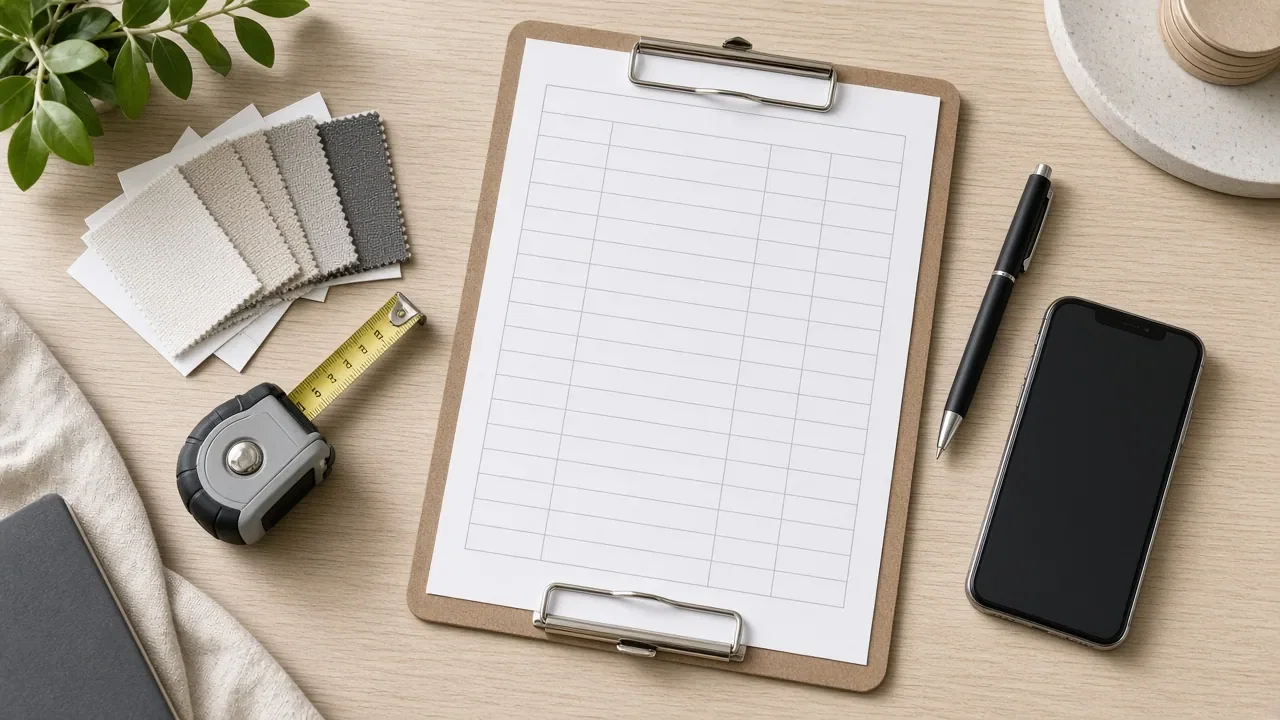
You don’t need to have a fabric picked out, but sharing your preferences helps narrow the options and pricing:
- Fabric or vinyl? Restaurants and healthcare spaces often lean toward commercial vinyl for cleanability; offices and lounges often use woven fabrics.
- Color and style, or photos of the look you want
- Durability needs, such as heavy daily use, outdoor exposure, or frequent disinfecting
- Brand or code requirements from your company, franchise or building
- Customer-supplied material, if you plan to provide your own fabric
If you’re unsure, say so. Part of a good quote process is helping you choose materials that fit how the furniture is used. Our commercial upholstery services page shows the kinds of settings we work in.
Step 5: Tell Us About Logistics and Timing
Logistics can affect both price and scheduling, so include:
- Your address and where the furniture sits in the building (ground floor, upstairs, tight hallways)
- Pickup and delivery needs, or whether you’ll drop items off
- Removal and reinstallation for fixed booths or bolted seating
- Business hours and blackout dates, such as busy seasons, events or inspections
- Your target completion date, if there’s a deadline like a grand reopening
- Phasing needs, if you can only spare a portion of your seating at a time
Restaurants, for example, often want work done on closed days or in phases so the dining room stays open. Our restaurant and bar upholstery work is often scheduled this way.
Step 6: Send Everything in One Place
Once you’ve gathered your inventory, photos, measurements and notes, send them together. A single message or form submission with everything attached is much easier to work with than a string of separate emails.
Here’s a quick checklist to run through before you hit send:
- Inventory list with quantities and locations
- Photos of every furniture type, from multiple angles
- Close-ups of damage and special details
- Basic measurements for each type
- Material preferences or questions
- Address, access notes and scheduling needs
- Your name, role, phone and the best way to reach you
Common Mistakes That Slow Down a Quote
Even well-organized facility managers run into a few common snags. Avoiding them can save days of back-and-forth.
- Only photographing the damage. A close-up of a torn seat is helpful, but without a full view of the chair, it’s hard to know how it’s built or how big it is.
- Mixing similar but different pieces. Two chair styles that look alike might have different backs or seat construction. If you’re unsure, photograph one of each and note the count for both.
- Leaving out fixed seating details. Booths and built-ins often need removal and reinstallation. Without photos of how they attach, that labor is hard to estimate.
- Forgetting about access. A second-floor dining room with a narrow staircase affects pickup and delivery planning.
- Not mentioning deadlines. If you need everything done before a reopening or inspection, say so up front so the schedule can be built around it.
- Sending photos without context. A folder of images named with camera numbers is hard to match to an inventory. Short labels make a big difference.
What Happens After You Send Your Request
Once your information arrives, it’s reviewed to understand the scope: furniture types, quantities, construction, materials and logistics. If anything is unclear, you may get a few follow-up questions or a request for a couple of extra photos. For larger or more complex projects, a site visit may be suggested.
From there, you’ll receive an estimate that reflects the work involved, along with any options worth considering, such as a more durable vinyl for high-traffic seating or replacing foam at the same time as the cover. Once you approve, the next steps are choosing final materials and setting a schedule that works for your business.
When a Site Visit Makes Sense
Photos handle many quotes, but some projects benefit from an in-person visit. These often include large fixed booth installations, historic or unusual furniture, projects with many different furniture types, and anything that needs on-site removal and reinstallation. If your project falls into one of these categories, mention it and we can talk about the best next step.
Frequently Asked Questions
Can I get a quote from photos alone?
Often, yes, especially for movable furniture with clear photos and measurements. Some projects may still need a site visit to confirm details.
How many photos should I send?
Enough to show each type of piece from the front, side and back, plus close-ups of damage and details. More is usually better than fewer.
Do I need to know what fabric I want?
No. Sharing how the furniture is used and any style preferences is enough to start. We can help you choose from commercial options.
Why do quotes sometimes change after the furniture is opened up?
Hidden issues like broken frames, failed springs or deteriorated foam aren’t always visible from the outside. Good photos of the underside and frame help reduce surprises.
Do you only work with businesses?
We specialize in commercial work, but Leo’s Upholstery also handles residential projects for homeowners.
Request Your Commercial Upholstery Quote
The more complete the picture you send, the faster and more accurate your quote will be. Leo’s Upholstery serves businesses throughout the East Bay and greater Bay Area from our shop at 1835 E. 14th Street in San Leandro.
Ready to get started? Request a quote online and attach your photos, or call us at (510) 895-3632. Our hours are Monday through Friday, 8 AM to 4:30 PM, and Saturday, 7 AM to noon.