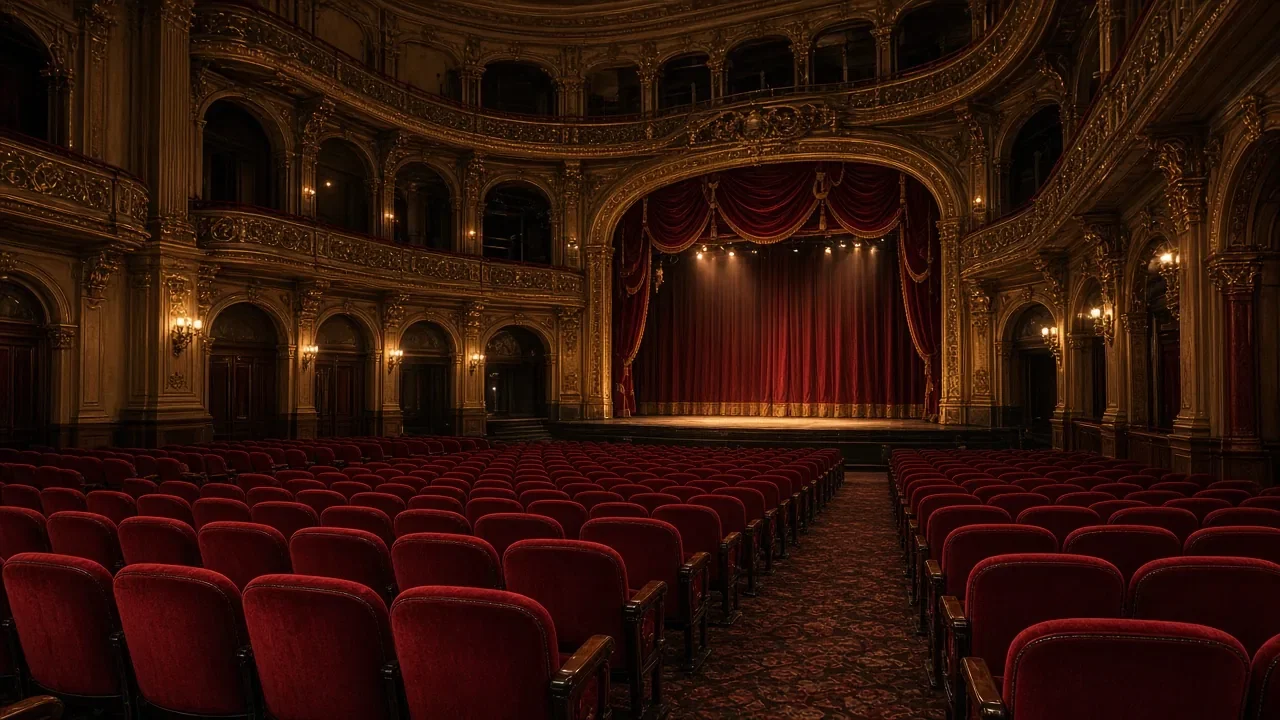
The seats in a theater, concert hall, auditorium or event venue might be the most-used furniture in the building. Hundreds or thousands of people sit in them every season, often for two or three hours at a time. Over the years, the fabric wears thin, cushions flatten, and a few seats in the most popular sections start looking noticeably worse than the rest.
Replacing an entire auditorium of seating is a major capital project. In many cases, though, the steel standards, arms and mechanisms are still sound, and what’s really worn out is the upholstery and foam. That’s where reupholstery comes in. Recovering seat pans and backs can restore comfort and appearance while keeping the infrastructure you already have.
This guide covers how auditorium and theater seat reupholstery typically works, what to consider when choosing materials, and how venues plan the work around performances and events.
Who This Applies To
Fixed and semi-fixed seating shows up in more places than traditional theaters. The same principles apply to:
- Performing arts theaters and playhouses
- School and university auditoriums and lecture halls
- Churches and houses of worship with theater-style seating or upholstered pews
- Community centers and civic halls
- Cinemas and screening rooms
- Corporate auditoriums and training rooms
- Event venues with fixed seating, VIP boxes or lounge areas
Each setting has its own schedule and priorities, but the seats themselves are often built in similar ways.
How Theater Seats Are Built
Most modern theater and auditorium chairs are modular. A typical seat includes:
- A standard or base bolted to the floor, often steel or cast metal
- Armrests, which may be wood, plastic or upholstered
- A seat pan, a removable section with a plywood or plastic shell, foam, and fabric cover, often attached to a spring-loaded or gravity-lift mechanism
- A seat back, typically another shell with foam and fabric, sometimes with a separate outer back panel
Because the seat pans and backs are usually removable, they can often be taken out, recovered, and reinstalled without pulling up the floor-mounted standards. That modular design is what makes reupholstery practical for large rooms.
Older and historic theaters may have different construction, including springs, horsehair or other traditional fillings, and decorative details. Those seats can often be restored too, though the work is more involved.
Signs Your Seating Needs Attention
Venue managers usually notice the obvious problems first, but it helps to look systematically:
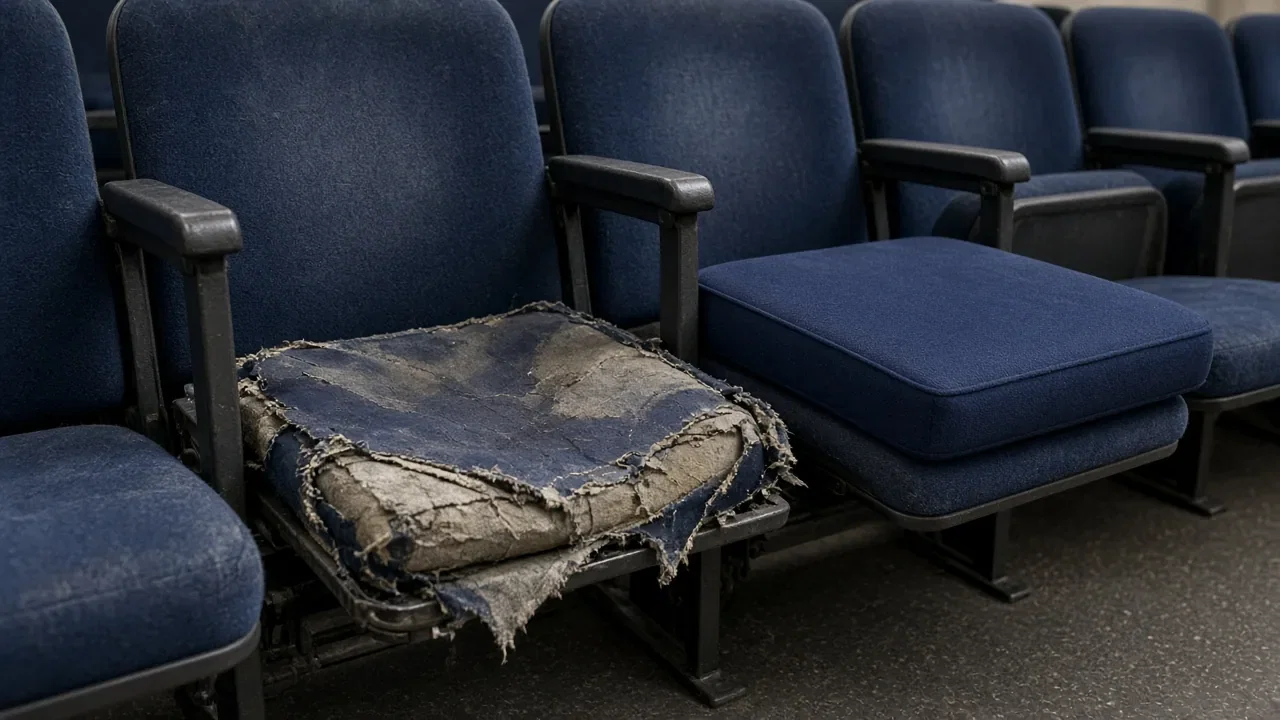
- Worn or shiny fabric on seat fronts and arms where people rub most
- Tears, holes and snags, often from bags, keys and rivets on clothing
- Flattened foam that leaves patrons feeling the shell underneath
- Stains that no longer come out with cleaning
- Mismatched seats from past one-off repairs with different fabric
- Loose or sagging covers that wrinkle when the seat folds up
Patrons may not mention worn seats, but they notice. Comfortable, clean seating is part of the experience you’re selling.
Choosing Fabric for Theater and Auditorium Seating
Durability First
Auditorium seating sees friction every time someone sits down, shifts, or stands up. Commercial upholstery fabrics are typically rated for abrasion in double rubs, and high-traffic venues benefit from fabrics rated for heavy-duty commercial use. Tight weaves and robust backings help resist snags.
Fire Safety
Public assembly spaces usually have fire-safety requirements for upholstered seating. The exact requirements depend on your jurisdiction, building type and local fire officials. Before choosing a fabric, check with your facilities manager, architect or local authority about what applies, and choose materials that meet those requirements. We can help you find commercial fabrics intended for these settings, but the venue should confirm its specific code obligations.
Appearance and Acoustics
Fabric color and texture set the tone of a room. Deep reds and blues remain classic for theaters, while charcoal, gray and other neutrals are common in modern auditoriums and lecture halls. Upholstered seating can also play a role in a room’s acoustics, since soft surfaces absorb sound. If acoustics are critical, such as in a concert hall, it’s worth involving your acoustician before changing materials significantly.
Cleanability
Venues with food and drink service, such as cinemas and event spaces, may benefit from stain-resistant performance fabrics or coated fabrics that wipe clean. For traditional theaters, a durable woven or velvet-style fabric is often preferred for its look and feel.
Don’t Forget the Foam
New fabric over failed foam won’t feel like an upgrade to the person sitting in it. During a reupholstery project, foam is usually evaluated and replaced where needed. Seat foam tends to break down faster than back foam because it carries most of the weight.
Choosing the right density and firmness keeps seats comfortable through a long performance and helps them hold their shape for years. Many fire-safety requirements apply to the foam as well as the fabric, which is another reason to plan materials carefully.
Planning Around Your Performance Calendar
The biggest challenge in auditorium reupholstery usually isn’t the sewing. It’s the schedule. Venues need seats available for shows, classes, services and events.
Phased Section-by-Section Work
Many venues recover seating in phases: one section, one row block, or one level at a time. Seat pans and backs are removed from a section, taken to the shop, recovered, and reinstalled, then the next section begins. This keeps most of the room usable.
Using Dark Periods
Summer breaks, off-season weeks, and holiday closures are natural windows for bigger phases. Schools often use summer, while performing arts venues might use the time between seasons.
Numbering and Tracking
On large projects, careful labeling matters. Seats are often numbered by section, row and seat so every pan and back returns to its exact position. This is especially important in older venues where seats may vary slightly in size.
Spare Seats
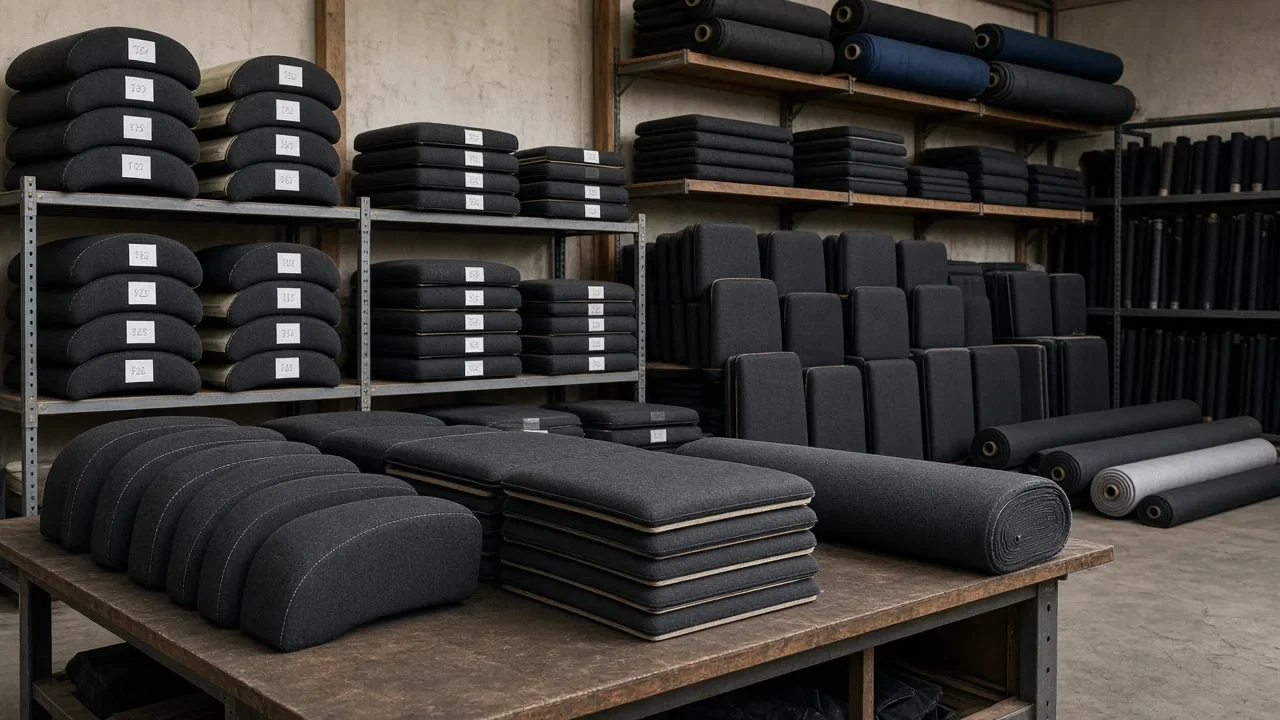
Some venues keep a small stock of recovered spare pans and backs so damaged seats can be swapped quickly during the season, rather than leaving a broken seat out of service.
What a Typical Seating Project Looks Like
Every venue is different, but most auditorium reupholstery projects follow a similar path from first call to final walk-through.
1. Assessment
It starts with photos, a seat count, and ideally a site visit. We look at how the seats are built, how pans and backs attach, the condition of the foam and shells, and whether any seats have unusual sizes or details. This is also when we talk about your schedule and any dark periods coming up.
2. Sample Seat
On larger projects, recovering one or two sample seats first is often a smart move. It lets your team see and sit in the finished result, confirm the fabric and foam feel right, and catch any surprises in construction before the full run begins.
3. Materials
Once the sample is approved, fabric and foam are ordered in the quantities needed. Commercial fabric availability can vary, so confirming materials early helps keep the schedule on track. It’s also wise to order a little extra for future repairs.
4. Removal, Recovering and Reinstallation
Seats are labeled, removed by section, recovered in the shop, and reinstalled in their original positions. Each phase ends with a check that seats fold properly and covers sit tight.
5. Final Review
A walk-through at the end confirms everything looks consistent and works as it should, and gives you a chance to flag anything that needs a touch-up.
Reupholstery vs. Replacing Theater Seating
Reupholstery is usually worth considering when:
- The standards, mechanisms and shells are structurally sound
- The seat layout, sightlines and spacing still work for your venue
- You want to keep the character of an older or historic room
- You’d like to update the look with a new color or fabric
Replacement may make more sense when mechanisms are failing widely, shells are cracked, or you’re reconfiguring the room for accessibility, sightlines or capacity. Some venues do both: replace a few problem areas and recover the rest.
Caring for Recovered Seating
Once seats are freshly upholstered, a maintenance routine helps them last:
- Vacuum seats regularly, focusing on crevices where debris collects.
- Treat spills promptly using the fabric manufacturer’s recommendations.
- Do periodic walk-throughs to catch loose covers and small tears early.
- Repair individual seats quickly so damage doesn’t spread.
- Keep a record of fabric and foam specs for future repairs and matching.
Leo’s Upholstery handles a wide range of commercial upholstery services from our San Leandro shop, including seating for hospitality and public venues. Our custom upholstery work also covers unusual or historic pieces that need special attention.
Frequently Asked Questions
Can you recover theater seats without removing the whole chair?
In many cases, yes. Most modern theater seats have removable seat pans and backs that can be taken out, recovered in the shop, and reinstalled without removing floor-mounted standards.
How do you keep track of hundreds of seats?
Seats are typically labeled by section, row and position before removal, so each piece goes back exactly where it came from.
Can we keep the venue open during the project?
Most venues phase the work so only part of the room is affected at a time. We can talk through a schedule that fits your calendar.
Do you handle historic theater seating?
Older and historic seats can often be restored, though construction varies. Send photos and we can talk through what’s involved.
What fabrics meet fire-safety requirements?
Requirements depend on your location and building type. Your facilities team or local fire authority can confirm what applies, and we can help source commercial fabrics intended to meet those requirements.
Get a Quote for Your Venue Seating
Comfortable, clean, consistent seating makes every show, lecture and event better. If your auditorium or theater seats are showing their age, reupholstery may let you restore them without the cost and disruption of full replacement.
Request a quote online or call Leo’s Upholstery at (510) 895-3632. Send us photos, a seat count and your event calendar, and we’ll help you plan a project that keeps your venue running.