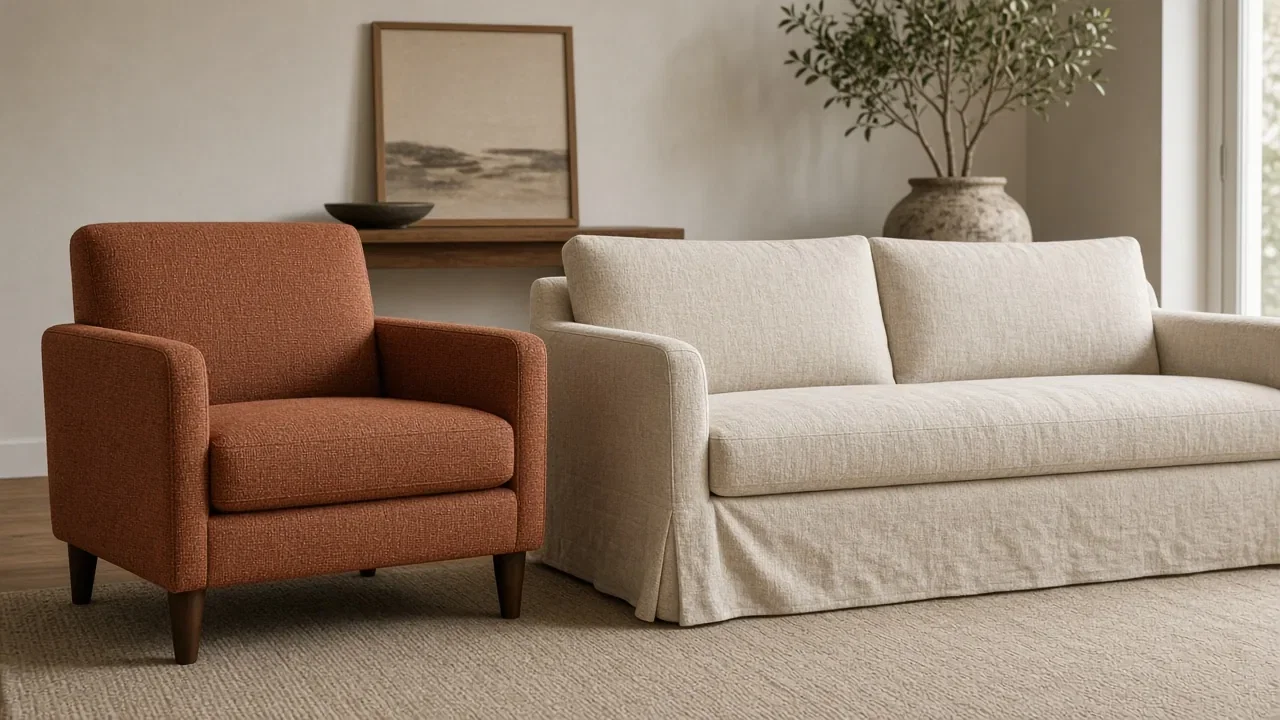
When a sofa or chair starts looking worn, most people have three options: reupholster it, cover it with a slipcover, or replace it with something new. Each has real advantages, and each has drawbacks. The right answer depends on the furniture itself, your budget, how you live and how long you want the piece to last.
As an upholstery shop, we obviously love reupholstery. But we also believe in giving honest advice, and sometimes a slipcover or a new piece is the better choice. This comparison walks through all three so you can decide with confidence.
Option 1: Reupholstery
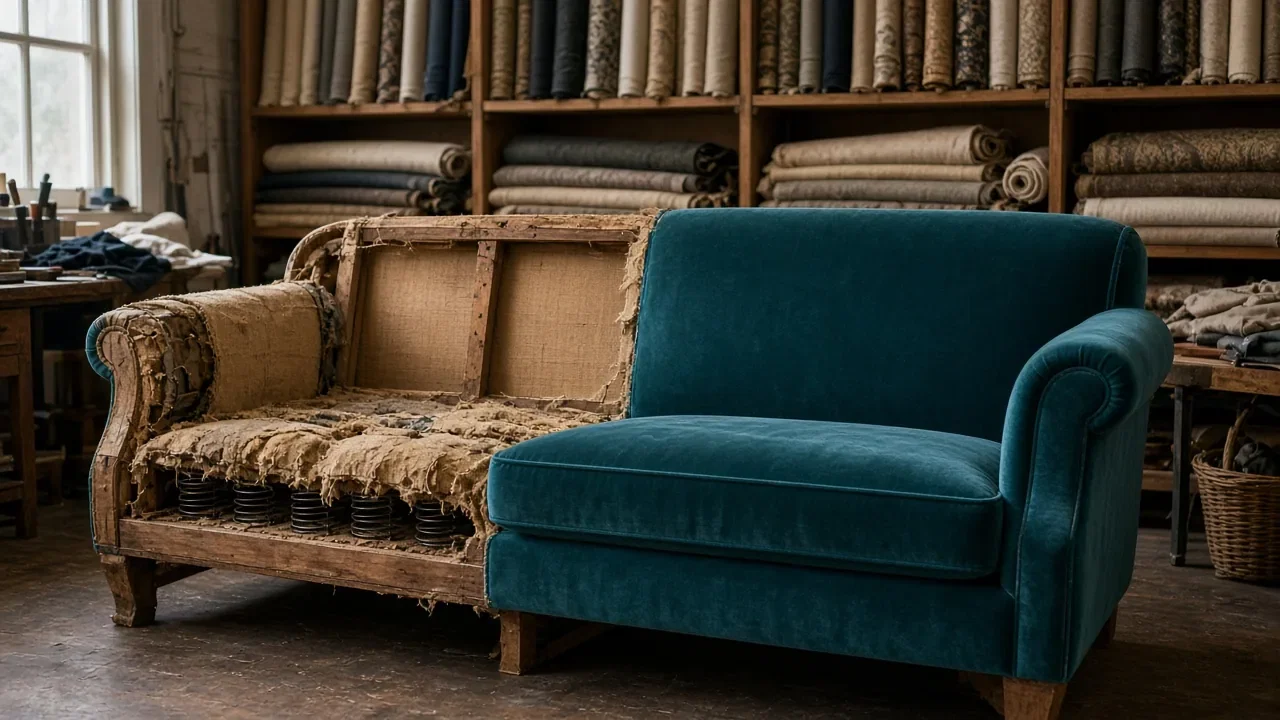
Reupholstery means removing the old fabric (and often the padding), repairing what’s underneath, and covering the piece in new fabric. A quality job may include new foam, new batting, retied or replaced springs, and frame repairs.
Advantages
- Keeps a good frame in use. Well-built furniture often has frames that last far longer than the fabric. Reupholstery lets you keep those bones.
- Restores comfort, not just looks. New foam and suspension work can make a piece feel better than it has in years.
- Total customization. Choose any upholstery fabric, plus details like welting, skirts, tufting, nailheads and cushion firmness.
- Tailored fit. Fabric is cut and attached to the frame, so it looks crisp and intentional.
- Preserves sentimental and vintage pieces. Heirlooms and mid-century or antique furniture can be saved and enjoyed.
- Less waste. Keeping furniture out of landfills is a meaningful benefit for many people.
Drawbacks
- Not instant. Fabric selection, ordering and labor take time. You’ll be without the piece while it’s in the shop.
- Cost depends on the job. Labor and materials for large or complex pieces add up. It’s worth comparing with new furniture of similar quality, not the cheapest option.
- Not worth it for poor frames. If the frame is particleboard or broken, reupholstery may not be a good investment.
Best For
Well-made furniture with a solid frame, pieces you love the shape of, heirlooms and vintage finds, and anyone who wants a custom result.
Option 2: Slipcovers
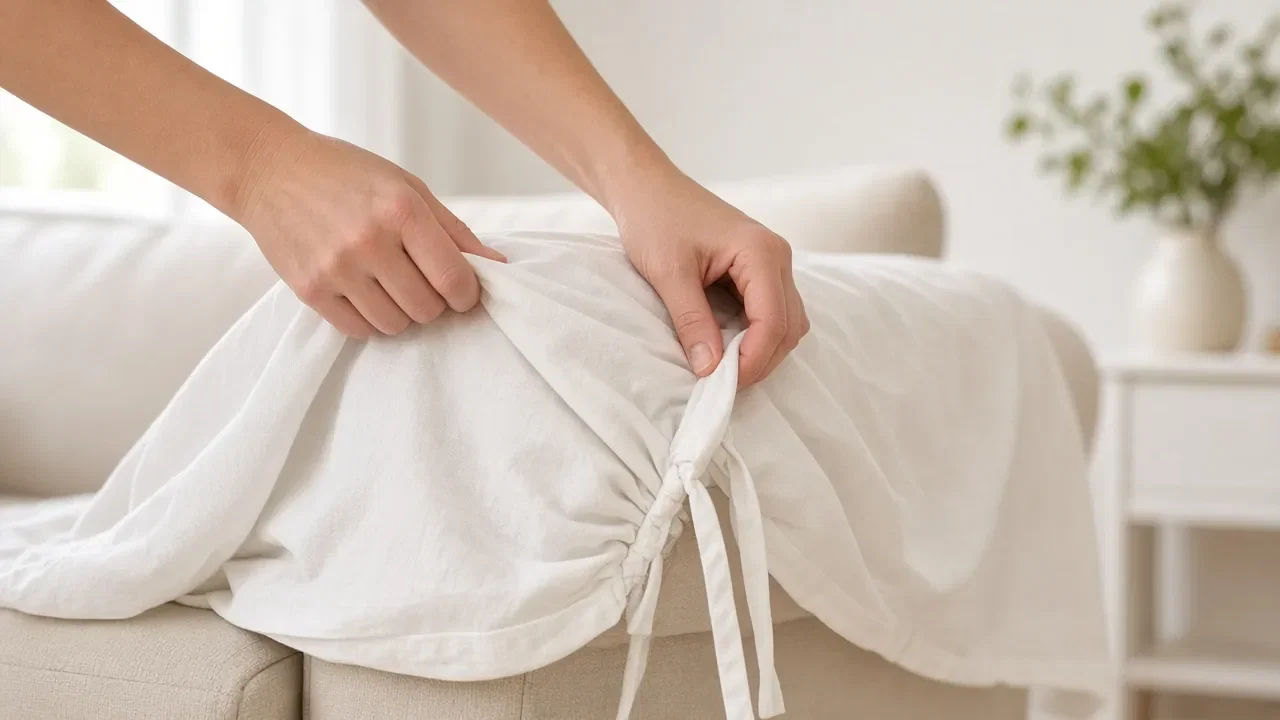
A slipcover is a removable fabric cover that fits over existing furniture. Slipcovers range from inexpensive, stretchy, one-size-fits-most covers to custom-made, tailored slipcovers sewn for a specific piece.
Advantages
- Lower upfront cost. Ready-made slipcovers are often much less expensive than reupholstery.
- Quick change. You can transform the look of a room in an afternoon.
- Washable options. Many slipcovers can be removed and laundered or dry cleaned, which appeals to families with kids and pets.
- Seasonal flexibility. Some people swap slipcovers seasonally, such as lighter linen in summer and heavier fabrics in winter.
- Protects the original upholstery of furniture you want to preserve.
Drawbacks
- Fit can be an issue. Ready-made slipcovers often look baggy or slide around, especially on unusual shapes. Custom slipcovers fit much better but cost more.
- Doesn’t fix comfort. A slipcover changes the look but does nothing for flat cushions, sagging springs or a wobbly frame.
- Requires upkeep. Covers shift and need tucking and straightening. Washing can cause shrinkage if not handled carefully.
- Casual look. Even well-made slipcovers tend to have a relaxed, cottage style that doesn’t suit every room.
Best For
Furniture that’s comfortable and structurally sound but looks dated or stained, renters who want flexibility, households that need washable covers, and anyone wanting a quick, lower-cost refresh.
Option 3: Buying New
Sometimes the simplest solution is a new piece of furniture. The market offers everything from budget options to high-end custom-built sofas.
Advantages
- Fresh start. New style, new size, new configuration.
- Speed (sometimes). In-stock items can arrive quickly. Custom-order furniture, however, may take a while.
- Better fit for changing needs. If you’ve moved, your family has grown, or you need a sleeper or sectional, a new piece may simply suit you better.
- Warranty. Many new pieces come with a manufacturer’s warranty, though terms vary widely.
Drawbacks
- Quality varies widely. Many affordable sofas use lightweight frames and low-density foam that wear out faster.
- You can’t always see what’s inside. Construction details are often hidden behind the fabric.
- Limited fabric choices at many price points.
- Disposal. Getting rid of the old piece can be a hassle, and bulky furniture often ends up in landfills.
Best For
Furniture with broken or poor-quality frames, pieces that no longer fit your space or lifestyle, and situations where you want a completely different style.
Side-by-Side Comparison
Here’s a quick summary of how the three options generally compare:
- Comfort improvement: Reupholstery can improve comfort significantly. Slipcovers don’t. New furniture depends on quality.
- Customization: Reupholstery offers the most. Custom slipcovers offer some. New furniture is limited to what’s available or offered as custom order.
- Fit and finish: Reupholstery is tailored. Slipcovers range from loose to fitted. New furniture varies.
- Upfront cost: Ready-made slipcovers are typically the lowest. Reupholstery and new furniture depend heavily on size and quality.
- Longevity: A quality reupholstery job on a good frame can last many years. Slipcovers may need replacing sooner. New furniture depends on construction.
- Sustainability: Reupholstery and slipcovers keep existing furniture in use. Buying new adds to demand and often to waste.
Common Scenarios and What Usually Makes Sense
Every piece is different, but these everyday situations come up often. They aren’t hard rules, just a starting point for thinking it through.
The Inherited Sofa With Great Bones
A sofa from a parent or grandparent, built with a heavy hardwood frame, but covered in faded fabric from decades ago. This is a classic reupholstery candidate. The frame is likely better than many new options, and reupholstery lets you keep the shape and the memories while choosing a fabric that suits your home.
The Comfortable Sofa With Stains
The cushions still feel great and the frame is solid, but the fabric has seen too many spills. A custom slipcover can be a practical fix, especially in a washable fabric. Reupholstery in a performance fabric is the longer-lasting option if you prefer a tailored look.
The Budget Sofa That Sags
An inexpensive sofa that’s only a few years old, with a lightweight frame and cushions that have gone flat. Here, an honest assessment matters. If the frame is weak, putting money into it may not make sense, and replacing it with a better-built piece could be the smarter move. If the frame is sturdier than expected, new foam alone might be enough.
The Mid-Century Chair From an Estate Sale
A vintage lounge chair with a beautiful wood frame and torn, crumbling upholstery. Slipcovers rarely suit these pieces, and new reproductions may not match their character. Reupholstery is usually the way to bring them back.
The Sectional That No Longer Fits
You’ve moved, and the big sectional doesn’t fit the new living room. No amount of new fabric will change the size. Unless the pieces can be reconfigured, buying something that fits your new space is often the right choice.
The Rental or Temporary Home
If you’re renting or expect to move soon, a slipcover can freshen up what you have without a big investment, and it goes with you when you leave.
Thinking About the Long Term
It helps to think beyond the immediate cost. A well-built piece that’s reupholstered thoughtfully can stay in your home for many more years, and it can be recovered again later when your style changes. Lower-quality new furniture may need replacing sooner. Slipcovers sit in between, offering flexibility now with the option to reupholster later.
Questions to Help You Decide
Ask yourself:
1. Is the frame solid? If yes, reupholstery or a slipcover are both strong options. If no, consider new. 2. Is it comfortable? If the cushions and springs are fine, a slipcover might be enough. If not, reupholstery can fix comfort. 3. Do I love the shape and size? If yes, keep it. If it no longer fits your life, new may be better. 4. How long do I want this piece to last? For the long haul, quality reupholstery is worth considering. 5. Does it have sentimental or vintage value? If yes, reupholstery is usually the way to honor it. 6. Do I need washable fabric? Slipcovers or performance fabric reupholstery both work.
A Hybrid Approach
You don’t always have to choose just one. Some people reupholster a sofa in a durable fabric and then add a slipcover for parties or pets. Others reupholster their best pieces and replace lower-quality ones. And many combine foam replacement with a custom slipcover for a comfort-and-style refresh.
Frequently Asked Questions
Is reupholstering cheaper than buying new?
It depends on the piece and what you’d compare it to. Compared with a new sofa of similar construction quality, reupholstery is often a good value. Compared with the cheapest new options, it may not be. A quote for your specific piece is the best way to compare.
Do slipcovers look cheap?
Ready-made ones can look loose. Custom slipcovers made for your furniture look much more tailored.
Can you make a custom slipcover?
Ask us about your piece. We can talk through whether a custom cover or reupholstery is the better fit.
How do I know if my frame is good?
Lift one corner; a solid frame lifts evenly without twisting. Sturdiness, weight and construction details can tell more, and we’re happy to evaluate it.
Can a reupholstered sofa be recovered again later?
Usually, yes. A solid frame that has been reupholstered once can typically be recovered again in the future, which is one reason well-built furniture can stay in a home for so long.
Do you work with businesses?
Yes. Leo’s Upholstery specializes in commercial upholstery for restaurants, offices, healthcare facilities and hospitality businesses, and we also serve homeowners.
Get an Honest Opinion on Your Furniture
Not sure which option is right? We’ll tell you honestly whether your piece is a good candidate for reupholstery. Leo’s Upholstery in San Leandro serves homeowners and businesses across the East Bay and Bay Area. Explore our residential upholstery services and sofa and couch upholstery.
Request a quote online with a few photos, or call us at (510) 895-3632.