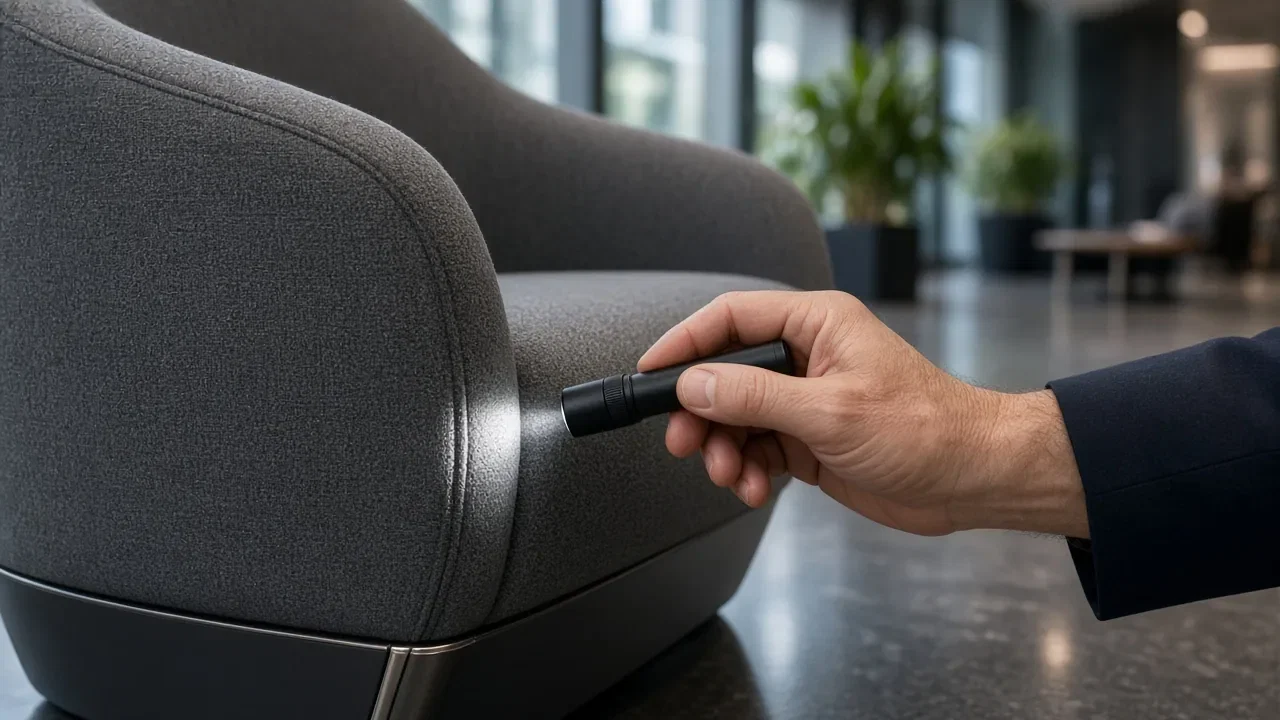
Most facilities treat upholstery the way many people treat their car’s check-engine light: ignore it until something breaks. A seam splits, a chair gets pushed into a back room, and eventually someone orders replacements. It feels efficient in the moment, but over time this reactive approach often costs far more than it needs to.
Preventive upholstery maintenance takes a different approach. By inspecting seating on a schedule, cleaning it properly and fixing small problems early, facilities can extend the life of their furniture, keep spaces looking professional and spread costs out more predictably. This guide explains how facility managers, property managers and business owners in the Bay Area can build a simple, practical preventive maintenance program for upholstered furniture.
Why Reactive Upholstery Care Costs More
Upholstery damage almost never stays small. A tiny problem today tends to grow into a big one.
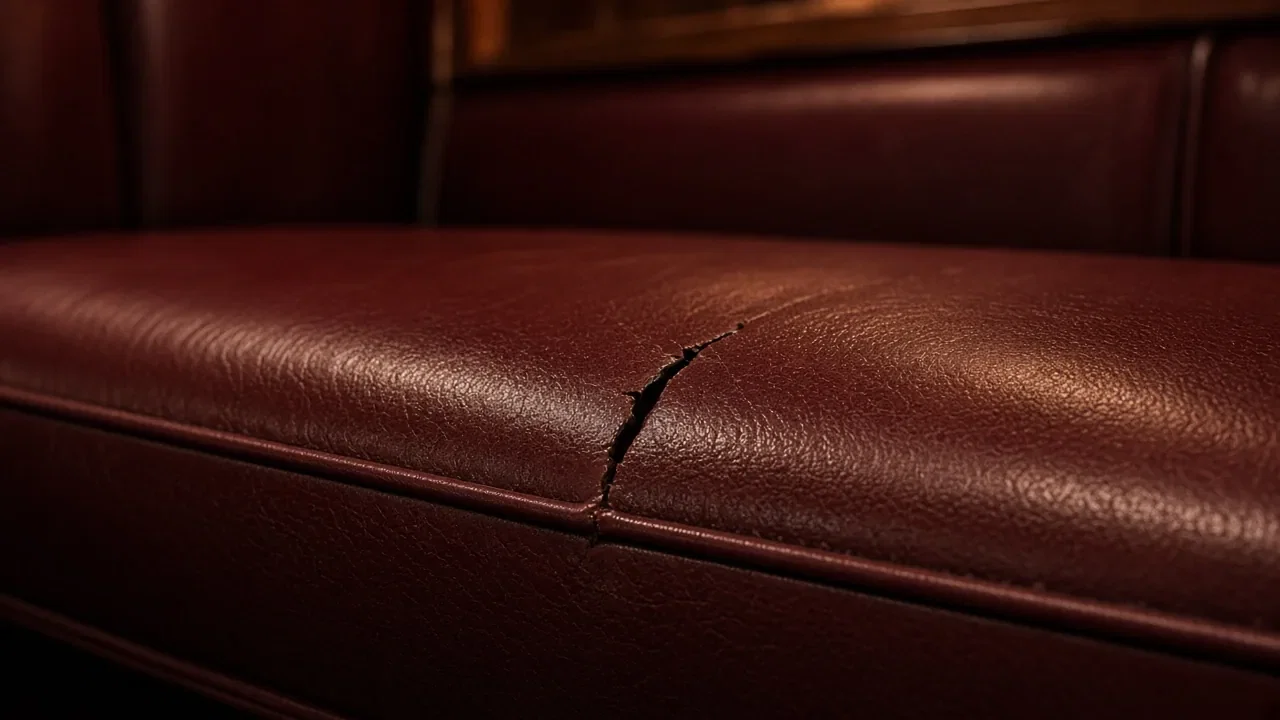
Small tears become big tears
A split seam or small puncture on a busy chair will be stressed every time someone sits down. Within weeks or months, a short split can run the length of the cushion. Once the tear is large, a simple restitch is no longer possible, and the whole cover needs to be replaced.
Exposed foam breaks down
When a cover tears, the foam underneath is exposed to friction, light, spills and cleaning products. It can crumble, absorb moisture and lose support. What could have been a cover repair becomes a cover and foam replacement.
Damage spreads to frames
Loose arms, wobbly legs and broken springs get worse with use. A loose joint that could be reglued early can crack a frame if it is ignored. Frame damage is much more expensive to fix and sometimes means the piece cannot be saved.
Replacement costs add up
When furniture fails outright, the default is often to buy new pieces. New commercial furniture can involve long lead times and significant costs, plus disposal of the old furniture. Replacing pieces one at a time can also leave a space with mismatched seating.
Appearance affects business
Worn seating sends a message to customers, patients, guests and employees. In restaurants, clinics, hotels and offices, torn chairs can quietly undermine confidence in the business.
What Preventive Upholstery Maintenance Includes
A preventive program does not need to be complicated. It has four main parts.
1. Inventory
Start by knowing what you have. List upholstered pieces by location, type and material. Note the manufacturer and fabric if you know them, and take photos. Even a simple spreadsheet is enough.
2. Scheduled inspections
Walk through spaces on a regular schedule and check each piece. How often depends on how heavily furniture is used. High-traffic areas like restaurant dining rooms, waiting rooms and lobbies may benefit from more frequent checks, while private offices may need fewer.
3. Routine cleaning
Proper cleaning removes the grit, oils and residue that wear materials down. Following the material manufacturer’s cleaning instructions is key, since the wrong products can damage vinyl and fabric.
4. Early repairs
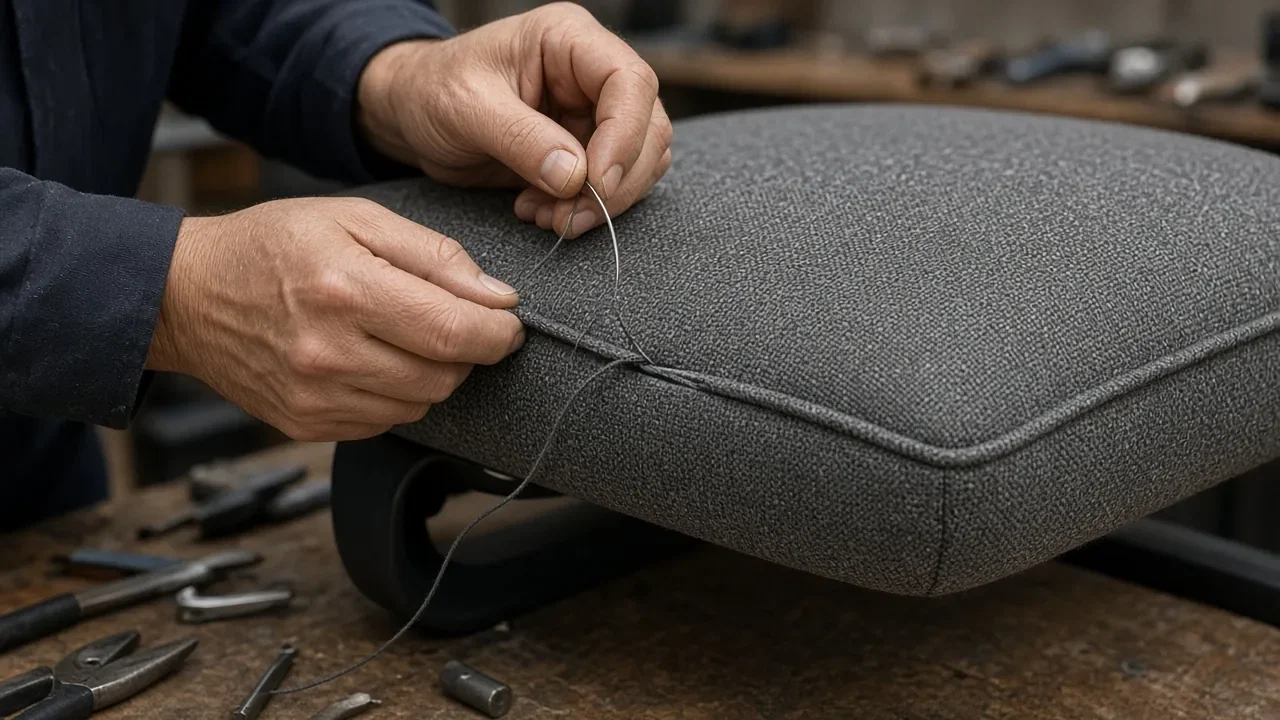
When an inspection finds a problem, fix it while it is small. Restitching a seam, regluing a loose arm, tightening hardware or replacing a single worn cushion is usually far easier than rebuilding a piece later.
What to Look For During Inspections
Give your staff a simple checklist. During each walk-through, check:
- Seams: Look for loose threads, gaps or small splits, especially on seat fronts and arm tops.
- Surfaces: Watch for cracking, peeling, thinning, pilling or punctures.
- Cushions: Press on seats and backs. They should feel supportive and even, not flat, lumpy or hollow.
- Frames: Gently rock chairs and pull on arms. Note any wobble, creaks or loose joints.
- Hardware: Check glides, casters, bolts and brackets for missing or loose parts.
- Stains and odors: Note anything that cleaning is not removing, since it may mean fluids have reached the foam.
- Edges and corners: Look where furniture contacts walls, tables or other furniture, since rubbing causes wear.
Tag or log each issue with the location, a photo and a short description. That makes it easy to group repairs.
Setting an Inspection Schedule
There is no single correct schedule, but these general guidelines can help you start:
- Very high use (restaurant seating, waiting rooms, hotel lobbies, gym equipment): frequent visual checks, with a more detailed inspection on a regular cycle.
- Moderate use (conference rooms, break rooms, classrooms): periodic inspections, such as once a quarter.
- Light use (private offices, executive suites, low-traffic lounges): less frequent inspections, such as once or twice a year.
Adjust the schedule based on what you find. If you keep discovering issues in a particular area, inspect it more often.
Cleaning Practices That Extend Upholstery Life
Cleaning is one of the most cost-effective parts of preventive maintenance, but it has to be done correctly.
- Vacuum fabric regularly. Dust and grit act like sandpaper on fibers.
- Wipe vinyl with approved cleaners. Use the products and dilutions the manufacturer recommends.
- Rinse residue when directed. Some disinfectants leave residue that can dry and crack vinyl over time.
- Treat spills promptly. Quick action prevents stains from setting.
- Schedule periodic deep cleaning. Professional cleaning for fabric seating can remove built-up soil that daily care misses.
- Avoid harsh products. Bleach, solvents and abrasive pads can damage many upholstery materials unless the manufacturer says they are safe.
Small Repairs That Prevent Big Failures
Many common upholstery problems can be handled quickly if they are caught early:
- Restitching seams before they open further
- Replacing a single cushion cover rather than a whole set
- Replacing worn foam in one or two seats to restore support
- Recovering arm caps, which often wear before the rest of the chair
- Regluing and tightening frames to stop wobble before it cracks a joint
- Replacing glides and casters that can scratch floors and stress legs
A commercial upholsterer can often handle several of these in one visit, which keeps downtime and costs low.
A Simple Example of the Math
You do not need exact figures to see how preventive care pays off. Picture a dining room with a few dozen identical chairs. Under a reactive approach, chairs are ignored until they are visibly torn. By then, several need new covers and new foam, a couple have loose frames, and one or two may be beyond saving. The result is an urgent, larger project, often at an inconvenient time, plus the risk of mismatched replacements.
Under a preventive approach, staff notice a small seam split on one chair and a loose leg on another during a routine walk-through. Both are fixed quickly. Over the following months, a handful of other minor issues are handled the same way. When the whole set eventually needs recovering, the frames are still solid, the work can be scheduled during a slow period, and every chair comes back matching.
The specific savings depend on your furniture and materials, but the pattern is consistent: small, early fixes are almost always less disruptive and less costly than large, late ones. Ask your upholsterer to quote both a repair and a full recover on a sample piece, so you can see the difference for your own furniture.
Planning and Budgeting for Upholstery
Preventive maintenance also makes budgeting easier.
Spread costs over time
Instead of facing a large replacement bill all at once, a preventive program spreads smaller costs over the year. Facility budgets become more predictable.
Plan recovering cycles
Even well-maintained upholstery eventually wears out. Knowing the condition of your furniture lets you plan recovering projects in advance, perhaps one area or floor at a time, instead of reacting to failures.
Standardize materials
Using a standard set of materials across your facility makes repairs and recovering easier. It is simpler to keep spaces matching, and you can order consistent materials over time. Ask your upholsterer about materials that are likely to stay available.
Track results
Keep notes on what was repaired and when. Over time you will see which areas and pieces need the most attention and can adjust your plan.
Who Benefits Most From Preventive Upholstery Care?
Nearly any facility with upholstered seating can benefit, but it is especially valuable for:
- Restaurants, bars and cafes with booths and dining chairs
- Medical, dental and chiropractic offices with waiting rooms and treatment seating
- Hotels and hospitality venues with lobbies, rooms and event spaces
- Gyms and fitness centers with upholstered equipment
- Offices with task chairs, conference seating and lounges
- Schools, libraries and campuses with heavy-use common areas
- Senior living communities with dining and lounge furniture
Working With a Commercial Upholsterer
A good upholstery partner can make a preventive program easier. Many businesses find it helpful to work with one shop that knows their furniture and materials. When you reach out, share your inventory and inspection notes, and ask about:
- Handling small repairs and larger recovering projects
- Scheduling work after hours or on weekends to reduce disruption
- Sourcing and keeping track of your standard materials
- Providing written quotes that help with budgeting
Frequently Asked Questions
How often should commercial upholstery be inspected?
It depends on use. Very busy areas benefit from frequent checks, while light-use areas can be inspected less often. Adjust based on what you find.
Is it worth repairing a single torn chair?
Usually, yes, especially if the tear is small. Fixing it early can prevent the damage from spreading to the foam and frame.
Can upholstery be repaired on-site?
Some small repairs may be handled on-site, while others are better done in the shop. Your upholsterer can recommend the best approach.
What cleaning products should we use?
Follow the material manufacturer’s recommendations. If you are unsure, ask your upholsterer for guidance on your specific materials.
Request a Quote for Upholstery Maintenance and Repair
Leo’s Upholstery works with businesses and facilities across the East Bay and greater Bay Area to keep commercial seating in good shape. From our shop at 1835 E 14th St in San Leandro, we handle repairs, re-padding and full recovering for offices, restaurants, clinics, hotels and more. Learn more about our commercial upholstery services and office furniture upholstery, then request a quote or call (510) 895-3632. We are open Monday through Friday from 8 AM to 4:30 PM and Saturday from 7 AM to noon.