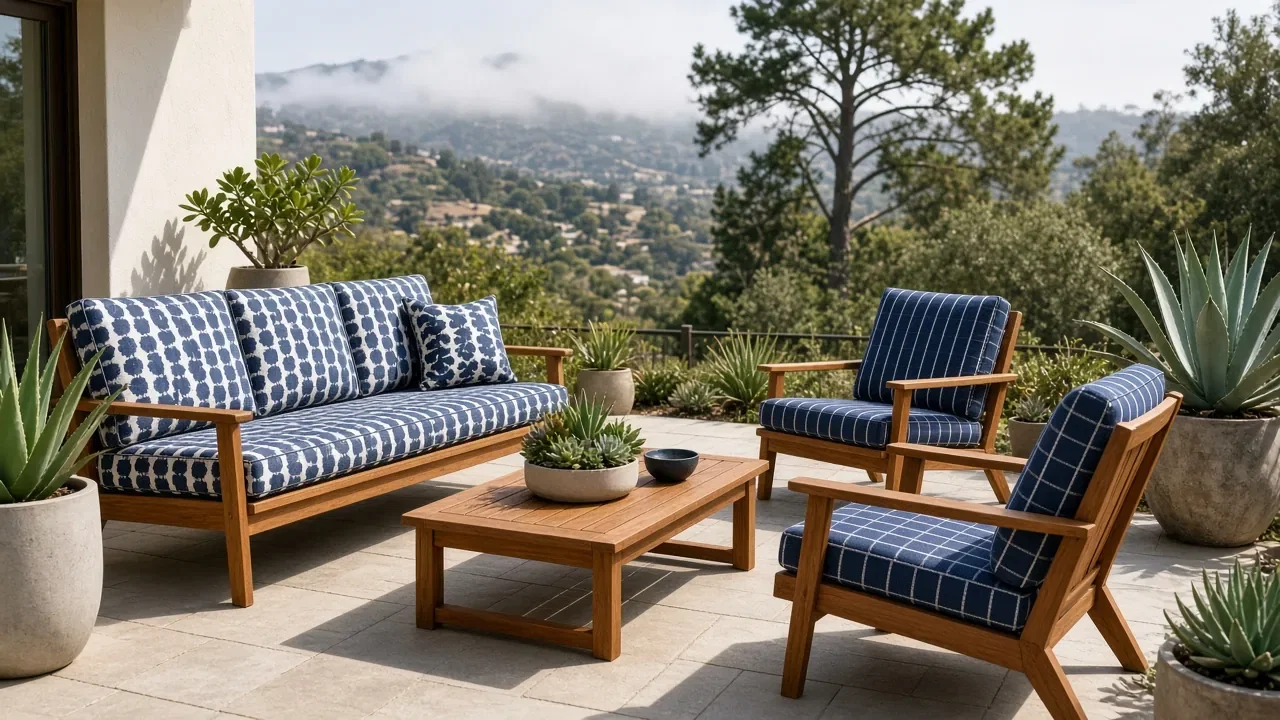
The Bay Area is a wonderful place to spend time outdoors. Mild temperatures mean patios, decks and balconies get used for much of the year. But our weather is also surprisingly tough on outdoor cushions. Strong sun in inland valleys, damp marine fog near the water, and concentrated rain during the wetter months all take a toll.
If your patio cushions are faded, flat, spotted with mildew or just tired, new outdoor upholstery can make your outdoor space inviting again. The key is choosing materials and construction built for our particular mix of conditions.
How Bay Area Weather Affects Outdoor Upholstery
The Bay Area isn’t one climate; it’s a patchwork of microclimates. What happens to your cushions depends a lot on where you live.
Sun and UV
Inland areas and sunny pockets of the East Bay can see long stretches of strong sun, especially in summer and early fall. UV exposure fades color and breaks down fibers over time. Cushions that look bright in spring can look washed out by the end of the season if the fabric isn’t made for it.
Fog and Moisture
Closer to the bay and the ocean, morning fog and marine air keep things damp. Cushions that never fully dry out are prone to mildew and musty smells, especially if the foam inside holds water.
Rainy Season
Much of the region’s rain falls in the cooler months. Cushions left out through the wet season can soak up water, stay wet for days and develop mold or mildew inside the foam.
Wind, Dust and Pollen
Breezy afternoons, dust and seasonal pollen settle on outdoor fabric and can work their way into the weave, dulling colors and making cushions look dingy.
Choosing the right fabric, foam and construction helps cushions handle all of this.
Outdoor Fabrics: What to Look For
Solution-Dyed Acrylic
Solution-dyed acrylic is widely used for high-quality outdoor cushions. Because the color is added to the fiber before it’s spun into yarn, the color runs all the way through rather than sitting on the surface. This generally makes it very resistant to fading. Many solution-dyed acrylics are also treated to resist water and mildew.
Solution-Dyed Polyester and Olefin
Other synthetic outdoor fabrics, including some polyesters and olefins (polypropylene), are designed for outdoor use and can offer good fade and moisture resistance. Quality varies by product, so ask about UV resistance and intended use.
Outdoor Vinyl and Mesh
Marine-grade vinyl is extremely water resistant and wipes clean, making it popular for boats and poolside seating. It can get hot in direct sun, though. Breathable mesh fabrics are sometimes used on cushion bottoms or slings to let water drain and air circulate.
What to Avoid Outdoors
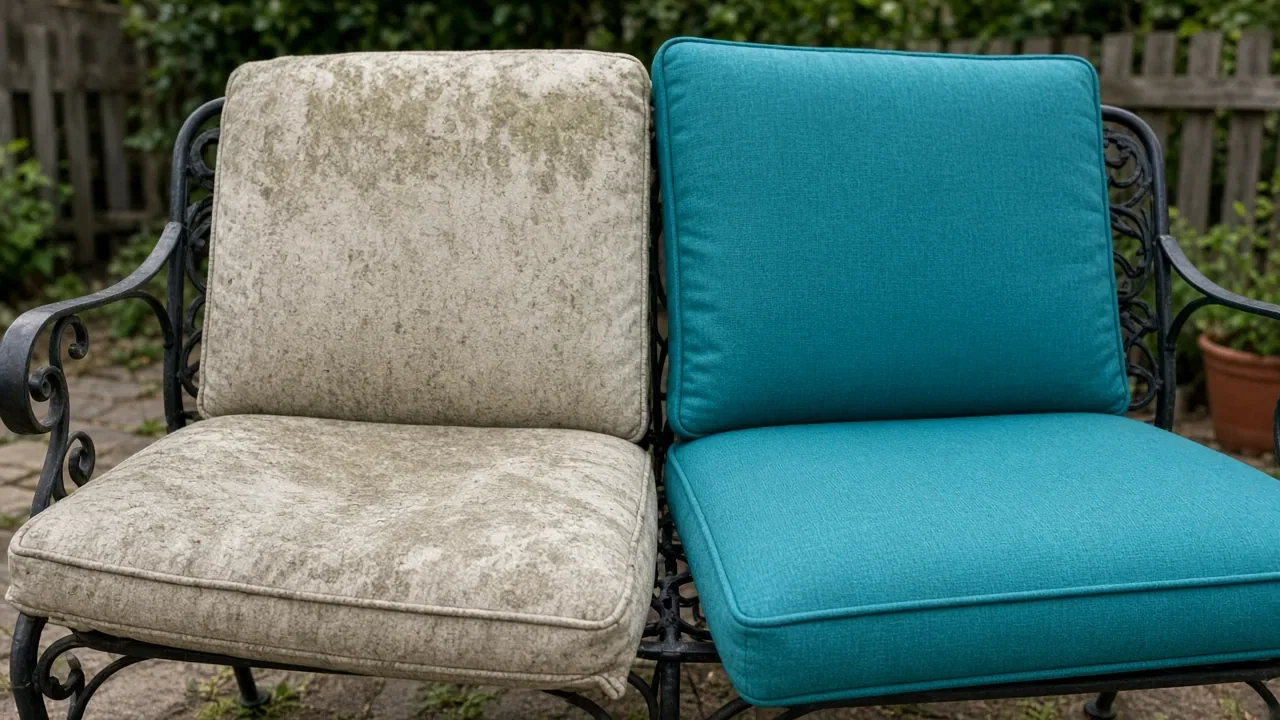
Indoor fabrics, untreated cotton and printed fabrics with surface dyes tend to fade, mildew and break down quickly outdoors. Even if they look great at first, they rarely last a full season in direct sun or damp air.
Choosing Colors That Stay Beautiful Outdoors
Color choice outdoors is about more than style. Even the best fade-resistant fabrics will change a little after years of strong sun, and some colors hide that better than others.
- Mid-tones and heathered colors tend to hide dust, pollen and minor fading better than very light solids.
- Deep, saturated colors look rich but can show fading more noticeably in full sun, especially on cheaper fabrics. Quality solution-dyed fabrics help.
- Stripes and patterns add personality and disguise small stains and water spots.
- Very dark fabrics can get hot in direct afternoon sun, which matters for chaise lounges and benches.
- Coordinate with your setting. Bay Area gardens often feature greens, grays and warm earth tones. Navy, sage, terracotta and sandy neutrals tend to look at home against both foggy mornings and sunny afternoons.
It’s worth looking at fabric samples outdoors, in the actual light your patio gets, before committing. Colors can look very different in bright sun than they do indoors.
Getting the Fit Right
Cushions that are too small slide around and leave gaps; cushions that are too big bunch up and wear unevenly. For a custom fit, measure:
- The width and depth of each seat and back area
- The thickness you want for the finished cushion
- Any corner notches around posts or arms
- The location of ties or straps
For deep seating and built-ins, it’s best to have an upholsterer confirm measurements or make a template, especially for curved or angled benches. A good fit looks better and helps cushions last longer.
The Inside Matters: Choosing Outdoor Foam
Most cushion problems start inside. Standard upholstery foam acts like a sponge. Once it gets wet, it can take days to dry and becomes a breeding ground for mildew.
Quick-Dry (Open-Cell) Foam
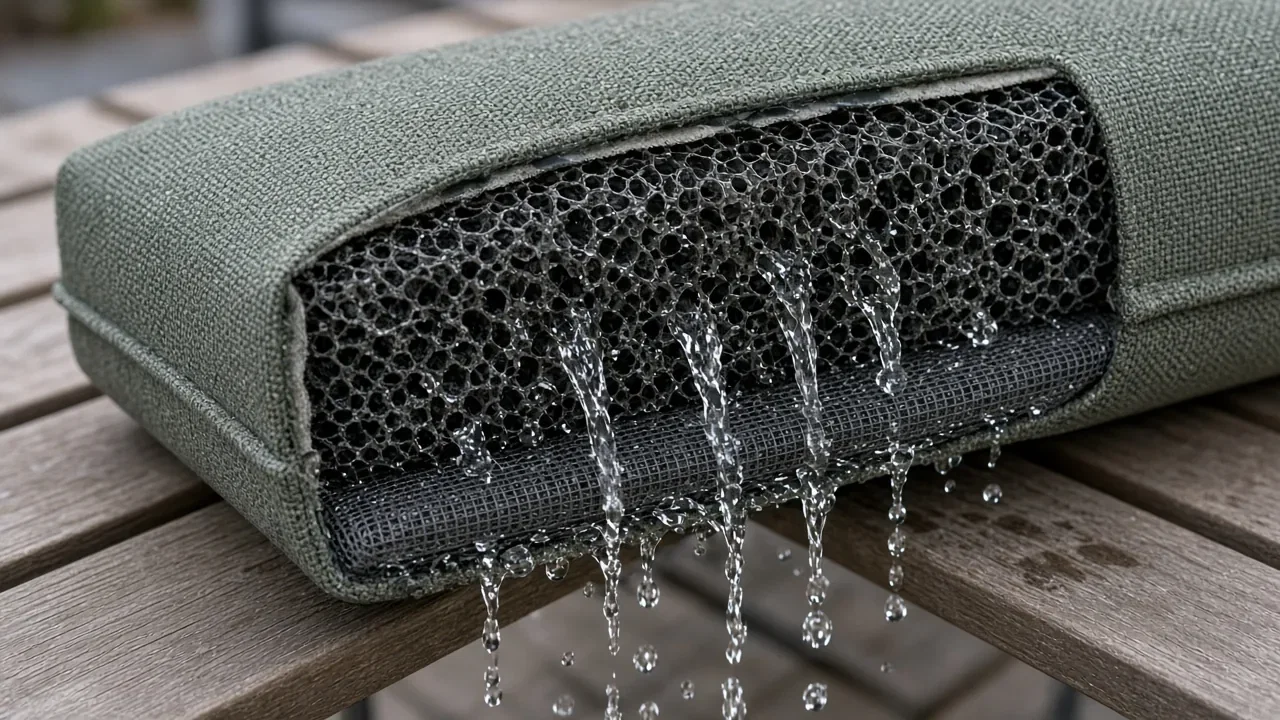
Quick-dry or reticulated foam has a very open structure that lets water drain straight through and air circulate. It’s commonly used for outdoor cushions in wet or humid environments. It feels a little different than standard foam and is usually wrapped in a layer of outdoor batting for a smoother look.
Wrapped Standard Foam
In covered areas that rarely get wet, standard foam wrapped in a moisture-resistant layer may work. For cushions exposed to rain or heavy fog, quick-dry foam is usually the better choice.
Polyester Fiber Fill
Loose-fill cushions, such as back pillows and throw pillows, often use polyester fiber, which resists moisture better than natural fills.
Construction Details That Make Cushions Last
- Outdoor-rated thread. Ordinary thread can rot in UV light long before the fabric fails. UV-resistant thread helps seams stay strong.
- Mesh or breathable bottoms. A mesh panel on the underside lets water drain and air flow through.
- Rust-resistant zippers. Plastic or coated zippers hold up better than standard metal zippers outdoors.
- Ties and fasteners. Ties, straps or hook-and-loop tabs keep cushions in place on windy days.
- Welting. Piping at the seams helps cushions keep a crisp shape and protects edges from wear.
Types of Outdoor Upholstery Projects
Outdoor upholstery goes beyond patio chair cushions. Common projects include:
- Deep seating cushions for patio sofas and sectionals
- Chaise lounge pads by the pool
- Dining chair seat cushions
- Built-in bench and banquette cushions on decks and porches
- Throw and lumbar pillows
- Swing and daybed cushions
- Window seat cushions in sunrooms and enclosed porches
Custom cushions are made to fit your furniture exactly, which matters for built-ins and unusual frames where off-the-shelf cushions never quite fit.
Recovering vs. Replacing Outdoor Cushions
If your cushion foam is still in good shape and hasn’t absorbed moisture or mildew, new covers alone may be enough. But if the foam is flat, crumbling, musty or stained from water, replacing it with quick-dry foam usually gives a much better result. Many people choose to replace both at once so the cushions look and feel new.
Planning Around the Seasons
Timing matters for outdoor projects. Many people think about new cushions when the weather warms up in spring, which is also when outdoor projects tend to stack up. Starting in late winter or early spring gives you time to choose fabric and have cushions ready when patio season begins.
Fall can be a smart time as well. Recovering cushions before the rainy season, with quick-dry foam and better construction, means they’ll be ready to handle wet weather and look fresh the following spring.
Caring for Outdoor Cushions in the Bay Area
A little care goes a long way:
- Stand cushions on edge after rain so water drains quickly, or bring them under cover.
- Store cushions during the rainy season if you won’t use your patio much, in a dry, ventilated spot.
- Brush off debris like leaves, pollen and dust regularly.
- Clean according to the fabric maker’s guidance. Many outdoor fabrics can be cleaned with mild soap and water.
- Let cushions dry completely before storing them or putting covers back on.
- Use furniture covers in exposed spots, choosing breathable ones that won’t trap moisture.
- Rotate and flip cushions to spread out sun exposure and wear.
Outdoor Upholstery for Businesses
Restaurants with patios, hotels with pool decks, office courtyards and rooftop bars all rely on durable outdoor seating. Commercial outdoor cushions see heavy use and need to look good day after day. Leo’s Upholstery specializes in commercial work, including restaurant and bar upholstery, and we apply the same durability standards to residential outdoor projects.
Frequently Asked Questions
What is the best fabric for outdoor cushions?
Solution-dyed acrylic is a popular choice for its fade and mildew resistance. Other outdoor-rated synthetics can also perform well. The best option depends on how much sun and moisture your cushions get.
Why do my outdoor cushions get mildew?
Usually because moisture gets trapped inside the foam. Quick-dry foam, breathable bottoms and good drying habits help prevent it.
Can you make cushions for built-in benches?
Yes. Custom cushions can be made to fit built-in benches, window seats and other unusual shapes.
Can I just replace the covers?
If the foam is still in good condition and dry, new covers may be enough. If the foam is flat or musty, replacing it is usually worth it.
How long do outdoor cushions last?
It depends on the fabric, foam, sun and moisture exposure, and how they’re cared for. Quality outdoor fabrics with quick-dry foam, stored during the wettest months, generally last much longer than budget cushions left out year-round.
Should I bring my cushions in every night?
It isn’t usually necessary with good outdoor materials, but bringing them in or standing them on edge before rain or heavy fog helps them dry faster and stay fresh.
Do you also do boat cushions?
Yes. We also offer marine upholstery for boat seats and cushions.
Get New Outdoor Cushions for Your Patio
Fresh, weather-ready cushions can make your patio, deck or balcony a place you actually want to spend time. Leo’s Upholstery in San Leandro makes custom outdoor cushions for homeowners and businesses across the East Bay and Bay Area. Learn more about our outdoor upholstery services.
Request a quote online with photos and measurements of your furniture, or call us at (510) 895-3632.