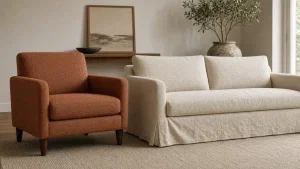
Furniture in a senior living community does more than fill a room. It helps residents feel at home, supports their independence and plays a part in their health and safety every day. A dining chair that is easy to rise from, a lounge chair that supports a tired back, and a recliner that can be cleaned thoroughly after an accident all make a real difference in residents’ quality of life and in the work of the staff who care for them.
That is why upholstery decisions in assisted living, memory care, independent living and skilled nursing settings deserve careful thought. The right materials and construction make furniture easier to clean, more comfortable and safer. The wrong ones can wear out quickly, hold odors and become a constant headache for housekeeping.
This guide is for executive directors, facilities managers, interior designers and housekeeping leaders at Bay Area senior living communities who are planning to refresh or reupholster furniture.
What Makes Senior Living Upholstery Different
Senior living furniture sits somewhere between hospitality and healthcare. Communities want spaces that feel warm and residential rather than clinical, but the furniture still has to stand up to healthcare-level cleaning and heavy daily use.
Residents spend a lot of time seated
Many residents spend significant parts of their day in chairs, whether in their apartments, in common lounges, at meals or in activity rooms. Comfort and support matter more here than in almost any other commercial setting.
Incontinence and spills are part of daily life
Moisture from incontinence, spilled drinks and meals is common. Upholstery that absorbs fluids can hold odors and become difficult or impossible to clean thoroughly. Moisture management is one of the most important factors in material selection.
Infection control matters
Older adults can be more vulnerable to infections, so communities follow cleaning and disinfection routines for shared spaces. Public health guidance, including CDC guidance for healthcare and long-term care settings, generally emphasizes regular cleaning of frequently touched surfaces with appropriate products. Upholstery needs to tolerate those products without breaking down.
Mobility and fall prevention
Seat height, seat depth, firmness and sturdy arms all affect how easily a resident can sit down and stand up. Furniture that is too low, too soft or too deep can make standing harder and may increase the risk of falls.
Key Material Considerations
When choosing upholstery for senior living furniture, these are the main factors to weigh.
Moisture barriers
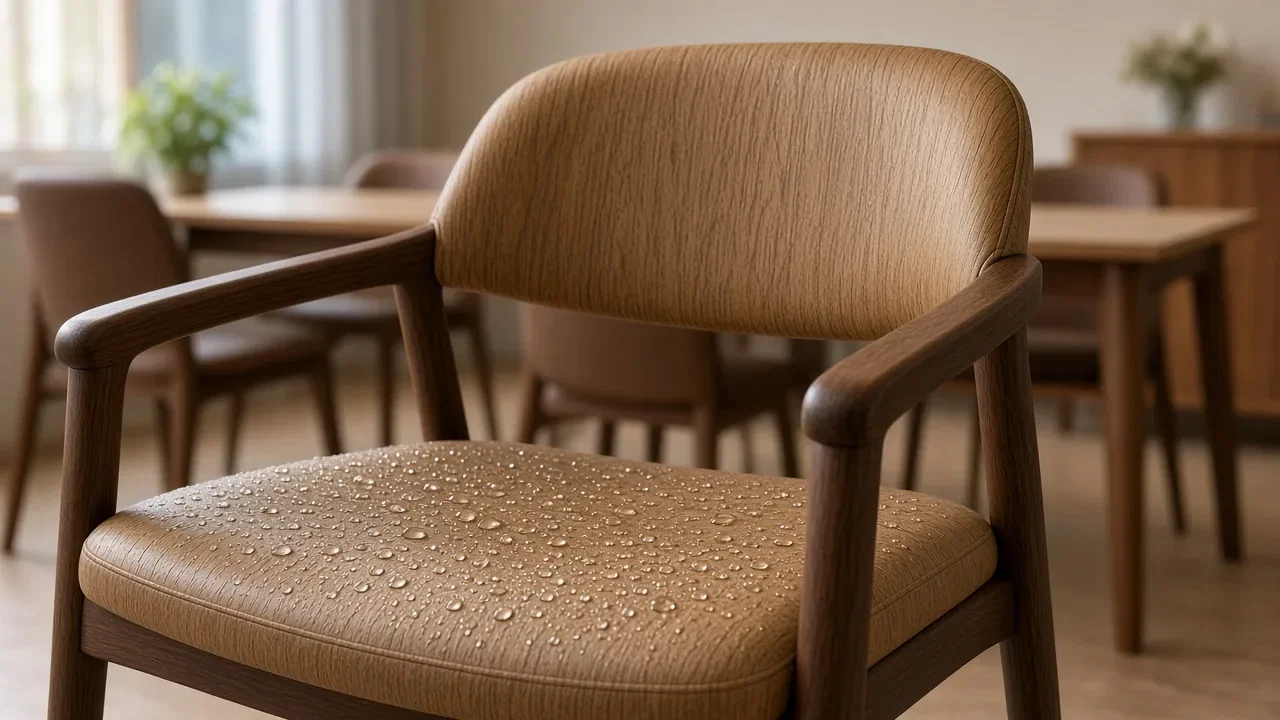
Many healthcare and senior living fabrics are designed with a moisture barrier, either built into the material or added as a separate layer between the fabric and the cushion. A barrier helps keep fluids from soaking into the foam, where they can cause odors and contamination that cleaning cannot reach. For dining chairs and lounge seating, ask your upholsterer about moisture barrier options.
Cleanability and disinfectant compatibility
Look for materials that the manufacturer indicates can be cleaned with the products your community uses. Healthcare-grade vinyls and polyurethanes, and many performance fabrics, are designed for frequent cleaning. Share your housekeeping team’s product list with your upholsterer so the material can be matched to your routine.
Durability
Commercial materials are often rated for abrasion resistance. Lounge and dining seating in senior communities sees heavy use, so materials rated for heavy commercial use are a good choice.
Comfort and feel
Residents spend long hours seated, so the material should feel pleasant against skin and not get uncomfortably hot or sticky. Many communities choose soft, fabric-like healthcare textiles or supple vinyls that look and feel residential while still being cleanable.
Flammability
Upholstered furniture in California is subject to state flammability standards, and licensed care facilities may have additional fire safety requirements. Ask your upholsterer for documentation on the materials you choose, and check with your facility’s compliance team about any specific requirements.
Designing for Safety and Independence
The right upholstery work can support residents’ independence, not just their comfort.
Firm, supportive seats
Seats that are too soft let residents sink in, which makes standing more difficult. When reupholstering, high-density foam with a supportive feel is generally preferred for senior seating. An upholsterer can adjust foam firmness and thickness when replacing cushions.
Seat height and depth
Reupholstery is a chance to look at seat height. Replacing flattened foam can restore lost height, and in some cases foam thickness can be adjusted. Seat depth matters too: a seat that is too deep makes it hard for shorter residents to sit with their back supported and their feet on the floor.
Sturdy, easy-to-grip arms
Arms are used for leverage when sitting and standing. Padded arm caps should be firm and securely attached. Worn arm upholstery is often the first thing to fail and is worth checking during inspections.
Color contrast
Many senior living designers use color contrast to help residents with low vision see the edges of furniture. A seat cushion in a color that contrasts with the floor and frame can make it easier to judge where to sit. In memory care, designers often avoid very busy patterns that can be confusing or visually overwhelming.
Clean-out gaps
Some senior living chairs are designed with a gap between the seat and back so crumbs and spills can be cleaned out easily. When reupholstering, keep that gap clear and avoid adding material that closes it.
Furniture Types Commonly Reupholstered
Senior living communities typically have a wide range of upholstered furniture that can be recovered:
- Dining chairs and banquettes
- Lounge chairs, sofas and loveseats in common areas
- Lift chairs and power recliners
- Wingback and high-back chairs
- Activity room and library seating
- Resident apartment furniture
- Lobby and reception seating
- Chapel and theater seating
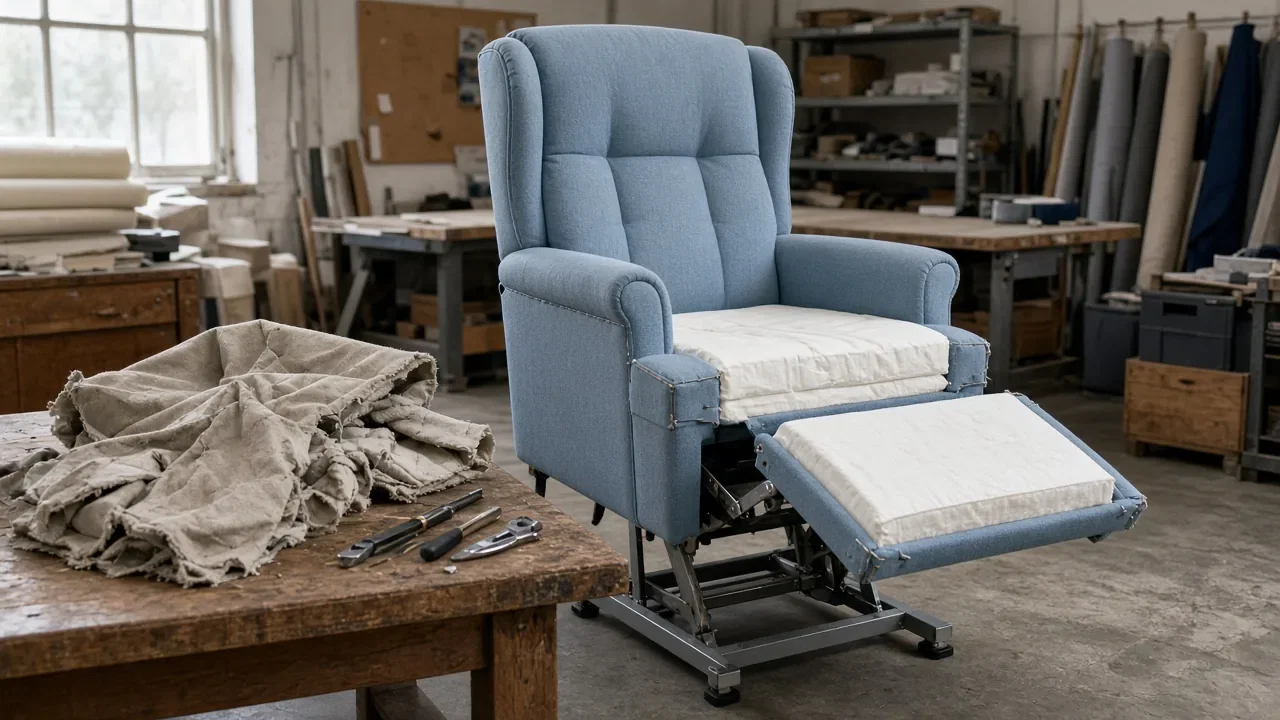
Lift chairs and recliners often have mechanical parts in good working order with worn upholstery. Recovering them can extend their service life considerably.
Creating a Residential Feel Without Sacrificing Function
One of the biggest challenges in senior living design is avoiding an institutional look. Residents and families choosing a community want it to feel like home, not like a hospital. Upholstery plays a big part in that impression.
Fortunately, healthcare textiles have come a long way. Many cleanable, moisture-resistant materials now come in woven-look textures, soft hand finishes, and warm patterns that read as residential. Wood-look and leather-look vinyls can add warmth to dining rooms. Layering colors, using accent chairs in a complementary pattern, and choosing finishes that coordinate with carpets, wall colors and window treatments all help a space feel inviting.
It also helps to think about each space separately. A dining room might prioritize moisture resistance and easy cleaning above all else. A library or living room might use softer, more decorative materials on pieces that see fewer spills. A memory care lounge might focus on calm, solid colors with clear contrast. Matching the material to the room’s real use gets the best balance of beauty and practicality.
Caring for Reupholstered Furniture
New upholstery lasts longest with consistent care:
- Clean spills and accidents promptly using products the material manufacturer approves.
- Follow manufacturer guidance on dilution and rinsing, since residue from strong cleaners can dry out some vinyls.
- Inspect arm caps, seat fronts and seams during routine housekeeping.
- Rotate dining chairs occasionally so wear is spread evenly.
- Report small tears early so they can be addressed before fluids reach the foam.
Signs It Is Time to Reupholster
Housekeeping and maintenance staff are usually the first to see problems. Watch for:
- Persistent odors that remain after cleaning
- Stains that will not come out
- Cracking or peeling vinyl
- Torn seams or worn arm caps
- Cushions that have flattened, making seats lower and harder to rise from
- Fabric that pills, frays or has worn thin
- Exposed foam anywhere on the piece
Odors in particular can signal that fluids have soaked into the foam. In that case, replacing the foam along with the cover, and adding a moisture barrier, is usually the right fix.
Planning a Reupholstery Program Without Disrupting Residents
Residents value routine and familiarity. A well-planned program minimizes disruption.
- Phase the work. Recover dining chairs a few tables at a time, or one lounge at a time, so spaces stay usable.
- Communicate with residents and families. Let them know when furniture will be away and when it will return.
- Handle personal furniture with care. Residents’ own chairs may have deep sentimental value. Talk with residents and families before recommending changes.
- Use loaner pieces where possible. Having a few spare chairs keeps dining rooms fully seated during a project.
- Standardize materials. A consistent palette across the community makes it easier to recover pieces over time and keep everything matching.
Reupholster or Replace?
For many communities, reupholstery is the better value when frames are solid. Quality commercial furniture is built to last, and recovering it with healthcare-appropriate materials can give it a long second life. Replacement makes more sense when frames are loose or broken beyond repair, mechanisms in lift chairs are failing, or the furniture design itself makes it hard for residents to sit and stand safely.
Frequently Asked Questions
What is the best upholstery for assisted living dining chairs?
Many communities choose a healthcare-grade vinyl or a cleanable performance fabric with a moisture barrier. Your upholsterer can recommend options based on your cleaning products and design goals.
Can you reupholster lift chairs and power recliners?
Often, yes. The upholstery can usually be replaced while the mechanism stays in place, as long as the mechanism is in good working order.
How do we get rid of odors in upholstered chairs?
If odors persist after cleaning, fluids may have soaked into the foam. Replacing the foam and cover, and adding a moisture barrier, typically solves the problem.
Can you make chairs easier for residents to get out of?
Firmer, high-density foam and restoring lost seat height can help. Talk with your upholsterer and care team about each resident’s needs.
Request a Quote for Your Senior Living Community
Leo’s Upholstery works with assisted living, memory care and senior living communities throughout the East Bay and greater Bay Area. From our shop at 1835 E 14th St in San Leandro, we recover dining chairs, lounge seating, lift chairs and recliners with cleanable, comfortable materials, and we plan projects around residents’ routines. Explore our medical upholstery and commercial upholstery services, then request a quote or call (510) 895-3632. We are open Monday through Friday from 8 AM to 4:30 PM and Saturday from 7 AM to noon.