Few pieces of furniture change a bedroom as much as a headboard. It’s the first thing you see when you walk in, it frames the bed, and it makes the room feel finished. An upholstered headboard adds softness and comfort too. If you like to read or watch TV in bed, a padded headboard is far nicer to lean against than wood or metal.
Ready-made headboards come in standard sizes and a limited range of fabrics. A custom upholstered headboard lets you choose the exact shape, height, fabric and details so it fits your room and your style. Here’s a guide to the options and what to expect when you have one made.
Why Choose a Custom Headboard?
Custom headboards make sense for many reasons:
- Exact sizing. Get the height and width you want, whether you’re working with a low window, a tall ceiling or an unusual bed size.
- Fabric freedom. Choose from a huge range of upholstery fabrics, or supply your own to match curtains, pillows or a favorite pattern.
- Comfort. Pick foam thickness and firmness for comfortable lounging.
- Design details. Add tufting, channels, welting, nailheads or a unique silhouette.
- Quality construction. A well-built headboard on a solid base holds up for years and can often be recovered later.
Popular Headboard Styles
Plain Panel
A simple rectangle with smooth, padded upholstery. Clean and versatile, it works in modern, transitional and traditional rooms. Welting around the edge can add definition.
Button Tufted
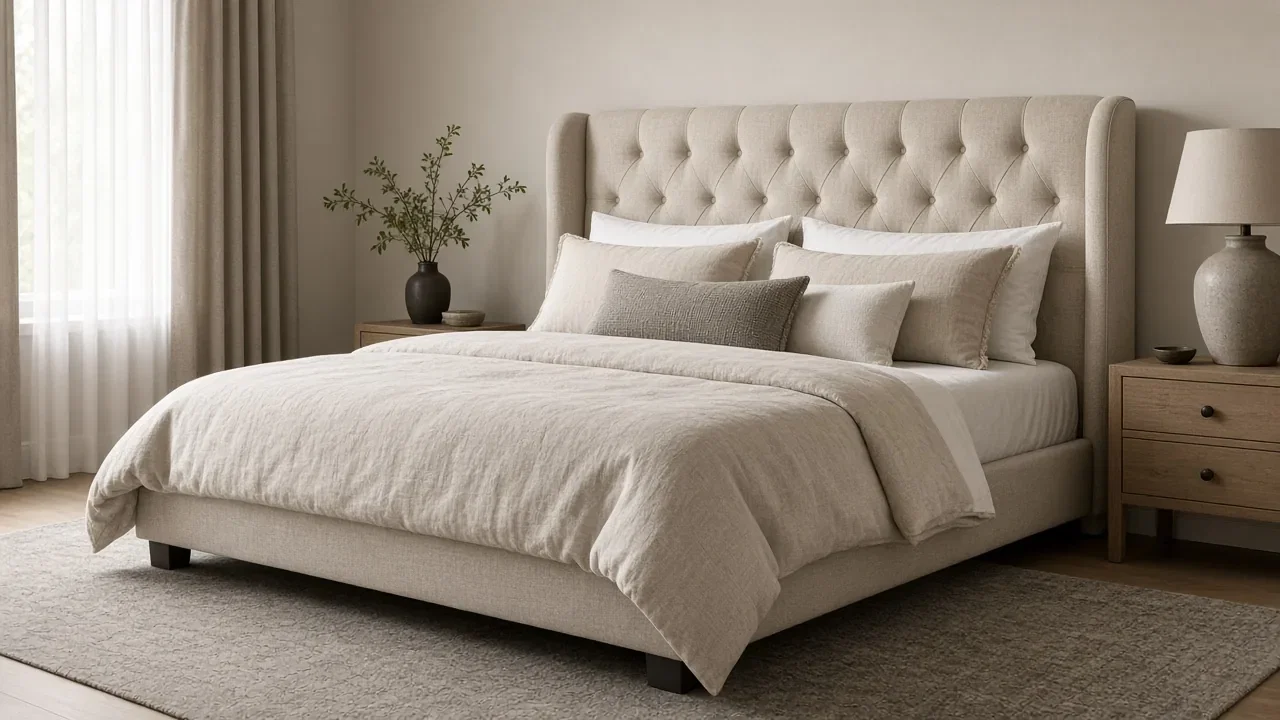
Buttons pulled into the padding create a classic diamond or square pattern. Deep diamond tufting feels traditional and luxurious, while shallow tufting or a simple grid of buttons looks more relaxed.
Channel Tufted
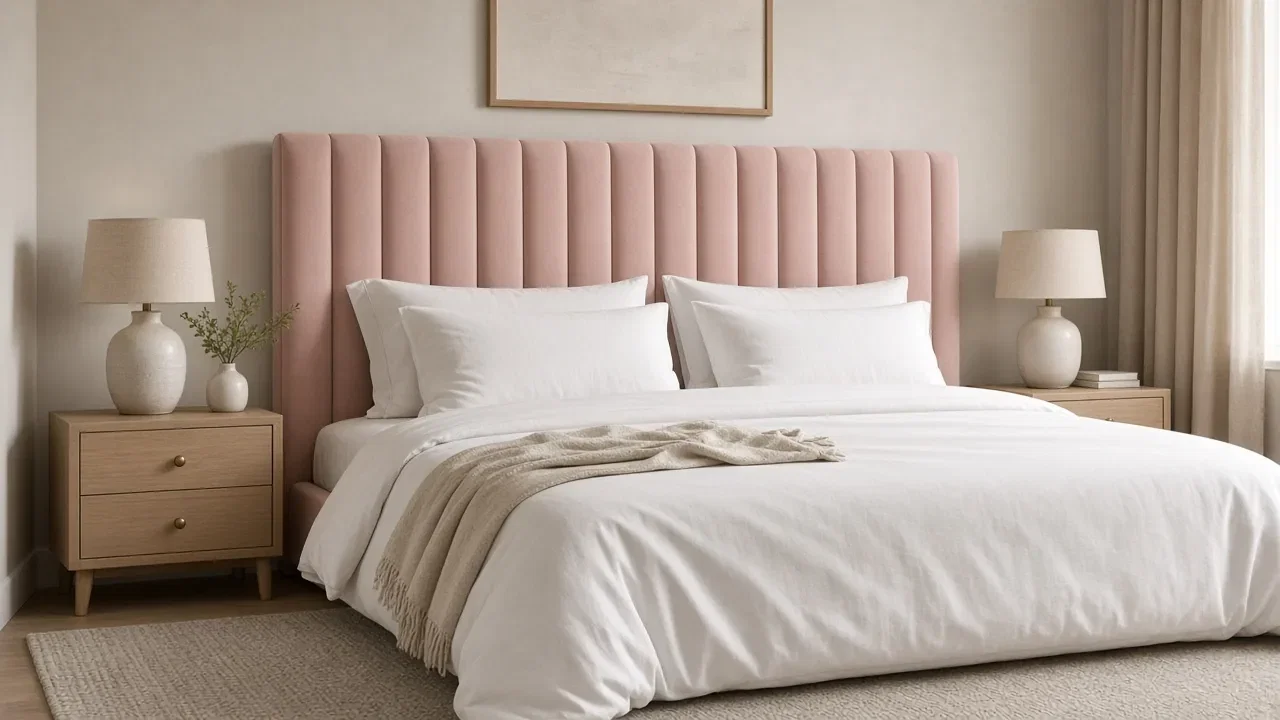
Vertical (or sometimes horizontal) channels run across the headboard. Channel tufting has a retro, glamorous feel and works especially well in velvet. It also suits tall headboards that stretch toward the ceiling.
Wingback
Side panels wrap forward around the pillows, creating a cozy, enclosed feel. Wingbacks make a strong statement and work well in larger rooms.
Shaped and Curved
Arched tops, camelbacks, scalloped edges and other curved silhouettes add personality. Shaped headboards range from classic to playful depending on the fabric.
Wall-Mounted Panels
Instead of attaching to the bed frame, some headboards mount directly to the wall. Wide, wall-mounted panels can stretch beyond the bed to frame nightstands, creating a built-in look.
Choosing the Right Fabric
Durability and Feel
Headboards don’t get the same friction as a sofa seat, so you can often use fabrics that might be too delicate elsewhere. Still, if you lean against your headboard often, choose something comfortable and reasonably durable.
Popular Choices
- Velvet, for a rich, soft, luxurious look. Performance velvets are easier to clean.
- Linen and linen blends, for a relaxed, natural feel. Blends wrinkle less than pure linen.
- Boucle and textured weaves, for warmth and visual interest.
- Performance fabrics, for homes with kids and pets or anyone who likes easy cleanup.
- Leather or faux leather, for a tailored, modern look that wipes clean.
- Patterned fabrics, for a statement. Large patterns may need careful centering.
Hair and Skin Oils
Over time, the area where your head rests can show wear and darkening from hair products and skin oils. Mid-tone colors and cleanable fabrics help. If you use hair oils or products at night, consider a fabric that tolerates spot cleaning.
Color and Room Harmony
Think about wall color, bedding, rugs and window treatments. A headboard can either blend in softly or act as the room’s main accent. Contrasting welting can tie it to other colors in the room.
Getting the Size Right
Width
Most headboards are made as wide as the bed frame or slightly wider. Common references for mattress widths are a good starting point, but always measure your actual bed frame, since frames vary.
Height
Height is where custom headboards really shine. Consider:
- How tall you want it to appear above the mattress
- The height of your mattress and box spring or platform
- Windows, outlets, light switches and wall sconces
- Ceiling height and the scale of the room
A taller headboard can make a room feel dramatic and cozy, while a lower headboard keeps things airy and works under windows.
Thickness and Padding
Thicker foam feels plusher and looks more substantial. Thinner padding keeps a slim, tailored profile. Your upholsterer can help you choose based on comfort and style.
Details That Make a Headboard Feel Custom
Small choices often make the biggest difference in how a finished headboard looks. A few details worth considering:
- Welting or piping. A self-welt in the same fabric gives a crisp edge, while a contrasting welt draws attention to the silhouette.
- Nailhead trim. Rows of decorative nails around the border can feel traditional, rustic or glamorous depending on the finish and spacing.
- Button finish. Buttons can be covered in the same fabric for a seamless look or in a contrasting fabric for a subtle accent.
- Tufting depth. Deep tufting creates dramatic shadows and a plush feel. Shallow tufting looks softer and more casual.
- Channel width. Narrow channels feel refined and vertical; wider channels read as bold and modern.
- Boxed or knife edges. A boxed edge with a visible side panel looks substantial, while a knife edge creates a thinner, softer profile.
- Matching pieces. A bench at the foot of the bed, a pair of pillow shams or an upholstered bed rail in the same fabric can tie the whole room together.
Bringing inspiration photos is the easiest way to communicate the look you want. Even screenshots of rooms you like can help your upholsterer suggest the right combination.
Common Mistakes to Avoid
A little planning prevents the most common headboard regrets:
- Going too short. If the headboard disappears behind your pillows, it won’t have much impact. Consider how much you want to see above the pillows.
- Ignoring outlets and switches. Wall-mounted headboards can cover outlets you need for lamps and chargers.
- Forgetting the nightstands. Wide headboards look great, but make sure they leave room for nightstands and lamps.
- Choosing hard-to-clean fabric for a lean-against headboard. If you read in bed every night, durability and cleanability matter more.
- Skipping mounting plans. Decide early whether the headboard will attach to the bed, the wall or stand on its own legs.
How Headboards Are Mounted
There are a few common ways to install a headboard:
- Bed frame mounting using legs or brackets that bolt to the frame
- Wall mounting with hardware such as French cleats, which hold the headboard securely and keep it from bumping the wall
- Freestanding headboards with legs that sit on the floor behind the bed
The right choice depends on your bed frame and whether you’d rather avoid drilling into walls. Mention your setup when you request a quote.
What to Expect From the Process
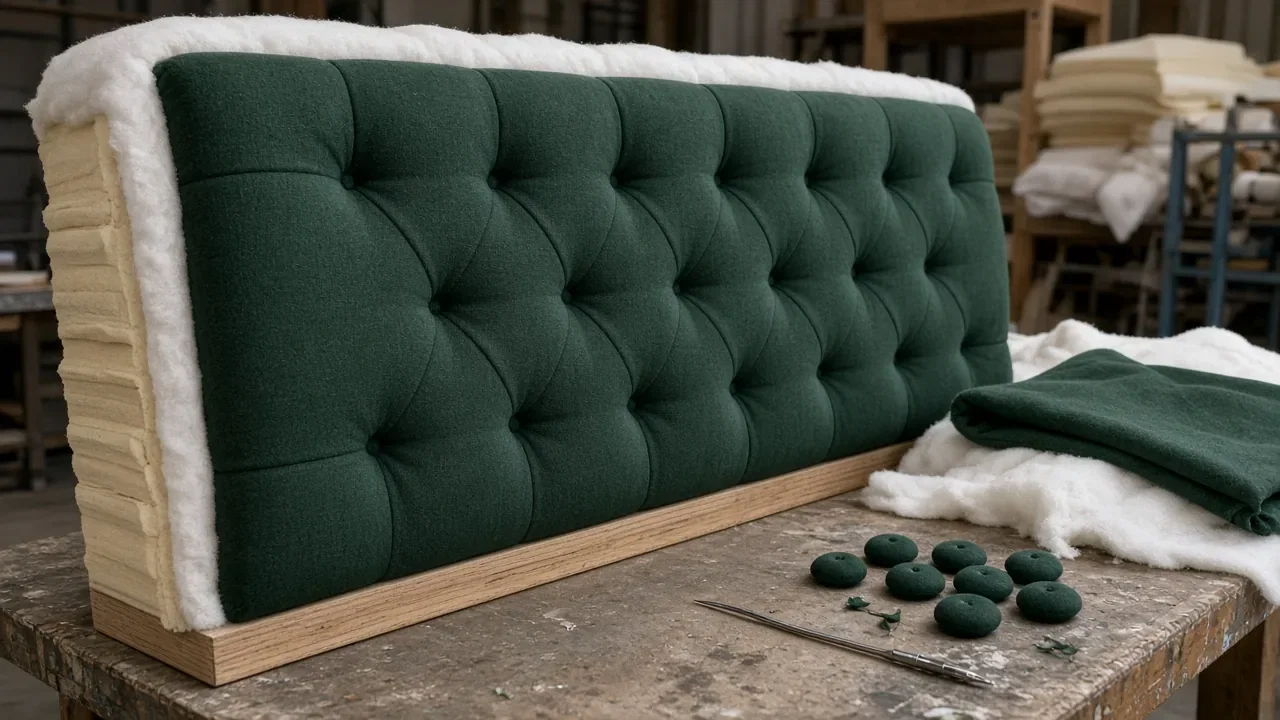
1. Consultation. Share photos of your room, bed size, desired height and any inspiration images. 2. Design decisions. Choose a shape, tufting style, details and fabric. 3. Measurements. Confirm the final dimensions, including mounting needs. 4. Fabrication. A base is cut and assembled, then padded with foam and batting. Fabric is applied, and tufting, channels, welting or nailheads are added. 5. Finishing and delivery. The back is finished, mounting hardware is prepared, and the headboard is ready to install.
Headboards for Guest Rooms, Kids’ Rooms and Small Spaces
A custom headboard isn’t only for the primary bedroom. Guest rooms benefit from a headboard that makes the space feel welcoming and finished without much fuss. In kids’ and teen rooms, a padded headboard in a durable, cleanable fabric can grow with them, and it’s easy to recover in a new color later.
In smaller bedrooms, a slim, wall-mounted panel saves space while still adding softness. A wide, low panel can make a narrow room feel wider, while a tall, narrow design draws the eye up and makes a low ceiling feel higher. Custom sizing lets you solve these layout challenges instead of settling for whatever size is available off the shelf.
Recovering an Existing Headboard
Already have an upholstered headboard you like the shape of? Recovering it can be a great option. If the base is sturdy, it can often be stripped, repadded and covered in new fabric. This is also a nice way to refresh a hotel-style bed or a headboard that came with a bedroom set.
Beyond the Bedroom
Upholstered headboards aren’t just for homes. Hotels, short-term rentals, senior living communities and other hospitality businesses use them to make rooms feel welcoming. Leo’s Upholstery specializes in commercial work, including hotel and hospitality upholstery, and we bring that durability-minded approach to residential projects too.
Caring for an Upholstered Headboard
- Vacuum with a soft brush attachment regularly to remove dust.
- Spot clean according to the fabric’s cleaning code.
- Use pillows or a pillow shield if you lean against it often.
- Keep it out of strong direct sun to reduce fading.
- Address small stains quickly before they set.
Frequently Asked Questions
Can a custom headboard be made for any bed size?
Yes. Custom headboards can be made to fit standard and non-standard beds. Just measure your bed frame and let us know any mounting preferences.
Can I use my own fabric?
Often, yes, as long as there’s enough of it and it’s suitable for upholstery. Patterned fabrics may need extra yardage for centering.
Should I mount it to the wall or the bed?
Both work well. Wall mounting gives a clean look and avoids rattling against the wall, while bed mounting is simpler if you’d rather not drill.
Can you match my headboard to other furniture?
We can use the same fabric as other pieces you’re having upholstered, like a bench at the foot of the bed or accent chairs.
Do you also make headboards for hotels and rentals?
Yes. We work with hospitality businesses and other commercial clients as well as homeowners.
Design Your Custom Headboard
A custom upholstered headboard can make your bedroom feel complete, comfortable and uniquely yours. Leo’s Upholstery in San Leandro designs and builds headboards for homeowners across the East Bay and Bay Area. Learn more about our headboard and bed upholstery services.
Request a quote online with your bed size and inspiration photos, or call us at (510) 895-3632.