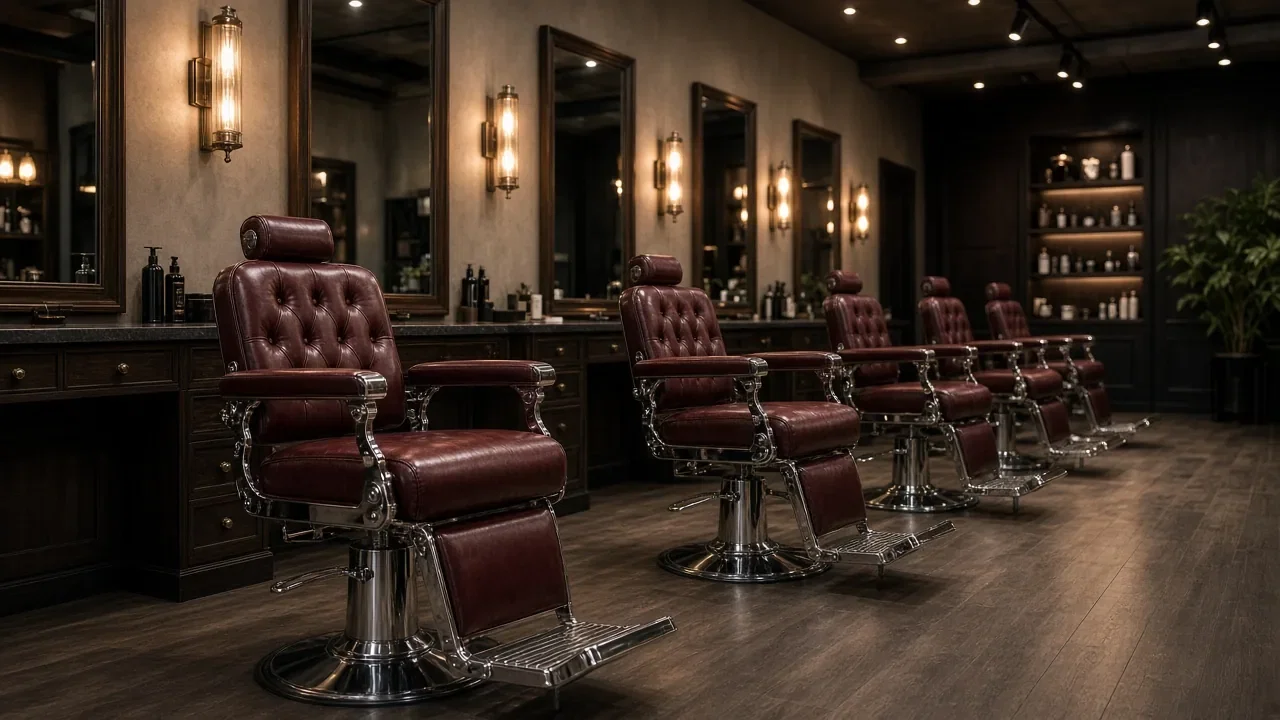
In a salon or barbershop, the chair is the center of everything. Clients sit in it for the whole service, they see it in the mirror the entire time, and it is often the first thing they notice when they walk in. A good chair makes a shop feel established and cared for. A cracked, taped or sagging one quietly works against all the effort you put into your craft.
Styling and barber chairs are built to last. Many have heavy hydraulic bases, steel frames and reclining mechanisms designed for decades of use. What wears out is the upholstery: the seat, back, arms, headrest and footrest pads. That is why reupholstery is one of the most practical ways for a salon or barbershop to refresh its look, often without the cost and lead time of buying new chairs.
This guide covers what salon owners, barbers and booth renters in the Bay Area should know about reupholstering styling chairs, barber chairs, shampoo chairs and waiting area seating.
Why Salon and Barber Chairs Wear Out
Salon furniture lives in a tough environment. Understanding what damages it helps you choose better materials and get more life out of your next set of covers.
Chemicals and products
Hair color, bleach, relaxers, perm solutions, hair spray, alcohol-based products and disinfectants all end up on chairs sooner or later. Many of these can stain, dry out or weaken vinyl. Repeated exposure is one of the main reasons salon chairs crack and peel.
Heat
Blow dryers, flat irons and hood dryers add heat around the chair all day. Heat can speed up the breakdown of some upholstery materials, especially on headrests and the upper back.
Constant use and movement
A busy chair can host many clients a day. People sit down hard, twist, lean on the arms and push off the footrest. Seams, arm caps and seat fronts take most of that stress.
Hair and abrasion
Cut hair, especially short clippings, works its way into seams and textures. Combined with clothing friction, this slowly abrades the surface of the material.
Signs It Is Time to Reupholster
You may get so used to your chairs that wear stops registering. Take a fresh look and check for:
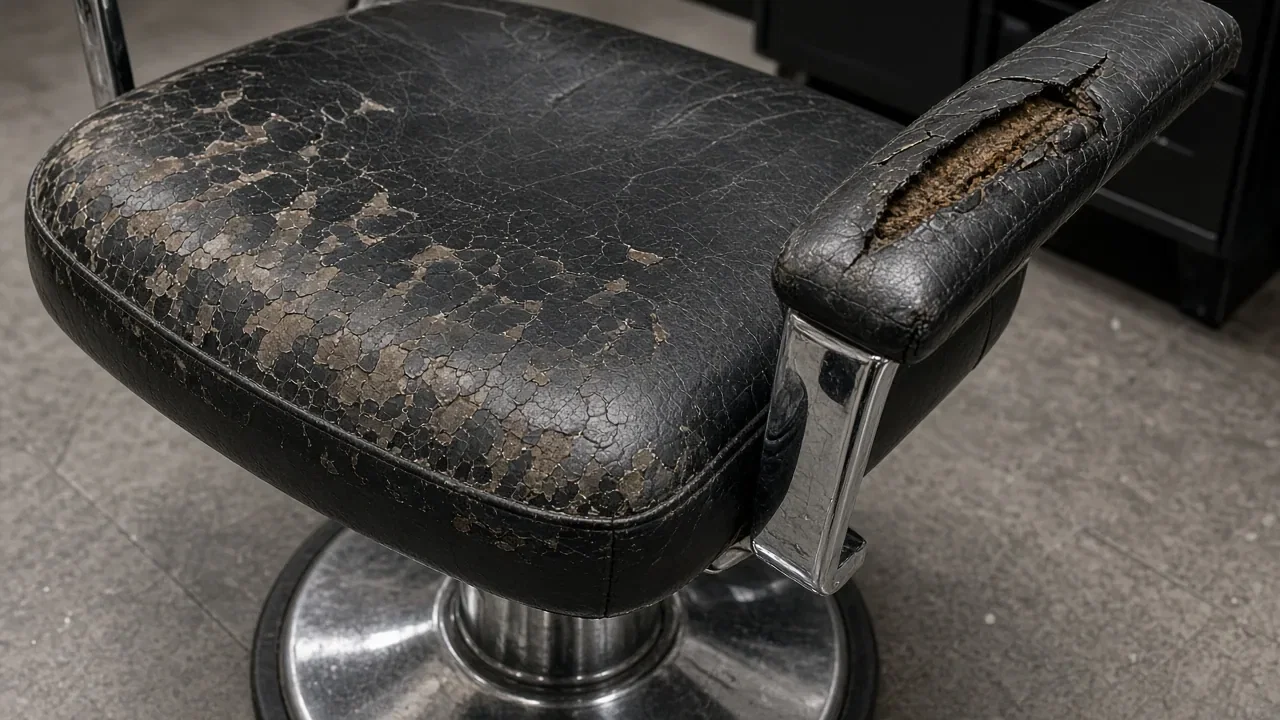
- Cracking or a crazed pattern on the seat or back
- Peeling or flaking vinyl, especially on arms and headrests
- Split seams or torn piping
- Tape or patches covering damage
- Flattened seat cushions that leave clients sitting low or uneven
- Permanent color stains on light chairs
- Arm caps worn down to the backing fabric
- Footrest pads that are cracked or missing
If clients have ever snagged clothing on a torn edge, or if you rotate chairs so the worst one is out of sight, it is probably time.
What Can Be Reupholstered
Most upholstered salon and barbershop furniture can be recovered. Common projects include:
- Hydraulic styling chairs
- Classic and modern barber chairs, including reclining models
- Shampoo chairs and backwash units
- Dryer chairs
- Esthetician and makeup chairs
- Nail station chairs and client stools
- Waiting area benches, sofas and chairs
- Rolling stylist stools
Classic barber chairs are especially good candidates. Many vintage chairs have beautiful cast frames and chrome that are worth preserving, and new upholstery can make them the centerpiece of a shop.
Choosing the Right Materials
Salon and barber chairs need materials that can handle chemicals, heat and heavy use while still looking sharp.
Commercial-grade vinyl
Most salon chairs are covered in commercial or contract-grade vinyl, and for good reason. Quality vinyls are designed to resist moisture, wipe clean easily and hold up to heavy use. When comparing samples, ask about:
- Chemical and stain resistance: Some vinyls are better at resisting hair dye and other salon products. Ask whether the manufacturer offers guidance on stain resistance.
- Durability ratings: Many commercial vinyls list abrasion ratings from standardized tests. For heavily used chairs, higher ratings are generally better.
- Cleanability: Confirm which disinfectants the material can tolerate. Salons often have state board sanitation requirements, so the chair surface should handle your regular cleaning routine.
- Flexibility: A supple vinyl is more comfortable and tends to resist cracking at folds and seams.
Leather and leather-look options
Real leather is beautiful and can be a great choice for a high-end barbershop, but it needs more care and may react to some chemicals and cleaners. Many shops choose a quality leather-look vinyl that gives the same classic appearance with easier maintenance.
Colors that work
Black remains popular because it hides stains and looks clean. Deep reds, oxblood, cognac, navy and forest green are common in barbershops that want a classic feel. Lighter colors like white or cream can look striking but show color stains more easily, so they need more careful cleaning. Ask to see samples in your shop’s lighting before deciding.
Stitching and details
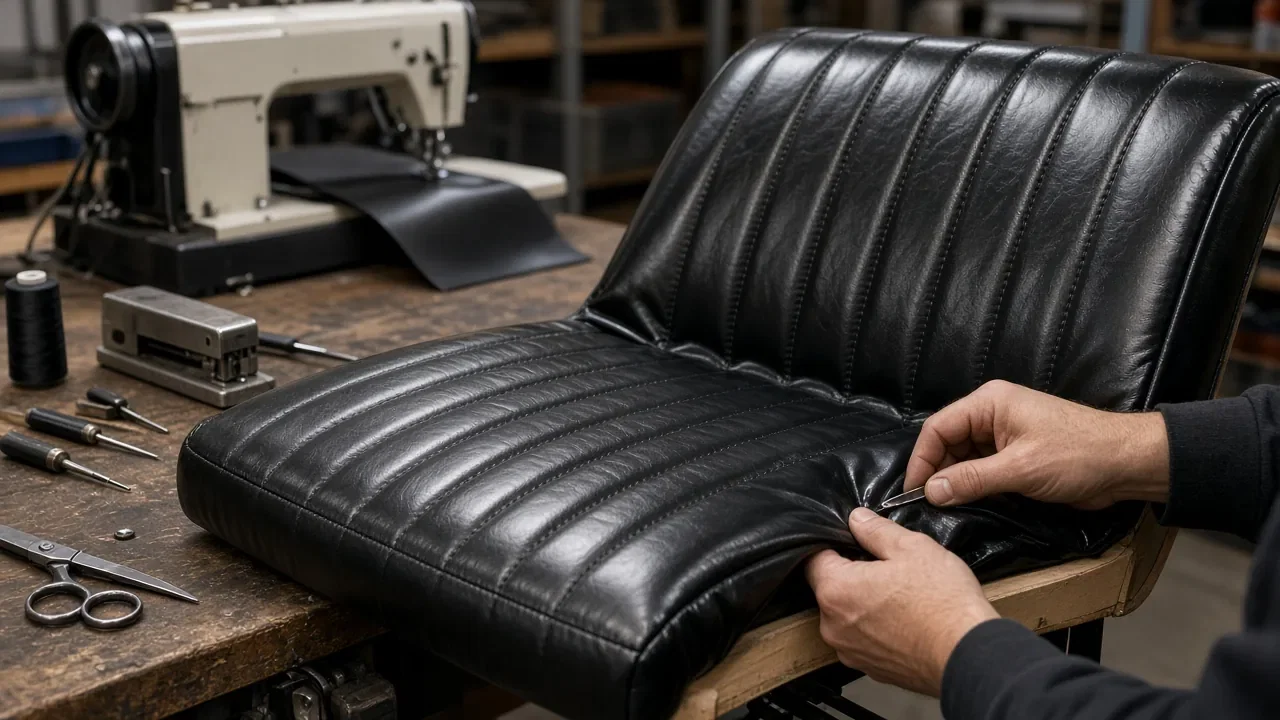
Details are where a reupholstered chair really stands out. Channel stitching, tufting, contrast thread, piping and embroidered or quilted backs can all give your chairs a custom look that matches your brand. A good upholsterer can often match the original pattern or create something new.
Why the Chair Matters to Your Business
It is easy to think of chairs as just equipment, but in a salon or barbershop they do a lot of work for your brand. Clients spend their entire appointment in the chair, often looking at themselves and their surroundings in the mirror. If the chair is comfortable and clean, they relax and enjoy the service. If it is cracked or lumpy, it can distract them and make the whole experience feel less polished.
Chairs also show up in photos. Many clients post their new cut or color online, and stylists share their work on social media. A sharp-looking chair in the background makes those photos look more professional, while a torn seat or taped armrest is hard to hide. For booth renters and independent stylists building a following, that matters.
Finally, well-kept chairs help with sanitation. Most state cosmetology and barbering boards expect tools and work surfaces to be cleaned and disinfected between clients. A smooth, intact cover is much easier to clean thoroughly than one with cracks and open seams where hair and product can collect.
Questions to Ask Your Upholsterer
Before committing, it helps to ask a few direct questions:
- Have you reupholstered salon or barber chairs before, and can you work with my chair brand?
- Which vinyls do you recommend for resistance to hair color and disinfectants?
- Will you replace the foam, and can we keep the seat height and feel my clients are used to?
- Can you match my existing chairs if I only recover some of them now?
- What details, like stitching or piping, are available for a custom look?
The Reupholstery Process
Knowing what to expect makes it easier to plan.
1. Assessment and quote. The upholsterer looks at your chairs, discusses materials and gives you a quote. Photos and model information help. 2. Material selection. You choose vinyl or leather, color, stitching style and any details. 3. Removal. In many chairs, the seat, back, arms and headrest come off the base, so only the upholstered parts need to go to the shop. 4. Rebuild. Old covers come off, worn foam is replaced, and new material is cut, sewn and fitted. 5. Reinstallation. The finished pieces are reattached and the chair is ready to use.
Because the hydraulic base usually stays put, the process is often less disruptive than people expect.
Keeping Your Shop Open During the Work
No salon wants empty stations. A few planning tips help:
- Work in phases. Recover a few chairs at a time so most stations stay in service.
- Use quiet days. Many shops schedule pickups on their slowest day or a day they are closed.
- Keep a spare. If you have an extra chair in storage, it can fill in while one is out.
- Do everything at once only when you can close. If you are planning a remodel or short closure, that can be a great time to recover every chair together.
Ask about turnaround and pickup options when you request your quote.
Reupholster or Replace?
Here is a simple way to think about it:
- Reupholster when the base, hydraulics and recline mechanism work well and the problem is the covers or foam. This is the most common case.
- Replace when the pump leaks, the base is damaged, the frame is cracked, or parts are no longer available.
- Restore when you have a vintage barber chair with a great frame. Recovering it can preserve the character that new chairs often lack.
For many shops, recovering a full set of quality chairs costs less than buying new and lets you choose exactly the look you want.
Making New Upholstery Last
Once your chairs are recovered, a few habits go a long way:
- Use capes and towels consistently to keep products off the vinyl.
- Wipe up color and chemical spills promptly.
- Follow the material manufacturer’s cleaning recommendations and avoid harsher products than you need.
- Brush hair out of seams regularly.
- Check arm caps and headrests often, since they tend to wear first.
Frequently Asked Questions
Can you reupholster a vintage barber chair?
Often, yes. Many classic barber chairs have sturdy frames and can be recovered with new padding and vinyl or leather, keeping their original character.
Do I have to bring in the whole chair?
Not always. On many models the seat, back, arms and headrest can be removed from the hydraulic base, so only those parts need to go to the shop.
Can you match my shop’s brand colors?
In most cases, yes. Commercial vinyl comes in a wide range of colors, and details like contrast stitching or piping can help tie chairs to your brand.
How long will my chairs be out of service?
It depends on the number of chairs and the materials you choose. Many shops recover chairs in phases to keep stations open. Ask for a timeline with your quote.
Get a Quote for Your Salon or Barbershop Chairs
Leo’s Upholstery recovers styling chairs, barber chairs, shampoo chairs and waiting room seating for salons and barbershops across the East Bay and Bay Area. Visit our shop at 1835 E 14th St in San Leandro, learn more about our chair upholstery and commercial upholstery services, or request a quote online. You can also call us at (510) 895-3632, Monday through Friday from 8 AM to 4:30 PM and Saturday from 7 AM to noon.