
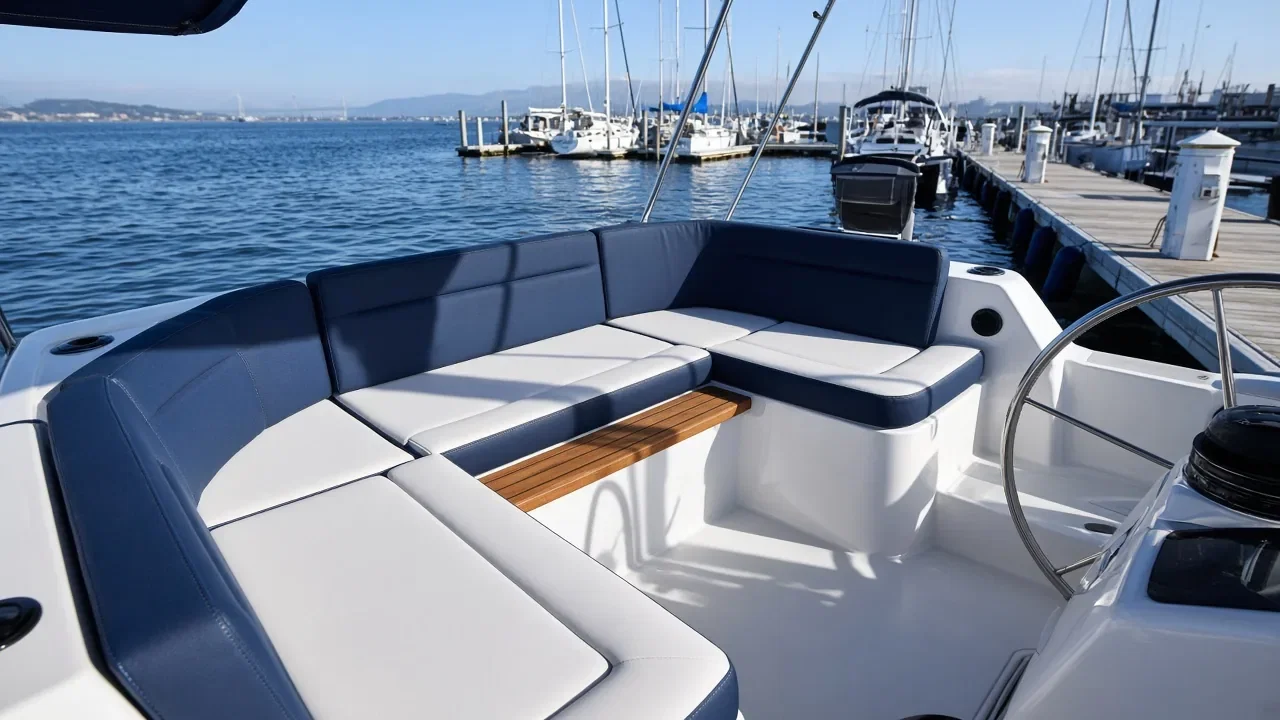
Boating on San Francisco Bay and the Delta is one of the best parts of living in Northern California. But anyone who keeps a boat here knows the local climate is tough on everything aboard, and upholstery takes some of the worst of it. Strong sun, salt spray, damp fog, wind, and long stretches when the boat sits covered at the dock all combine to fade, crack and stain seats and cushions.
Marine upholstery is its own specialty. Materials, foam, thread and construction methods that work fine indoors can fail quickly on the water. The good news is that with the right choices, boat upholstery can look sharp and stay comfortable for many seasons. This guide explains what Bay Area boat owners, charter operators and marina businesses should know about protecting and replacing marine upholstery.
Why the Bay Area Is Hard on Boat Upholstery
Every boating region has its challenges. The Bay Area’s mix of conditions is especially demanding.
UV exposure
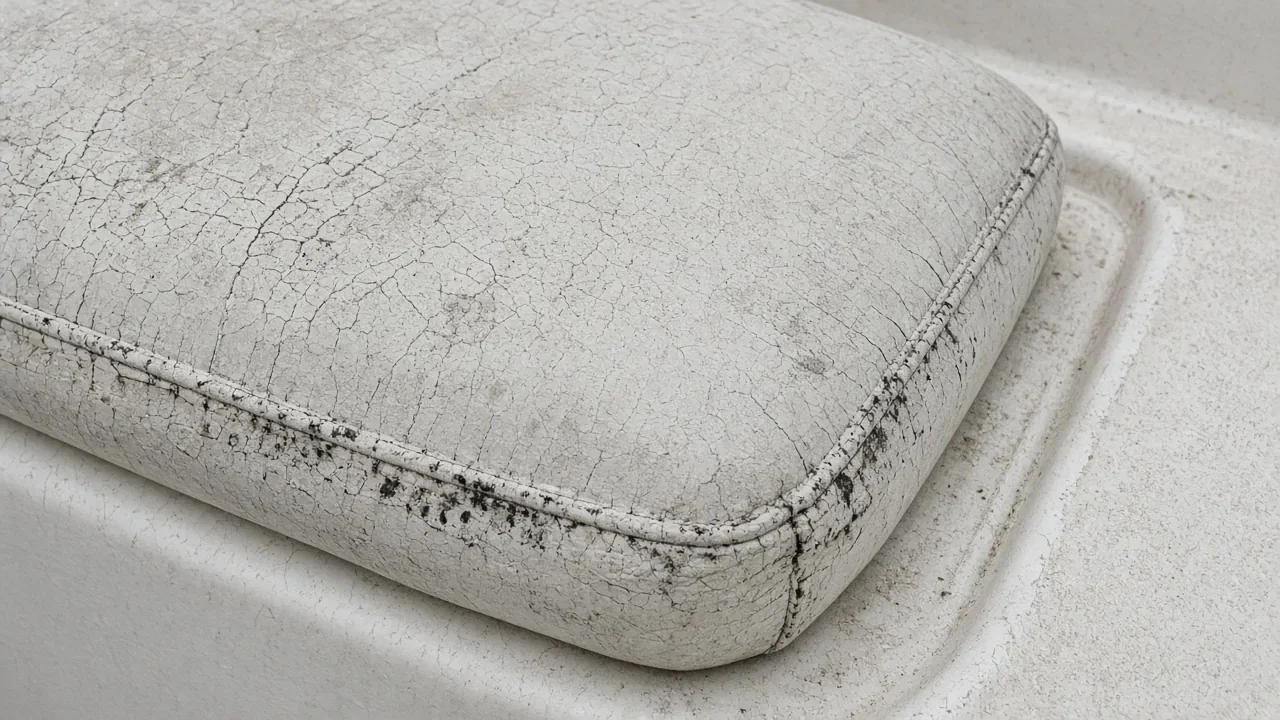
Even on cool, breezy days, the sun on the water is intense. UV light breaks down the plasticizers and pigments in vinyl, which leads to fading, chalkiness, stiffness and eventually cracking. Reflected light off the water adds to the exposure. Lighter colors tend to hide fading better, while dark colors can show it faster and get hot to the touch.
Salt air and spray
Salt crystals left behind after spray dries are abrasive and attract moisture. Over time, salt can wear at the surface of vinyl, corrode staples, snaps and zippers, and degrade thread along seams.
Fog, damp and mildew
Many parts of the Bay see regular morning fog and damp air, especially near the Golden Gate and along the coast. Boats that sit closed up at the dock can trap that moisture. Mildew needs moisture, warmth and something to feed on, such as dirt, sunscreen, food residue or body oils. It often shows up first as black or gray spots along seams, piping and the backs of cushions.
Temperature swings
The difference between a cold, foggy morning and a sunny afternoon can be dramatic. Repeated expansion and contraction stresses seams and makes older vinyl more prone to splitting.
Signs Your Boat Upholstery Needs Attention
Check your seats and cushions at the start of each season, and look for:
- Fading, chalky residue or a dull, dry look to the vinyl
- Cracks, especially along folds, edges and high-wear spots
- Split seams or thread that crumbles when you touch it
- Mildew spots that come back after cleaning
- Cushions that stay wet long after rain or washing
- Foam that feels soggy, heavy, flattened or crumbly
- Rusted staples or corroded snaps around seat bases
- Rotting or soft seat boards under the cushions
If water squishes out when you sit down, the foam has absorbed moisture and is likely past saving. Wet foam is also an ideal home for mildew.
Choosing the Right Marine Materials
The right materials make the biggest difference in how long boat upholstery lasts.
Marine-grade vinyl
Most boat seating is covered in marine-grade vinyl. Compared with standard upholstery vinyl, marine vinyls are generally made with UV inhibitors, mildew-resistant treatments and protective topcoats designed for outdoor use. When choosing a vinyl, ask about:
- UV resistance: Look for products designed for extended sun exposure.
- Mildew resistance: Many marine vinyls include treatments to discourage mildew growth on the surface.
- Cold crack resistance: This matters for boats used through cooler months or stored in unheated spaces.
- Cleanability: Check which cleaners the manufacturer recommends. Some harsh products can damage protective topcoats.
Marine fabrics
For bimini tops, covers and some cushions, solution-dyed acrylic fabrics are popular because the color goes all the way through the fiber, which helps resist fading. Fabrics designed for marine use usually breathe and drain better than vinyl, which can help with moisture, though they may not be as easy to wipe down.
Foam that drains
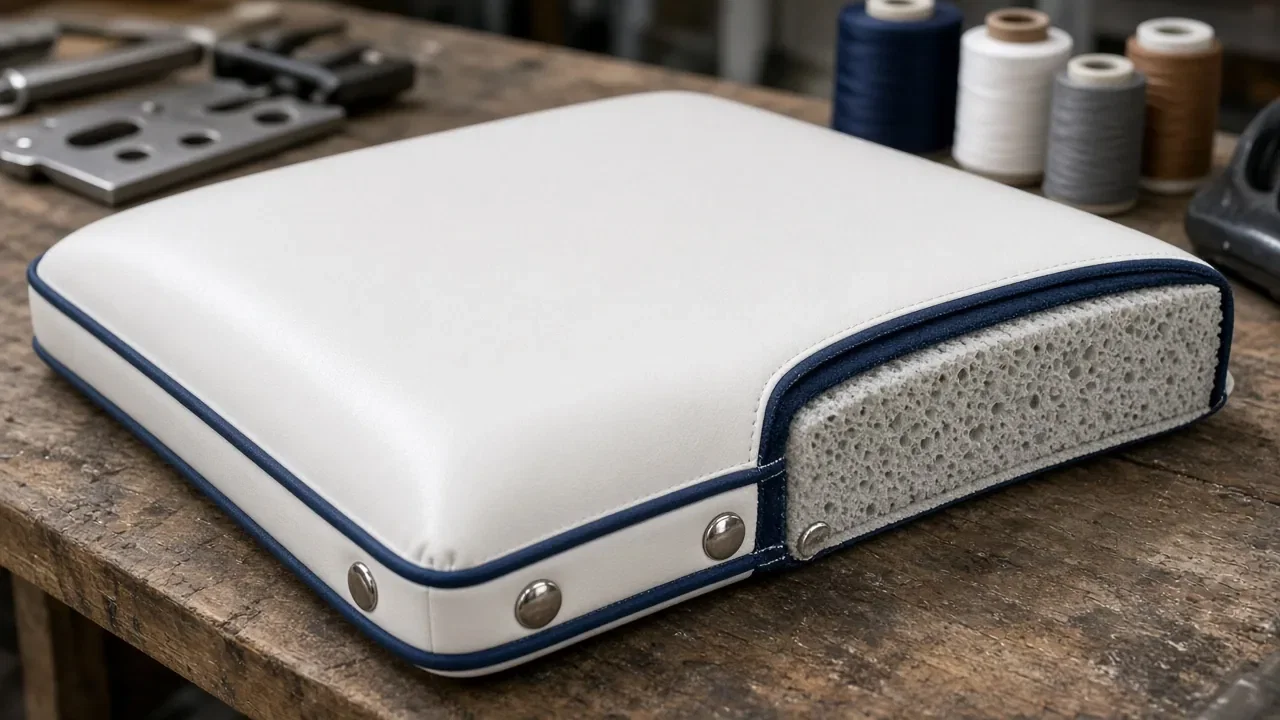
Foam is where many boat cushions fail. Standard upholstery foam soaks up water like a sponge and holds it. For boats, many upholsterers recommend open-cell quick-dry foam, which is designed to let water drain through and air dry quickly. Closed-cell foam is another option in some applications because it resists water absorption, though it feels firmer. Your upholsterer can help you choose based on how the cushion is used.
Thread, hardware and seat bases
Marine projects should use thread designed for outdoor use, such as UV-resistant polyester or PTFE-type threads, which resist sun and salt far better than standard thread. Stainless steel staples, snaps and fasteners help avoid rust stains and failures. Seat bases made from marine-grade plywood or polymer board hold up much better than standard wood, which can rot when it stays damp.
Construction Details That Help in a Wet Climate
Good marine upholstery is built differently from indoor furniture. Details to ask about include:
- Drain holes or mesh panels on the underside of cushions so water can escape
- Breathable backings that allow airflow under cushions
- Fewer exposed seams on top surfaces, where water and sun hit hardest
- Welting and piping made with marine materials so it does not crack before the rest of the cover
- Proper snap and fastener placement so cushions stay put when the boat is moving
These details may not be visible once a cushion is finished, but they make a big difference in how long it lasts.
Preventing Mildew and Sun Damage Between Trips
The right upholstery is the foundation, but care between outings matters just as much.
- Rinse cushions with fresh water after salty trips to remove salt and grime.
- Clean with a mild soap or a cleaner recommended by the vinyl manufacturer. Avoid bleach and harsh solvents unless the manufacturer says they are safe.
- Dry cushions thoroughly before covering the boat. Stand them on edge or prop them up to let air circulate.
- Use a breathable boat cover. Covers that trap moisture can make mildew worse.
- Improve ventilation in cabins and enclosed spaces.
- Wipe off sunscreen, food and drinks promptly, since residues can feed mildew.
- Consider a vinyl protectant that the manufacturer recommends to help with UV exposure.
Interior Cabins and Below-Deck Upholstery
Not all boat upholstery lives in the sun. Cabin settees, V-berth cushions, dinette seating and headliners face a different set of problems. Below deck, the main enemies are trapped humidity, condensation and poor airflow. Cushions that sit directly on a fiberglass or wood base can collect moisture underneath, especially when the boat is closed up for weeks during the off-season.
For interior cushions, many owners choose breathable marine fabrics or soft-touch marine vinyls that feel more like home furniture. A breathable underlayer or spacer mesh between the cushion and the base can help air move and reduce the condensation that leads to mildew. Foam choice matters here too. V-berth cushions are slept on, so comfort is important, but they still need foam that will not hold moisture for long.
Headliners and wall panels can sag or stain over time as adhesives fail in damp conditions. These are often worth addressing at the same time as cushions, so the whole cabin looks refreshed and consistent.
Planning Around the Boating Season
Timing your upholstery project can save frustration. Many Bay Area boaters use their boats year-round, but spring and summer tend to be the busiest times on the water. Scheduling upholstery work in the late fall or winter often means you get your boat back before the season you care about most.
A few planning tips help:
- Take photos and measurements of your seating before you call, so a quote can start right away.
- Remove cushions that come off easily and bring them to the shop to save time.
- Note any rot, soft spots or loose hardware you have found so it can be addressed while seats are apart.
- Decide whether you want to match the existing colors or update the look, since that affects material choices.
Repair, Recover or Replace?
Not every worn cushion needs to be rebuilt from scratch.
- Restitch seams if the vinyl is still supple but the thread has failed.
- Recover when the vinyl is cracked or faded but the foam and seat base are in good condition.
- Rebuild with new foam, new vinyl and new seat boards when foam is soggy or bases are rotting.
Many boat owners find that recovering all the seating at once gives a consistent look, especially if older cushions have faded unevenly.
Upholstery for Charter and Commercial Vessels
Charter boats, water taxis, tour boats and other commercial vessels see far more use than a private boat. Seating has to stand up to heavy traffic, frequent cleaning and long hours in the sun. Durable marine vinyls, sturdy construction and stainless hardware are especially important. Scheduling also matters, since commercial operators cannot afford to have a boat out of service for long. Recovering cushions in phases, or during slower seasons, helps keep the boat earning.
Frequently Asked Questions
What is the best vinyl for boats in the Bay Area?
Look for a marine-grade vinyl with UV inhibitors and mildew-resistant treatments. Your upholsterer can show samples suited to your boat and how you use it.
Why do my boat cushions keep getting mildew?
Usually it is a combination of damp air, trapped moisture and residue on the surface. Wet foam inside the cushion can also keep mildew coming back. Quick-dry foam, ventilation and regular cleaning help.
Can you reupholster seats without removing them from the boat?
It depends on the boat. Many seats and cushions can be unbolted or unsnapped and brought to the shop. Larger built-in pieces may need to be templated on the boat first.
Should I replace the foam when I recover my seats?
If the foam holds water, has flattened or crumbles, replacing it is a good idea. New quick-dry foam can help the new covers last longer.
Get a Quote for Your Boat Upholstery
Leo’s Upholstery helps boat owners and marine businesses around San Francisco Bay, the East Bay and the Delta with seats, cushions and interiors built for local conditions. Learn more about our marine upholstery and outdoor upholstery services, then request a quote or call (510) 895-3632. Our shop is at 1835 E 14th St in San Leandro, open Monday through Friday from 8 AM to 4:30 PM and Saturday from 7 AM to noon.


