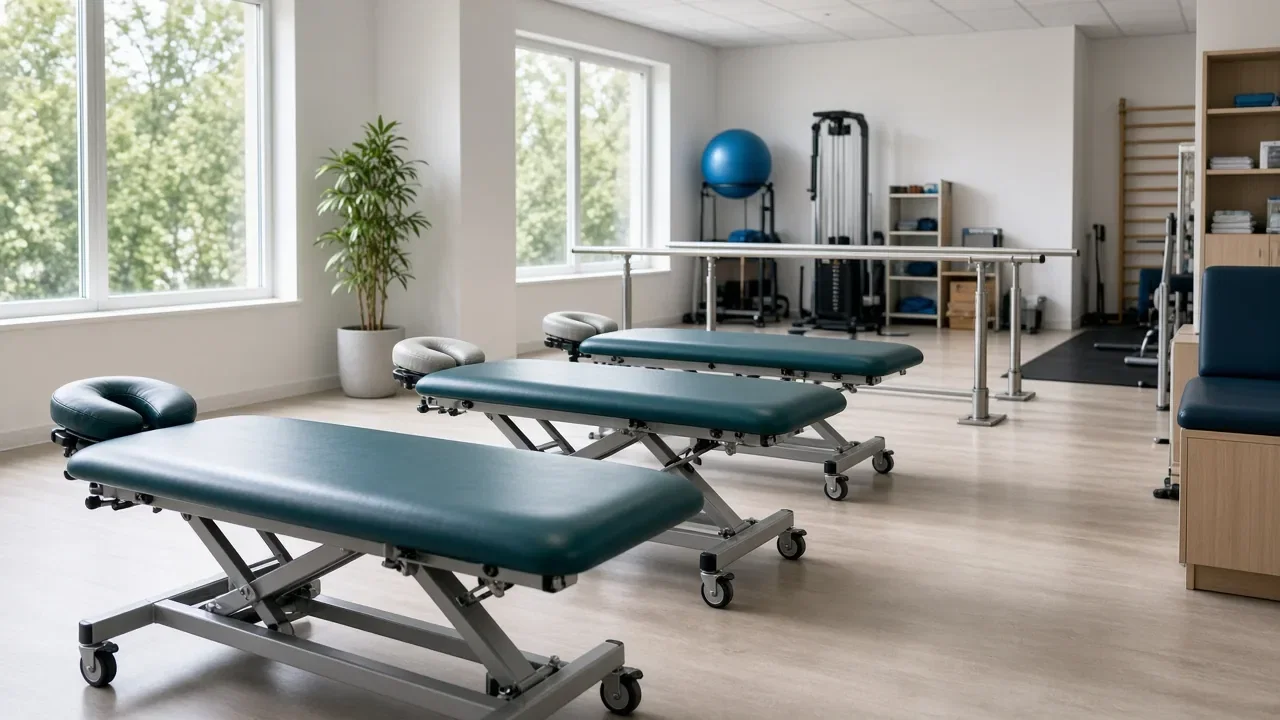
Walk into almost any physical therapy or rehab clinic and the first things a patient touches are upholstered: the treatment table, the mat platform, the hi-lo bench, the waiting room chairs. Those surfaces take a beating every day. They are wiped down between every patient, loaded with body weight from every angle, and pushed, folded, raised and lowered dozens of times per shift.
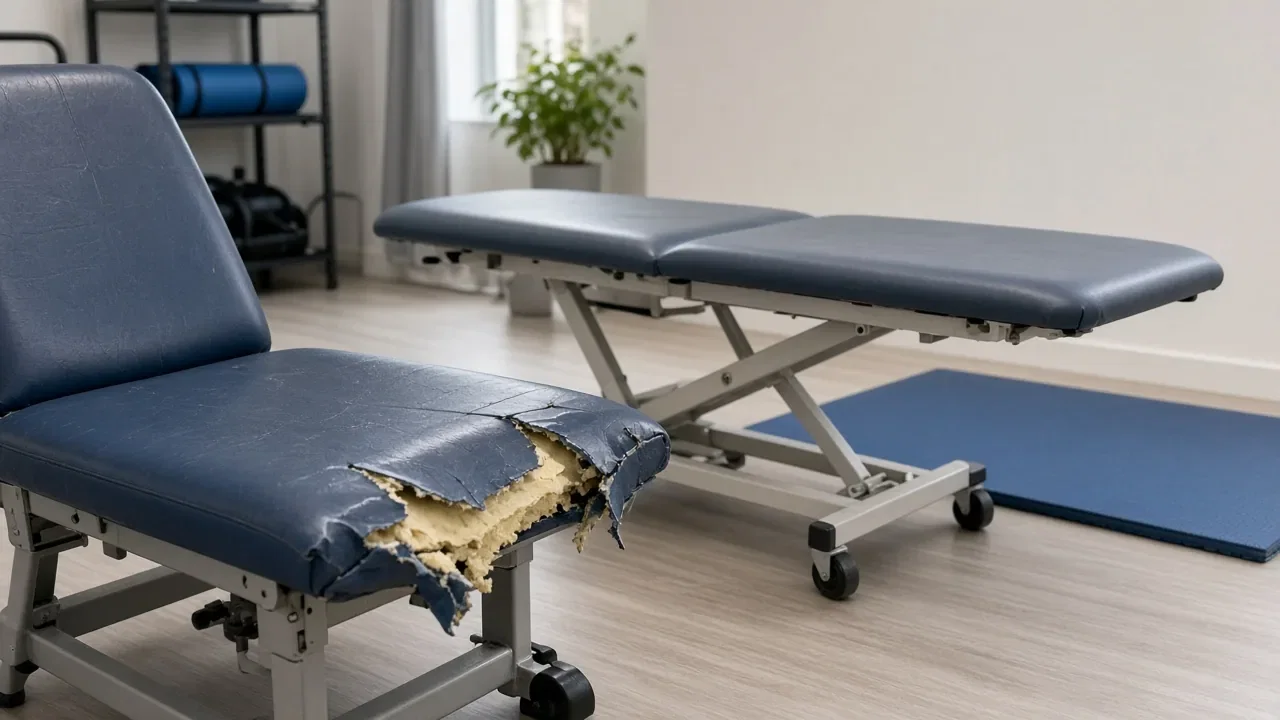
When the vinyl on that equipment starts to crack, peel or split, it is more than a cosmetic issue. Torn upholstery can trap moisture and contaminants, it is harder to disinfect properly, and it quietly tells patients that the clinic may not be keeping up. The good news is that most clinic equipment does not need to be replaced when the cover wears out. The frames, motors and mechanisms are usually built to last far longer than the upholstery, which makes reupholstery one of the most cost-effective upgrades a clinic can make.
This guide walks through what clinic owners and practice managers in the Bay Area should know about upholstering physical therapy and rehab equipment: what to look for, which materials work best, how to plan around patient schedules, and what to ask a commercial upholstery shop before you hand over your tables.
Why Upholstery Matters So Much in a Rehab Setting
Physical therapy equipment lives a harder life than almost any other furniture. A dining chair might be used a few times a day. A treatment table in a busy outpatient clinic can see a steady stream of patients from opening to close, plus a cleaning cycle after each visit.
Hygiene and infection control
Intact upholstery is part of a clinic’s cleaning program. Healthcare cleaning guidance from organizations like the CDC generally stresses that surfaces should be cleanable and in good repair, because cracks, seams and punctures can harbor contamination that wipes cannot reach. Once vinyl splits and the foam underneath is exposed, the cushion can absorb fluids and cleaning chemicals, and no amount of wiping will fully clean the inside of it.
Patient comfort and confidence
Patients in rehab are often in pain, recovering from surgery or nervous about their progress. A firm, smooth, supportive surface helps them relax into treatment. A lumpy, flattened cushion or a cover with tape over a tear does the opposite. Many patients form their impression of a clinic in the first few minutes, and the condition of the equipment is a big part of that.
Safety and function
Worn cushions can shift, slide or bottom out. Torn edges can catch clothing, and flattened foam may not give the support a therapist expects during mobilization or positioning. Keeping padding and covers in good shape helps the equipment do its job.
Common Equipment That Can Be Reupholstered
Most upholstered items in a rehab or PT clinic can be recovered, and often re-padded, without replacing the frame. Typical pieces include:
- Hi-lo and electric treatment tables
- Manual and folding treatment tables
- Mat platforms and Bobath-style tables
- Traction tables and split-section tables
- Exercise benches and weight equipment pads
- Stools, rolling therapist chairs and saddle seats
- Headrests, face cradles and bolsters
- Waiting room chairs, benches and reception seating
Because many tables use a removable top or bolt-on cushions, the upholstery work can often be done on the cushion alone while the base stays in place. That keeps the disruption to a minimum.
Signs It Is Time to Reupholster
Clinic staff tend to get used to wear, so it helps to inspect equipment on a regular schedule rather than waiting for a complaint. Watch for these signs:
- Cracks, crazing or a “spiderweb” look on the vinyl surface
- Splits along seams, corners or the edges of the table
- Peeling or flaking of the top layer of the vinyl
- Exposed or crumbling foam at any tear
- Cushions that feel flat, hard or uneven when you press on them
- Tape, patches or temporary covers used to hide damage
- Staining or discoloration that cleaning no longer removes
- Vinyl that feels sticky or stiff, which can signal chemical breakdown
If you see damage on one table, check the others. Equipment bought at the same time tends to wear out at about the same rate, and recovering several pieces in one visit is usually more efficient than doing them one at a time.
Choosing the Right Material for Clinic Equipment
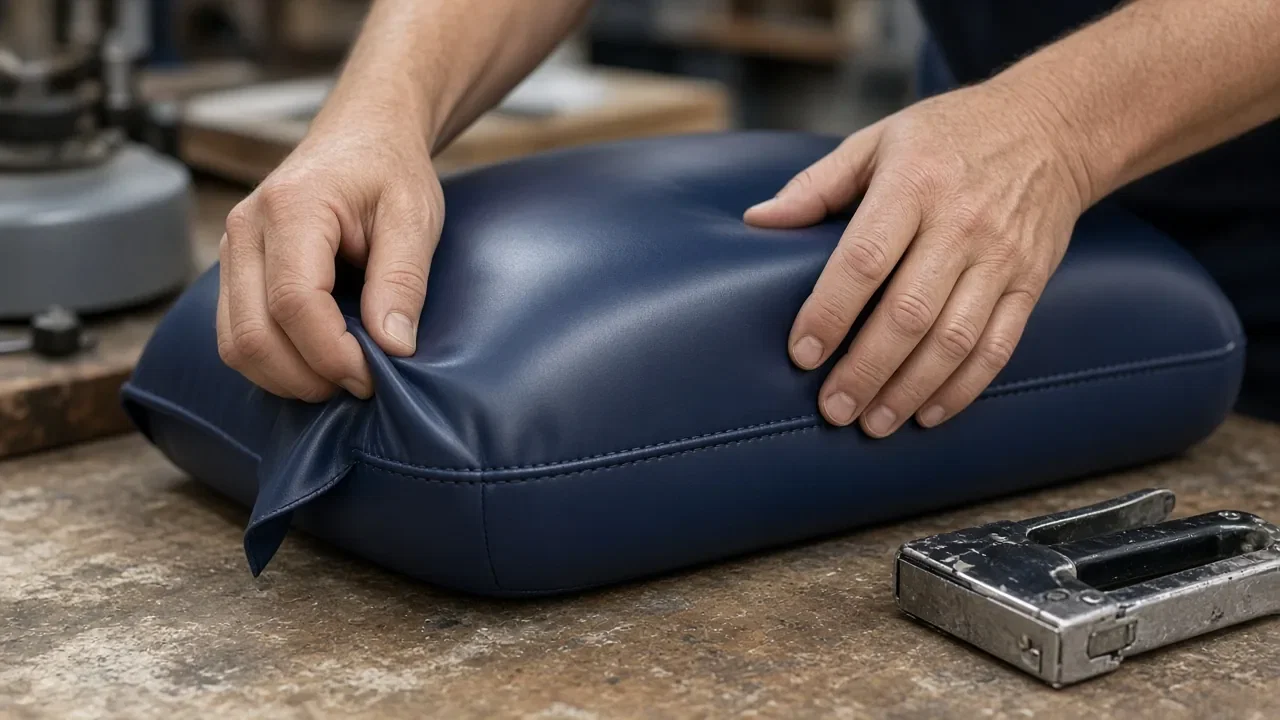
The material is the most important decision in a healthcare reupholstery project. The goal is a surface that stands up to frequent cleaning, resists fluids and feels comfortable against skin.
Healthcare-grade vinyl
Most PT and rehab equipment is covered in a healthcare or contract-grade vinyl. These vinyls are designed for heavy commercial use and are typically formulated to tolerate the disinfectants used in clinical settings. When you compare options, ask about:
- Cleanability: Which disinfectants the manufacturer says the material can tolerate, and any cleaning instructions that come with it.
- Abrasion resistance: Commercial vinyls are often rated for durability with standardized rub tests. Higher ratings generally mean longer wear for heavy-use surfaces.
- Antimicrobial or stain-resistant finishes: Many healthcare vinyls include protective topcoats. These help, but they do not replace regular cleaning.
- Flame resistance: Commercial interiors often have flammability requirements. Ask your upholsterer to confirm the material meets what your facility needs.
Why disinfectant compatibility matters
One of the most common reasons clinic vinyl fails early is chemical damage. Strong cleaners used again and again can dry out and crack vinyl that was not designed for them. Before choosing a material, list the disinfectants your clinic uses and share that list with your upholstery shop. Matching the vinyl to your cleaning program can noticeably extend the life of the new covers.
Foam and padding
The cover is only half the job. Foam in treatment tables compresses over time, and old foam can crumble once the cover fails. Reupholstery is the right moment to replace it. Firmer, high-density foam is typical for treatment surfaces because therapists need a stable base, while waiting room seating can use softer, more comfortable cushioning. Your upholsterer can match the original feel or adjust firmness if your therapists want a change.
Colors and finishes
Clinic owners often choose darker or mid-tone colors such as navy, charcoal, teal or slate because they show less wear. Some practices match their equipment to their brand colors for a more polished look. Smooth, low-texture finishes are easiest to wipe clean.
Planning Reupholstery Around a Busy Patient Schedule
The biggest worry for most clinic managers is downtime. You cannot stop seeing patients because the tables are in the shop. A good commercial upholsterer will work with you on scheduling.
Phased projects
Instead of pulling every table at once, many clinics recover equipment in phases. For example, a shop might take two or three tops at a time, return them, then pick up the next group. That way the clinic always has enough working tables.
After-hours and weekend pickups
Scheduling pickup at the end of the day and return before opening can keep a project almost invisible to patients. Ask your shop about timing options when you request a quote.
Removable tops and cushions
When a table top or cushion can be unbolted, the upholsterer may only need the cushion, not the whole table. The base, motor and wiring stay in the clinic, which reduces handling risk and transport.
Repair vs. Reupholster vs. Replace
Not every problem calls for a full recovering job, and not every table is worth saving. Here is a general way to think about it:
- Spot repair can make sense for a small, recent tear on otherwise healthy vinyl, though matching older material can be difficult and patches are usually a short-term fix.
- Reupholstery is usually the best value when the frame, mechanism and motor are in good working order but the cover and padding are worn.
- Replacement may make sense if the frame is damaged, the lift mechanism is failing, or the equipment no longer fits your clinical needs.
For many clinics, reupholstering quality tables gives them years of additional use at a fraction of the cost of new equipment. The best way to know where your equipment falls is to have a commercial upholsterer look at it and give you a quote.
Caring for Newly Upholstered Equipment
Once your tables are recovered, a few habits can help the new vinyl last:
- Follow the vinyl manufacturer’s cleaning recommendations and avoid harsher chemicals than necessary.
- Wipe off disinfectant residue as directed, since some residues can build up and dry the vinyl over time.
- Use table paper or face cradle covers as your clinical protocols call for.
- Keep sharp objects, buckles and tools away from the surface.
- Inspect tables on a regular schedule so a small split can be addressed before it grows.
These simple steps protect your investment and keep the equipment looking professional.
What to Ask a Commercial Upholstery Shop
Before you commit, ask a few questions so you know what you are getting:
- Do you regularly work on healthcare and clinical equipment?
- Which vinyls do you recommend for our cleaning products and patient volume?
- Will you replace the foam, and can you match the firmness our therapists prefer?
- How do you schedule pickups to avoid disrupting patient care?
- Can you handle all of our pieces, including stools, benches and waiting room seating?
A shop that is comfortable with commercial and medical upholstery should be able to answer these clearly and walk you through material samples.
Frequently Asked Questions
How long does it take to reupholster a treatment table?
It depends on the number of pieces, the material chosen and the shop’s schedule. Single cushions are often quick, while larger projects are usually done in phases. Ask for a timeline with your quote.
Can you reupholster electric hi-lo tables?
In most cases, yes. The upholstered top or cushion is typically removed from the base, so the electric components stay in place and are not affected by the recovering work.
Will new vinyl stand up to our disinfectants?
Healthcare-grade vinyls are designed for frequent cleaning, but compatibility varies by product. Share your cleaning chemicals with your upholsterer so they can recommend a material suited to them.
Should we replace the foam at the same time?
Usually it is a good idea. Old foam is often compressed or breaking down, and replacing it while the cover is off restores support and comfort.
Get a Quote for Your Clinic Equipment
Leo’s Upholstery works with physical therapy practices, rehab clinics and other healthcare facilities across the East Bay and greater Bay Area from our shop at 1835 E 14th St in San Leandro. We can recover treatment tables, mat platforms, stools, benches and waiting room seating with durable, cleanable materials, and we will plan the work around your patient schedule. Learn more about our commercial upholstery services, then request a quote or call us at (510) 895-3632. We are open Monday through Friday from 8 AM to 4:30 PM and Saturday from 7 AM to noon.