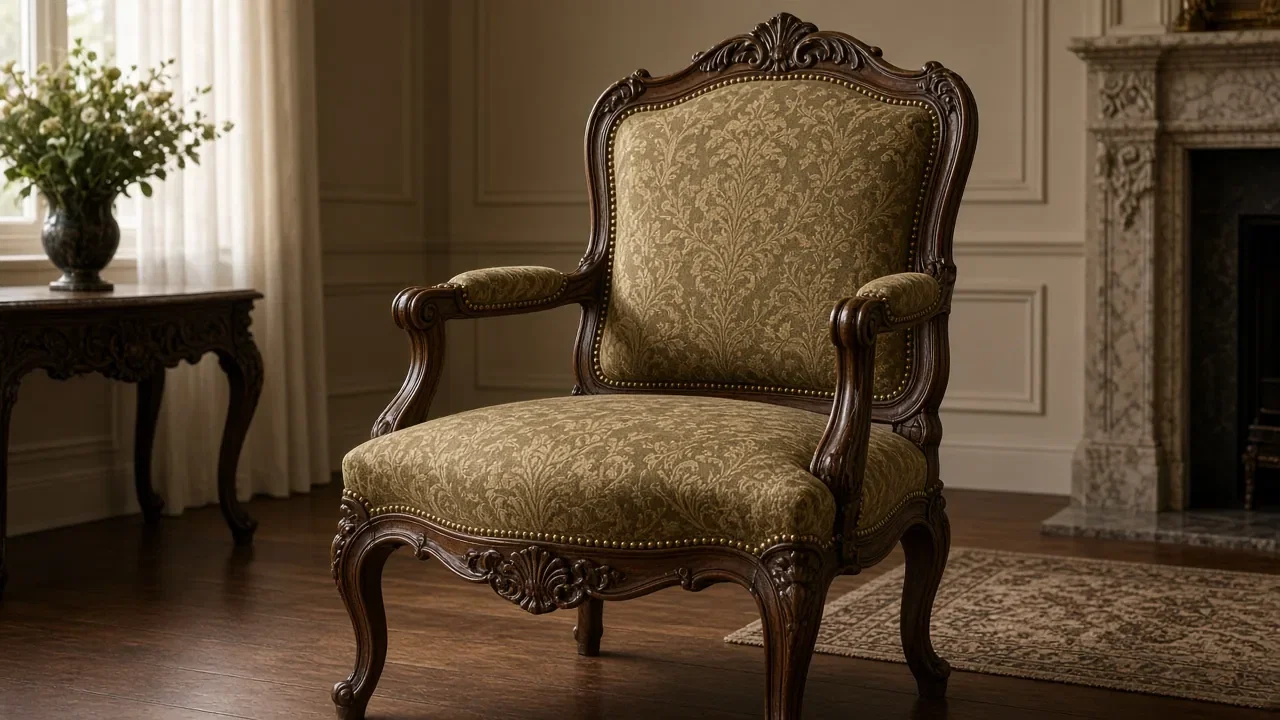
An antique chair carries more than its own weight. It might have come from a grandparent’s dining room, a lucky estate sale find, or a trip through an antique shop where it simply caught your eye. The carving, the patina on the wood and the shape of the arms tell a story that new furniture can’t.
But many antique chairs aren’t very usable as they are. The seat might sag, the fabric might be shredded or stained, a joint might wobble, or the stuffing might be crumbling out from underneath. The goal of a good restoration is to make the chair comfortable and sturdy enough to use again while protecting the character that makes it special.
This guide explains how antique chair restoration and reupholstery usually work, the decisions you’ll face along the way, and how to approach a piece you care about.
Restoration, Conservation or Refresh?
Before any work begins, it helps to decide what you want the finished chair to be. There’s a spectrum of approaches:
- Conservation aims to preserve as much original material as possible and make only the minimum changes needed for stability. It’s common for museum pieces and items with significant historic or monetary value.
- Restoration returns the chair to a condition close to how it might have looked originally, often using traditional methods and period-appropriate materials, while replacing what’s too far gone.
- Refresh or adaptation keeps the frame and overall character but uses modern materials and updated fabric to suit how you live today.
There’s no single right answer. A rare piece might call for a conservative approach, while a much-loved family chair used every day might benefit from modern foam and a durable fabric. If you think a chair may have significant value, consider having it appraised before making major changes.
Understanding How Antique Chairs Were Built
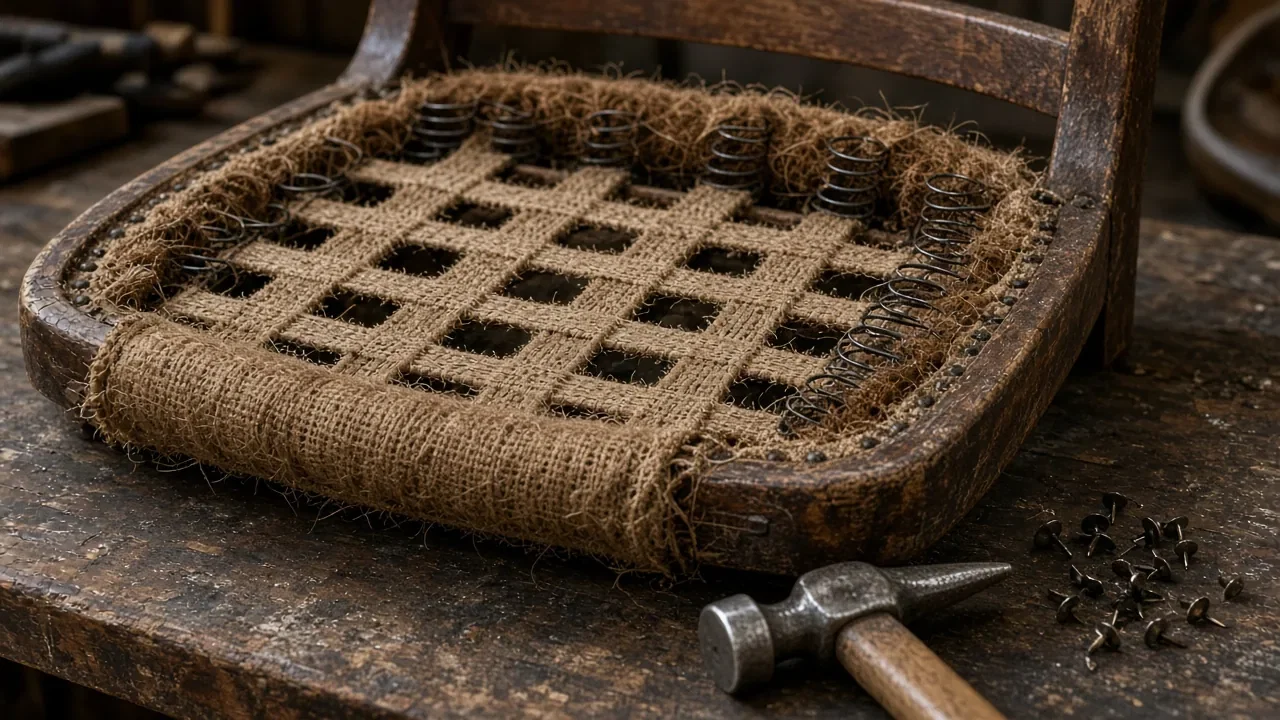
Many older chairs were upholstered using traditional methods that differ from modern furniture:
- Jute or linen webbing stretched across the seat frame
- Hand-tied coil springs in seats of better-quality pieces
- Natural stuffings such as horsehair, coir (coconut fiber), moss, cotton or wool
- Burlap and scrim layers to hold stuffing in shape
- Hand-stitched edges that create firm, defined seat rolls
- Tacks rather than staples to secure each layer
When these materials are in good condition, a restorer may reuse some of them. Horsehair, for example, can often be cleaned, teased and reused. When they’ve deteriorated, they can be replaced with new traditional materials or with modern equivalents, depending on your goals.
The Restoration Process, Step by Step
Every chair is different, but a typical antique chair restoration follows a general path.
1. Evaluation
The chair is examined for frame condition, joint stability, wood damage, previous repairs and the condition of the upholstery layers. Photos are taken to record the original look, including details like trim placement, tufting patterns and the profile of the seat.
2. Careful Stripping
The old fabric and layers are removed, one at a time, so the upholsterer can see how the chair was originally built. Sometimes this reveals earlier fabrics hidden underneath, clues to the chair’s age, or past repairs that need correcting. Tacks are pulled with care to avoid splitting old wood.
3. Frame Repair
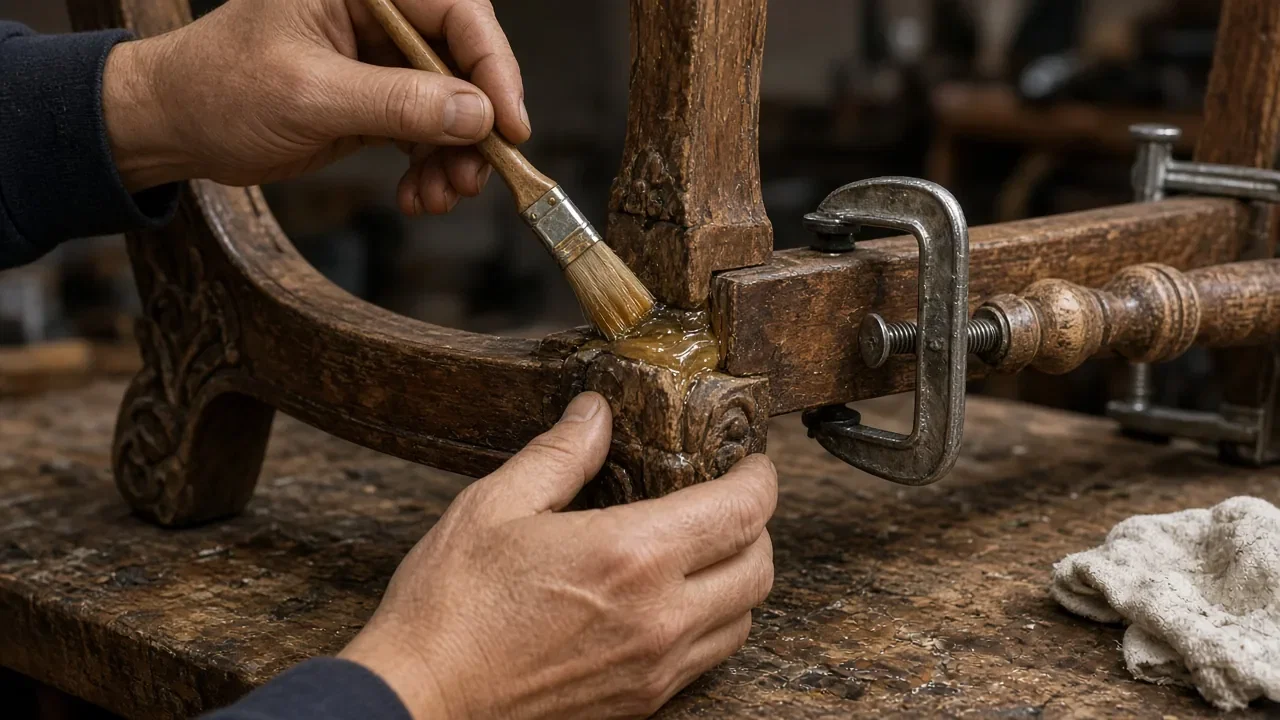
Loose joints are among the most common problems in older chairs. They’re typically disassembled where needed, cleaned of old glue, and reglued. Cracks and breaks may be repaired, and worn tack rails, the parts of the frame that hold upholstery, can be reinforced so they hold fasteners again.
4. Finish Considerations
The wood finish is a separate decision from the upholstery. Many people prefer to keep the original finish with light cleaning and touch-ups, since stripping and refinishing can remove patina and, in some cases, affect value. Others want a fresher look. It’s worth discussing before any finish work begins.
5. Rebuilding the Seat and Back
New or restored webbing, springs and stuffing are built up to create a comfortable, supportive seat with the right shape. This is where much of the skill of traditional upholstery shows, especially in hand-stitched edges and crisp profiles.
6. Fabric and Trim
Finally, the new cover goes on, followed by trim such as gimp, double welting or decorative nailheads. Placement is usually matched to the chair’s original lines.
Clues to Your Chair’s Age and History
You don’t need to be an expert to gather useful information about an old chair before restoration. A few clues can help you and your upholsterer decide how carefully to approach it:
- Tacks versus staples. Older upholstery was usually secured with tacks. If you see many staples, the chair has probably been reupholstered at least once in more recent decades.
- Hand tool marks. Uneven saw marks, hand-cut joints and slight irregularities in carving can suggest older handwork.
- Labels and stamps. Look under the seat and inside the frame for maker’s marks, retailer labels or handwritten notes.
- Layers of fabric. Multiple fabrics stacked on top of each other can show how the chair’s look changed over time. Sometimes the oldest layer offers a hint at the original design.
- Family stories. Anything you know about where the chair came from is worth writing down.
During stripping, an upholsterer will often find more clues. Some clients like to keep a small swatch of an old fabric or a note found inside the chair, and we’re happy to set aside anything interesting we find.
Why Professional Restoration Is Worth It
It can be tempting to staple new fabric over an old seat at home. For a simple drop-in seat, that sometimes works. For antique chairs with springs, stitched edges or fragile frames, though, shortcuts can cause damage that’s hard to undo, like split tack rails or covered-up structural problems. Professional work addresses the foundation first, so the finished chair is not just prettier but genuinely sound.
Choosing Fabric for an Antique Chair
Fabric has a huge impact on how a restored chair looks and feels. A few things to consider:
Period-Appropriate Fabrics
Damasks, brocades, tapestries, velvets, horsehair fabric, and stripes have long histories in traditional upholstery. Choosing a pattern and weave in keeping with the chair’s era can make it look as though it has always belonged in that fabric.
Modern Fabrics on Antique Frames
There’s also a lot to love about pairing a traditional frame with a modern fabric. A carved Victorian chair in a solid jewel-tone velvet or a contemporary geometric can look striking and fresh. This approach is common for pieces used every day in modern homes.
Durability for Real Use
If the chair will be used regularly, choose a fabric that can handle it. Very delicate silks may suit a decorative bedroom chair but not a dining chair. Your upholsterer can suggest options that balance look and durability.
Scale of the Pattern
Large patterns need enough surface to show off; on a small seat they can look cropped. Smaller chairs often look best with small-scale patterns or solids, while larger wingbacks and settees can carry bolder designs. Pattern centering matters too, especially on seat and back panels.
Traditional Materials vs. Modern Comfort
One of the biggest decisions in antique chair work is what goes inside.
Traditional materials like horsehair, coir and hand-tied springs create the authentic shape and feel of an antique seat. They tend to be firmer and can last a very long time when well made. They also take more time and skill to build.
Modern foam and padding can make a chair softer and more comfortable for everyday use and can sometimes be a more practical option. The tradeoff is that foam can change the profile of a seat and doesn’t age the same way traditional stuffing does.
Many restorations blend the two, such as keeping traditional springs and stuffing in the seat base while adding a modern comfort layer. The right choice depends on the chair, its value and how you plan to use it.
Common Problems We See in Older Chairs
- Wobbly legs and loose joints from dried-out glue
- Split or worm-damaged wood in tack rails
- Sagging seats from broken webbing or springs
- Previous repairs with screws, nails or modern glues that need correcting
- Multiple layers of old fabric stapled over each other through the years
- Crumbling foam from mid-century updates
Most of these can be addressed. Some take more work than others, which is why an in-person look is helpful before giving firm advice.
Caring for a Restored Antique Chair
- Keep it out of direct sunlight and away from heaters to protect wood and fabric.
- Lift the chair to move it rather than dragging it by its back or legs.
- Avoid tipping back on two legs, which stresses older joints.
- Vacuum upholstery gently with a soft brush attachment.
- Address loose joints early before they cause bigger damage.
Frequently Asked Questions
Will reupholstering my antique chair reduce its value?
It depends on the chair. For rare or highly valuable pieces, original materials can matter, so a conservative approach or an appraisal first is wise. For many family heirlooms and decorative antiques, careful reupholstery can make them more useful and attractive.
Can you keep the original horsehair stuffing?
Often, yes. Horsehair can frequently be cleaned and reused if it’s in reasonable condition.
Can you match the original fabric?
We can look for fabrics with a similar pattern, color or period style. Exact matches for very old fabrics aren’t always available, but close options often are.
Do you repair the wood frame too?
Frame stabilization such as regluing loose joints is usually part of the job, since upholstery depends on a sound frame. Extensive refinishing may be handled separately.
Do you only work on antiques?
No. Leo’s Upholstery works on all kinds of residential furniture, and we specialize in commercial upholstery for businesses too.
Bring Your Antique Chair Back to Life
A well-restored antique chair can be both beautiful and comfortable for years to come. Leo’s Upholstery in San Leandro helps homeowners throughout the East Bay and Bay Area restore chairs and other heirlooms with care. Learn more about our antique restoration and chair upholstery services.
Request a quote online with photos of your chair, or call us at (510) 895-3632 to talk through your options.