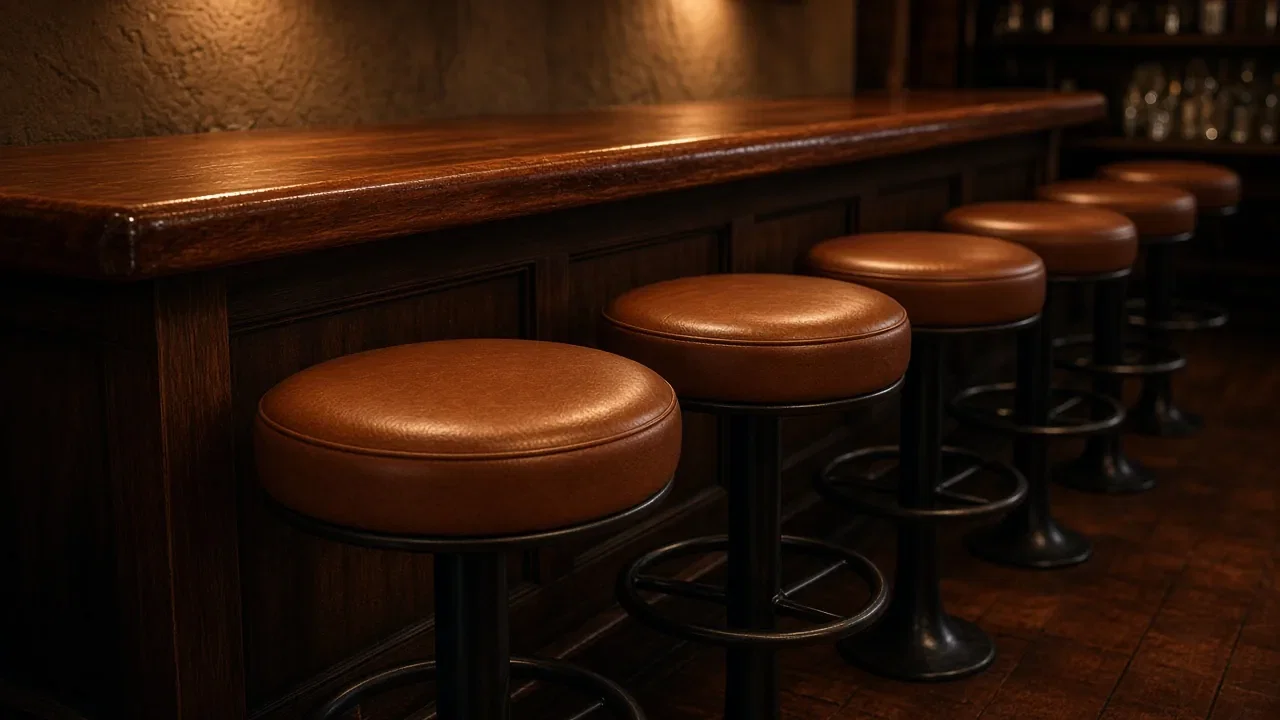
Bar stools work harder than almost any other seat in a restaurant or bar. They are pulled out, spun, climbed onto and slid off all night. They catch spilled drinks, sticky fingers, wet umbrellas and the occasional muddy boot on the footrest. And because they sit right at the counter, every guest at the bar sees them up close.
When stool seats start to split, flatten or stain, the whole bar can look tired. The good news is that recovering bar stools is usually one of the simplest and most visible upgrades a hospitality business can make. Most stool seats come off easily, the frames are often still solid, and a fresh cover with new foam can make them look and feel new.
The key to a long-lasting result is choosing the right material. This guide covers what bar stool upholstery has to handle, which materials perform well, and how to plan a recovering project for your bar, restaurant, brewery, cafe or club.
What Bar Stool Upholstery Has to Handle
Before comparing materials, it helps to understand the conditions stool seats face:
- Liquid spills. Beer, wine, cocktails, soda and water end up on seats regularly.
- Sugars and acids. Sweet mixers and citrus can leave sticky residue and, over time, affect some finishes.
- Constant friction. Guests slide and swivel on seats throughout the night.
- Frequent cleaning. Staff wipe stools down at the end of every shift, often more.
- Heavy, uneven loads. People lean, perch on edges and use the seat to climb up.
- Sharp objects. Rivets, belt buckles, keys and bag hardware can scratch or puncture covers.
- Sunlight and heat. Stools near windows or patio doors can fade and dry out.
A material that looks great on day one but can’t handle these conditions will quickly show wear.
Materials That Stand Up to Spills and Heavy Use
Commercial-grade vinyl
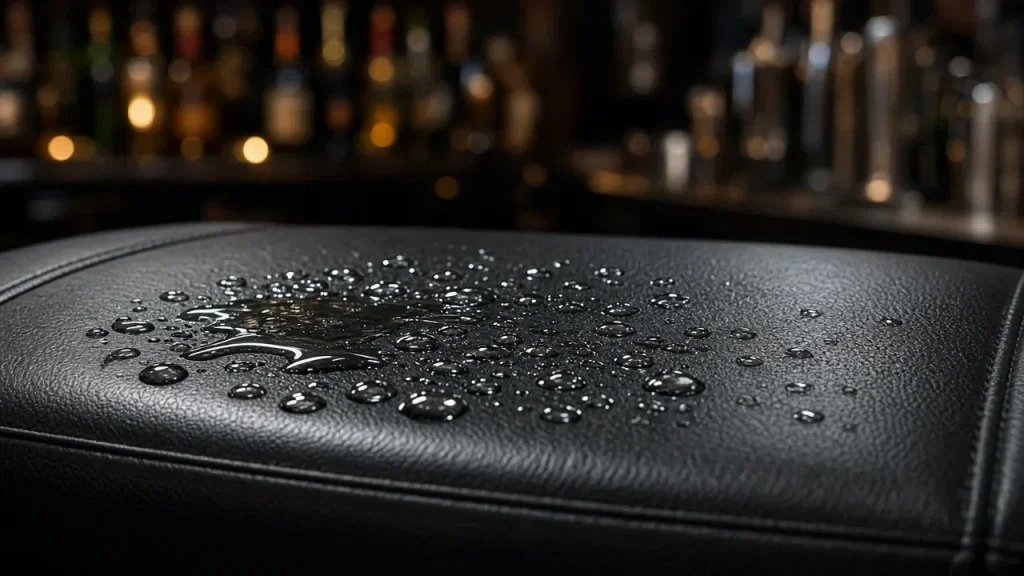
Vinyl is the most popular choice for bar stools for good reason. A quality commercial vinyl resists liquids, wipes clean easily and holds up to abrasion. It also comes in a wide range of colors, textures and finishes, from classic black to rich browns that resemble leather.
When choosing vinyl, look for:
- A product designed for commercial or hospitality use
- Good abrasion resistance for heavy daily friction
- A finish that resists stains from common drinks
- Compatibility with your cleaning products
- A texture that suits your bar’s style
Marine-grade vinyl
For outdoor bars, patios, rooftop spaces and waterfront venues, marine-grade vinyl is worth considering. It is generally formulated to better resist moisture, sunlight and mildew than standard indoor vinyl. It can also be a good option for indoor stools near open doors or windows.
Polyurethane and performance materials
Some polyurethane and engineered upholstery materials offer a softer, more leather-like feel while still being easy to wipe. Durability and cleaning compatibility vary widely between products, so review care instructions carefully.
Genuine leather
Leather adds a premium look and can develop an attractive patina. It requires more maintenance than vinyl and can stain if spills aren’t wiped quickly. For high-end lounges with attentive staff, leather can be a beautiful choice. For busy bars, many operators prefer the easier care of vinyl.
Fabric
Most woven fabrics are less practical for bar stools because they absorb liquids. Some performance fabrics are engineered to resist spills, but they still require more care than vinyl. Fabric is better suited to low-spill areas such as lounge seating away from the bar.
Construction Details That Make a Difference
Material is only part of the story. How a stool seat is built affects durability and appearance.
Foam
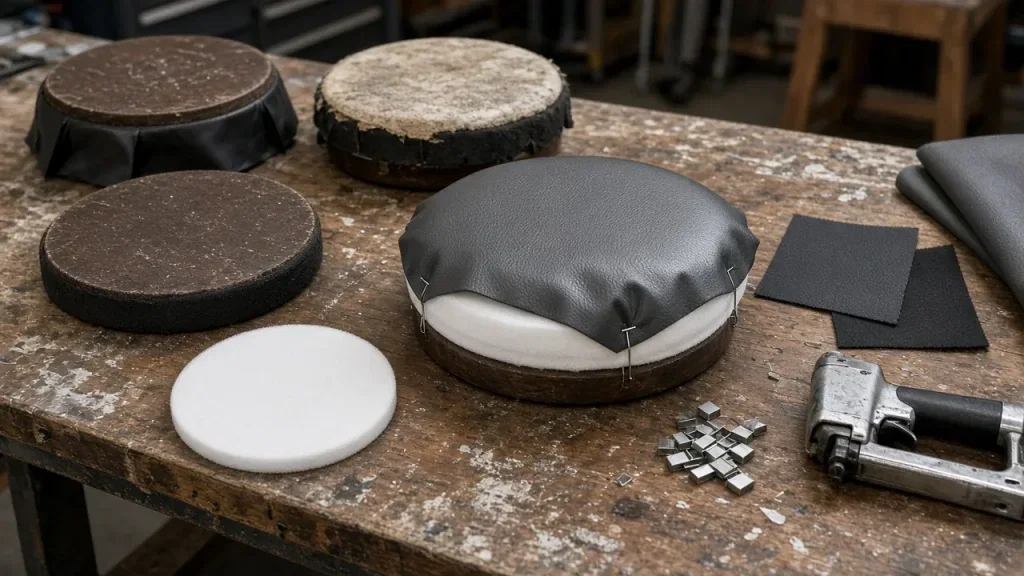
Bar stool foam should be firm enough to support guests without bottoming out, but comfortable enough for a long evening. Old foam often compresses into a hard pad. Replacing it during recovering improves comfort and helps the new cover fit smoothly.
Seams and edges
Welting or piping around the edge of a seat adds a finished look and can help protect the edge from wear. Tight, well-placed seams help prevent liquid from sitting in gaps.
Seat base
Most stool seats are built on a wood or metal base. If the wood is cracked, warped or water-damaged, it should be replaced so the new cover sits securely. Ask your upholsterer to check bases during recovering.
Backs and arms
Stools with upholstered backs or arms need the same durable materials. Backs see a lot of contact from hands and bags, so choose a material that stands up to handling.
Matching the Material to Each Seating Zone
Many venues have more than one kind of stool. A main bar, a high-top area, a window counter and an outdoor rail can all face different conditions. Choosing one material for everything is simple, but it is not always the best fit. Think about each zone separately before you order.
The main bar
Stools at the main bar typically see the most spills, the longest stays and the most cleaning. Prioritize a commercial vinyl with strong abrasion resistance and an easy-to-wipe finish. A medium or dark color can keep the bar looking tidy during a busy service.
High-top tables and counters
These stools may see quicker turnover and slightly fewer spills, which gives you more flexibility with color and texture. They are a good place to introduce an accent shade that ties the room together.
Windows, doorways and patios
Sunlight and moisture can be hard on upholstery. For stools near large windows, roll-up doors or outdoor areas, ask about materials formulated for exterior or marine exposure. Even indoors, a sunny spot can fade some colors faster than the rest of the room.
Keep a small reserve
When you recover a full set, consider ordering enough material for a few extra seats. Keeping spare covered seats on hand lets staff swap out a damaged seat quickly, so the bar stays fully seated while the damaged one is repaired. Ask your upholsterer whether this makes sense for your stool design.
Planning a Bar Stool Recovering Project
Recovering is usually straightforward, but a little planning keeps the bar running smoothly.
- Count and photograph your stools. Note seat shapes, sizes and any upholstered backs.
- Identify problem areas. Look for split seams, cracked surfaces, stains and flattened foam.
- Check the frames. Wobbly legs, loose welds or broken swivels should be repaired by a qualified technician or the stool’s manufacturer.
- Choose materials early. Confirm color and quantity before seats are removed.
- Work in batches. Recover a set of stools at a time so the bar always has seating.
- Schedule around service. Remove and reinstall seats during closed hours or slow days.
Ask your upholsterer for a realistic turnaround based on how many stools you have and how they are built.
Designing Stools That Fit Your Brand
Recovering is a great chance to refresh your bar’s look. Consider:
- Color. Dark colors such as black, espresso and oxblood hide stains and suit many bars. Bold colors can make stools a design feature.
- Texture. Leather-look grains, smooth finishes and subtle patterns each create a different feel.
- Contrast details. Contrasting welting or stitching can add a custom touch.
- Consistency. Match stools to booths and dining chairs, or use a complementary color.
Caring for Recovered Bar Stools
A few simple habits help new upholstery last:
- Wipe spills quickly. Don’t let drinks sit on the seat.
- Clean daily. Use a mild cleaner recommended for the material.
- Avoid harsh chemicals. Strong solvents and abrasive pads can damage vinyl.
- Rinse sticky residue. Sugary drinks can leave a film that attracts dirt.
- Inspect regularly. Catch small tears or loose seams early.
- Protect from sun. If stools sit near windows, consider shades or rotating stools.
Recovering Stools vs. Buying New
Replacing an entire set of stools can be expensive, and new stools may not match your existing bar. Recovering often makes sense when:
- The frames are sturdy and in good condition
- You like the style of your current stools
- You want custom colors or materials
- You’d like to reduce waste
If the frames are failing or no longer suit your space, replacement may be the better option.
Bar Stool Recovering in the Bay Area
Leo’s Upholstery recovers bar stools, booths and restaurant seating for bars, restaurants and hospitality businesses across the East Bay and greater San Francisco Bay Area. From our San Leandro shop, we help you choose durable materials and plan work around your service. Learn more about our restaurant and bar upholstery services and outdoor upholstery for patio seating.
Frequently Asked Questions
What’s the best material for bar stools?
Commercial-grade vinyl is a popular choice because it resists spills, wipes clean easily and holds up to heavy use. For outdoor or moisture-prone areas, marine-grade vinyl is often a good option.
Can you recover stools with upholstered backs?
Yes. We can recover seats, backs and arms. Bring photos so we can see the construction.
Do we need to bring the entire stool to the shop?
Often, only the seat needs to come in, since many stool seats unbolt from the frame. We’ll let you know what works best for your stools.
How can we keep stools looking good longer?
Wipe spills quickly, clean regularly with a mild cleaner suited to the material, and check seams and edges so small issues get repaired early.
Can you match our existing booth color?
We can help you find a close match or choose a complementary color that works with your space.
Give Your Bar a Fresh Look
Recovered bar stools can make a noticeable difference in how guests experience your space. With the right material and a well-planned schedule, you can refresh your seating without closing down.
Call Leo’s Upholstery at (510) 895-3632 or request a quote online. Our San Leandro shop at 1835 E 14th St is open Monday through Friday from 8 AM to 4:30 PM and Saturday from 7 AM to noon. Send us photos of your stools and we’ll help you choose materials that last.