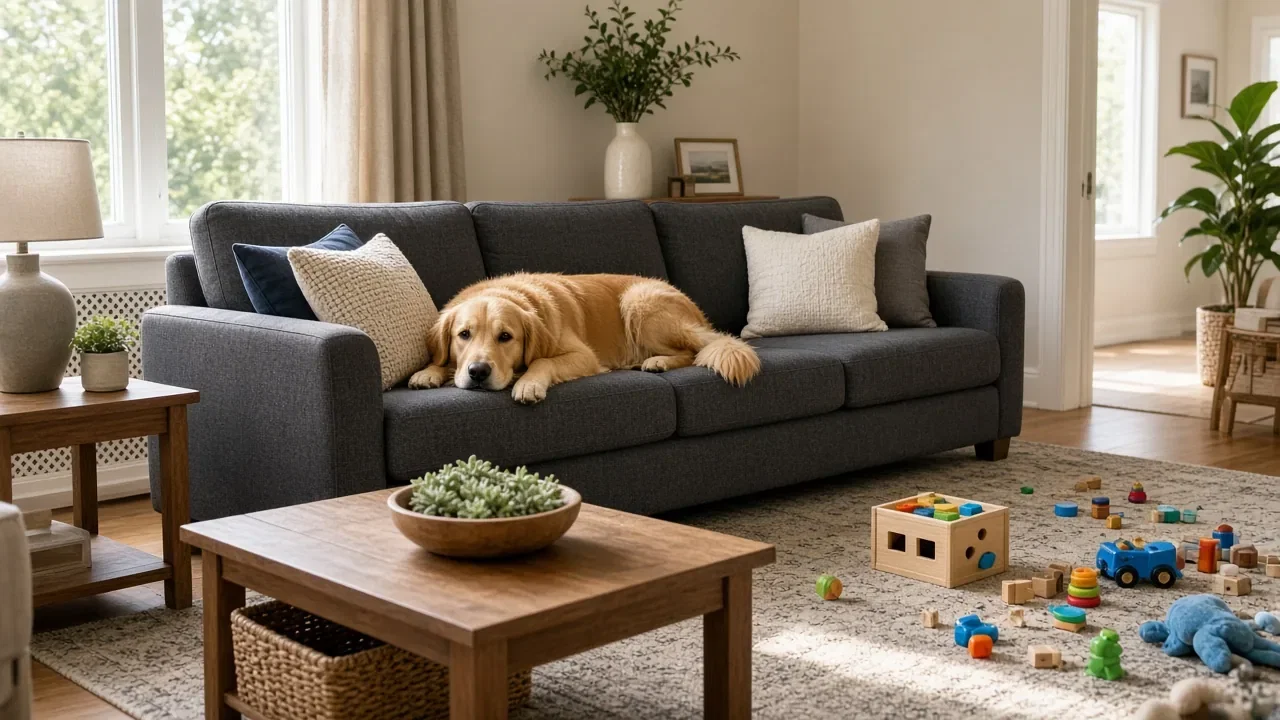
If you share your home with kids, pets or both, you already know that furniture lives a tough life. Juice boxes tip over. Muddy paws hop up for a cuddle. Someone decides the sofa is the perfect place for a marker art project. And the cat, of course, has opinions about where she sharpens her claws.
None of that means you have to live with plastic slipcovers or give up on furniture you love. It does mean choosing upholstery fabric with a little more care. The right fabric can shrug off spills, resist snags and hide everyday wear, while still looking and feeling like something you actually want in your living room.
Here’s a practical guide to picking upholstery fabric for real family life.
Start With How the Furniture Is Used
Before you look at a single swatch, think about who uses the piece and how:
- Is it the main family sofa, used every day for movies, homework and naps?
- Do pets sleep on it or just visit occasionally?
- Do you have cats who scratch or dogs who dig and circle before lying down?
- Do kids eat or drink on it?
- Does it get direct sun from a nearby window?
A formal living room chair that rarely gets used can handle a delicate fabric. The family room sofa where everyone piles on every night needs something tougher. Matching the fabric to the job is the most important decision you’ll make.
What Makes a Fabric Family-Friendly
Tight Weave
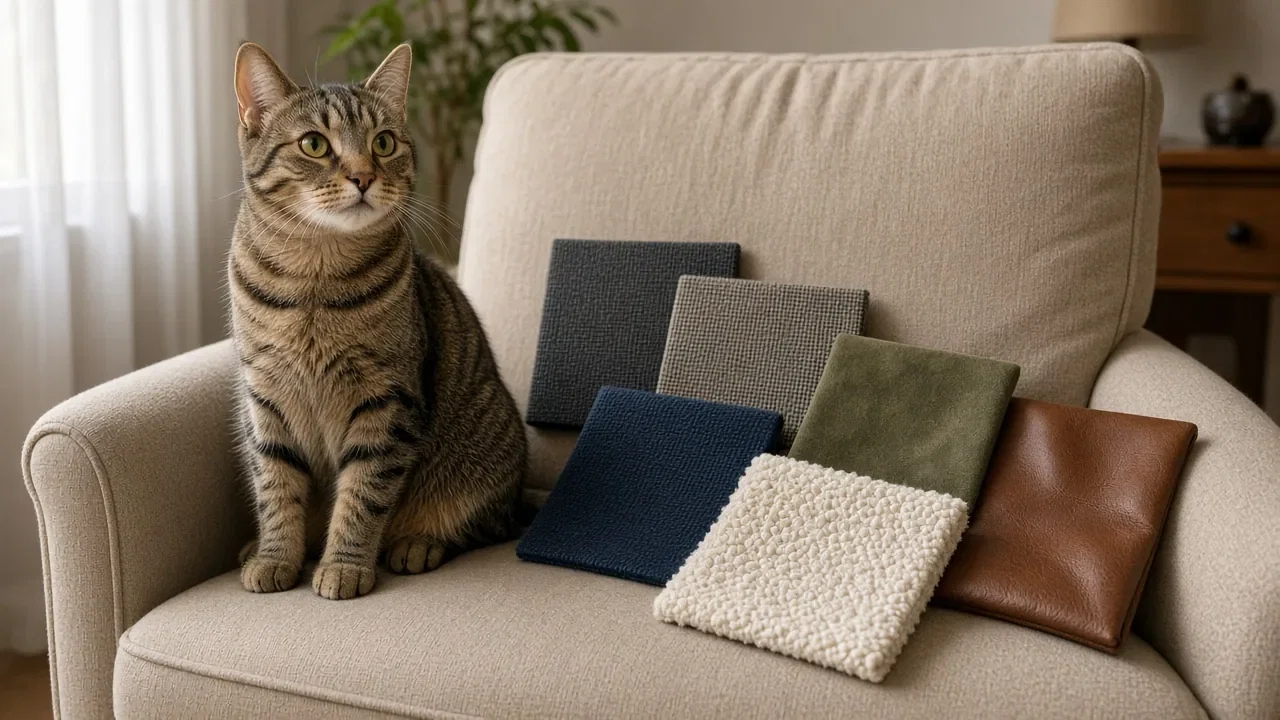
Tightly woven fabrics have less space between threads, which means fewer places for claws, toys and buttons to catch. Loose, nubby or loopy weaves look cozy, but they tend to snag easily, especially with cats.
A quick test: hold the fabric up and try to hook a fingernail into the weave. If it catches easily, a pet’s claw probably will too.
Durability
Upholstery fabrics are often rated for abrasion resistance using double rubs, which measure how well a fabric stands up to repeated friction. For a heavily used family sofa, a fabric rated for heavy-duty use is a good place to start. Ask your upholsterer about the rating on any fabric you’re considering.
Stain Resistance and Cleanability
Look for fabrics that are inherently stain resistant or treated to repel spills. Check the cleaning code, too. Some fabrics can be spot-cleaned with water-based cleaners, while others need solvent-based cleaners or professional cleaning only. For families, water-cleanable fabrics are usually the most convenient.
Removable Cushion Covers
Zippered cushion covers aren’t always meant to be machine washed, but they can make professional cleaning and spot treatment easier. Ask before you wash, since washing can shrink or fade some fabrics.
Fabric Types to Consider
Performance Fabrics
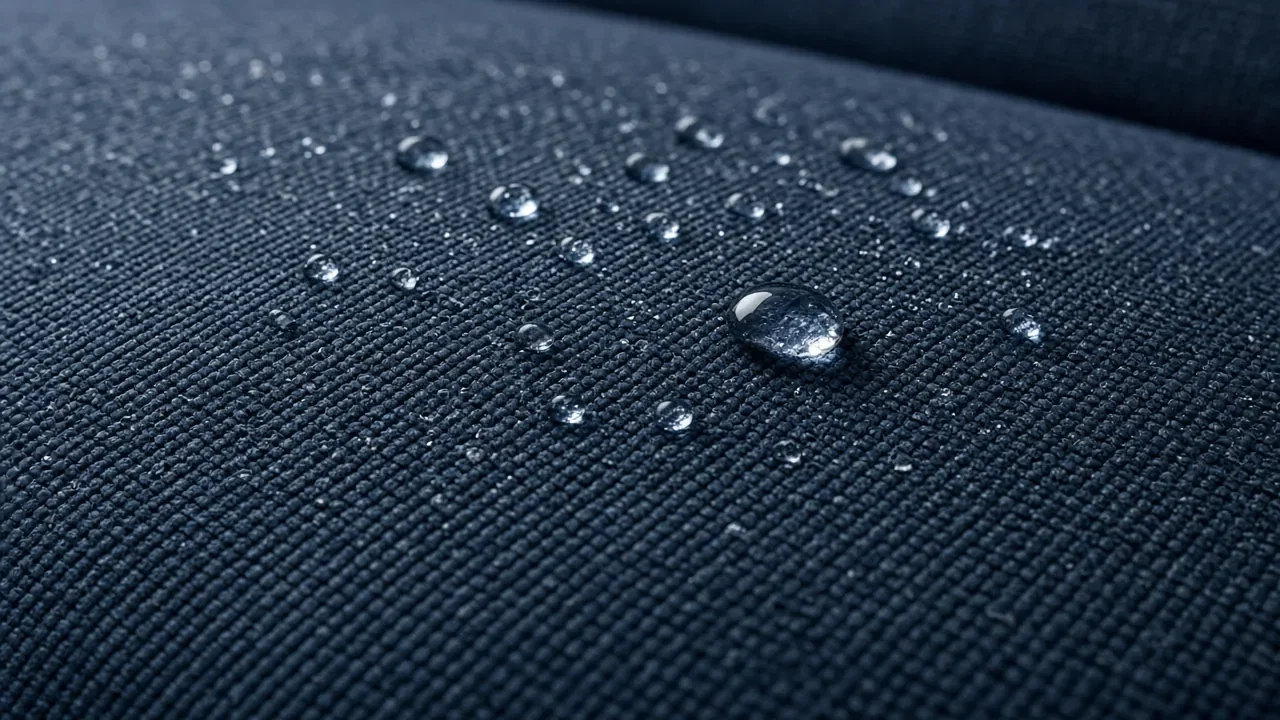
Performance fabrics are designed specifically for durability and easy cleaning. Many are made from synthetic fibers like solution-dyed acrylic, polyester or olefin, and some have built-in stain and moisture resistance. Many look and feel like traditional woven fabrics, so you don’t have to sacrifice style.
For a lot of families, performance fabric is the first place to look. It tends to handle spills well, resist fading, and stand up to daily use.
Microfiber and Microsuede
Microfiber is made from very fine, tightly woven synthetic fibers. It’s soft, resists many stains, and its tight structure makes it harder for claws to grab. Pet hair also tends to sit on top, making it easy to brush or vacuum off. On the downside, some microfibers can show water marks and may need specific cleaning methods.
Leather
Good-quality leather wipes clean easily, doesn’t trap pet hair, and doesn’t hold onto dander or odors the way some fabrics can. It also develops a patina over time. The tradeoff is that leather can scratch, especially from cats and large dogs. Some people love the lived-in look scratches give; others don’t. Protected or pigmented leathers usually resist stains and scratches better than more natural, unfinished leathers.
Faux Leather and Vinyl
Modern faux leathers and vinyls can be very durable and easy to wipe clean, which makes them appealing for households with young children. Quality matters a lot here. Lower-grade products can crack or peel over time, while better products hold up well.
Canvas and Denim
Heavy cotton canvas and denim are tightly woven and sturdy, and they can be a casual, relaxed choice. They aren’t as stain resistant as performance fabrics unless treated, so they’re often best paired with removable covers.
Fabrics to Approach With Caution
Some fabrics are beautiful but harder to live with when kids and pets are involved:
- Loose or looped weaves like some boucles and tweeds, which snag easily
- Silk and delicate fabrics, which stain and wear quickly
- Velvet, which can be surprisingly durable in performance versions but may show paw prints and crushing
- Linen, which wrinkles and stains easily unless blended or treated
- Very light solid colors without stain protection
This doesn’t mean you can never have them. It just means placing them on pieces that get less traffic, or choosing performance versions of the same look.
Thinking About Allergies, Hair and Odors
For many households, the biggest frustration isn’t stains. It’s the hair, dander and smells that build up over time. Fabric choice can help here too.
- Smooth, tight surfaces like leather, faux leather and microfiber give hair and dander less to cling to, so regular vacuuming or wiping removes more of it.
- Textured and loosely woven fabrics tend to trap hair deep in the weave, which can make cleaning harder.
- Synthetic performance fibers often resist absorbing moisture, which can help limit lingering odors from accidents.
- Cushion inserts matter as well. When a cushion has absorbed accidents over the years, replacing the foam and wrap during reupholstery can make a real difference to how fresh the piece feels.
If someone in your home has allergies, it’s worth mentioning when you talk with your upholsterer so they can suggest suitable materials.
Special Considerations for Babies and Toddlers
Young children bring their own set of challenges. Spit-up, sticky fingers, crayons and diaper leaks all find their way onto furniture. A few ideas help:
- Choose easy-wipe materials for the pieces where little ones spend the most time, like a nursery glider or the family room sofa.
- Consider a tight seat or securely attached cushions on pieces kids climb on.
- Pick mid-tone colors that won’t show every mark.
- Think long term. Kids grow fast. A durable fabric in a timeless color will still look good when the toddler years are over.
Matching Fabric to Each Room
You don’t have to use the same fabric everywhere. Many families put their toughest performance fabric on the main sofa and family room chairs, then choose something a bit more delicate for a formal living room, bedroom bench or upholstered headboard where wear is lighter. Thinking room by room lets you balance durability, comfort and style without compromising on every piece.
Picking Colors and Patterns That Forgive
Color and pattern can do a lot of the work in hiding daily wear:
- Mid-tone colors like warm grays, taupes, olive and denim blue tend to hide dirt better than very light or very dark solids.
- Match your pet’s coat if you can. A golden retriever’s hair disappears on a warm tan; a black cat’s hair blends into charcoal.
- Subtle patterns and textures, like small-scale tweeds or heathered weaves, camouflage spots and hair better than flat solids.
- Avoid high-contrast prints if you’re worried about wear patterns standing out.
Construction Choices That Help
Fabric is only part of the story. A few construction details can make your furniture more family-friendly:
- Tight backs (without loose back cushions) stay neater with kids climbing around.
- Higher-density cushion foam holds its shape better with daily use.
- Exposed legs make it easier to vacuum underneath and spot hidden toys.
- Skirts can hide dust and pet hair under the sofa, though they can also get dirty.
- Welting or piping can help edges wear more evenly.
Everyday Care Tips
Even the toughest fabric looks better with a little regular care:
- Vacuum upholstered furniture weekly to remove crumbs, grit and pet hair.
- Blot spills immediately rather than rubbing.
- Test any cleaner on a hidden spot first.
- Use a washable throw where your pet likes to sleep.
- Keep pets’ nails trimmed to reduce snags.
- Rotate and flip cushions to spread out wear.
Frequently Asked Questions
What is the best upholstery fabric for dogs?
Tightly woven performance fabrics and microfiber are popular choices because they resist stains and don’t snag easily. Leather can also work well if you don’t mind some scratches over time.
What fabric do cats not scratch?
No fabric is completely scratch-proof, but tight, smooth weaves like microfiber give claws less to grab than loose or looped fabrics.
Is velvet good for pets?
Some performance velvets hold up better than you might expect and don’t have loops for claws to catch, but they can show paw prints and pressure marks.
Can I reupholster my existing sofa in a pet-friendly fabric?
Yes, if the frame is solid. Reupholstering is a great way to upgrade to a more durable fabric while keeping a sofa you already like. See our sofa and couch upholstery services.
How long does a pet-friendly fabric usually last?
It depends on the fabric, how heavily the piece is used and how it’s cared for. Durable performance fabrics on a well-built sofa often hold up for many years. Regular vacuuming, prompt spill cleanup and trimmed pet nails all help extend that life.
Should I choose a dark fabric to hide everything?
Not necessarily. Very dark solids can show lint, light-colored pet hair and dust. A mid-tone or heathered fabric close to your pet’s coat color usually hides more.
Do you work with businesses too?
Yes. While we help many homeowners, Leo’s Upholstery specializes in commercial upholstery for restaurants, offices, medical practices and other businesses.
Get Help Choosing the Right Fabric
The right fabric can make your furniture feel at home in a busy, loving household. Leo’s Upholstery in San Leandro helps families across the East Bay and Bay Area choose durable, good-looking fabrics and reupholster the pieces they love. Explore our residential upholstery services to learn more.
Request a quote online, or call us at (510) 895-3632 to talk through options for your home.