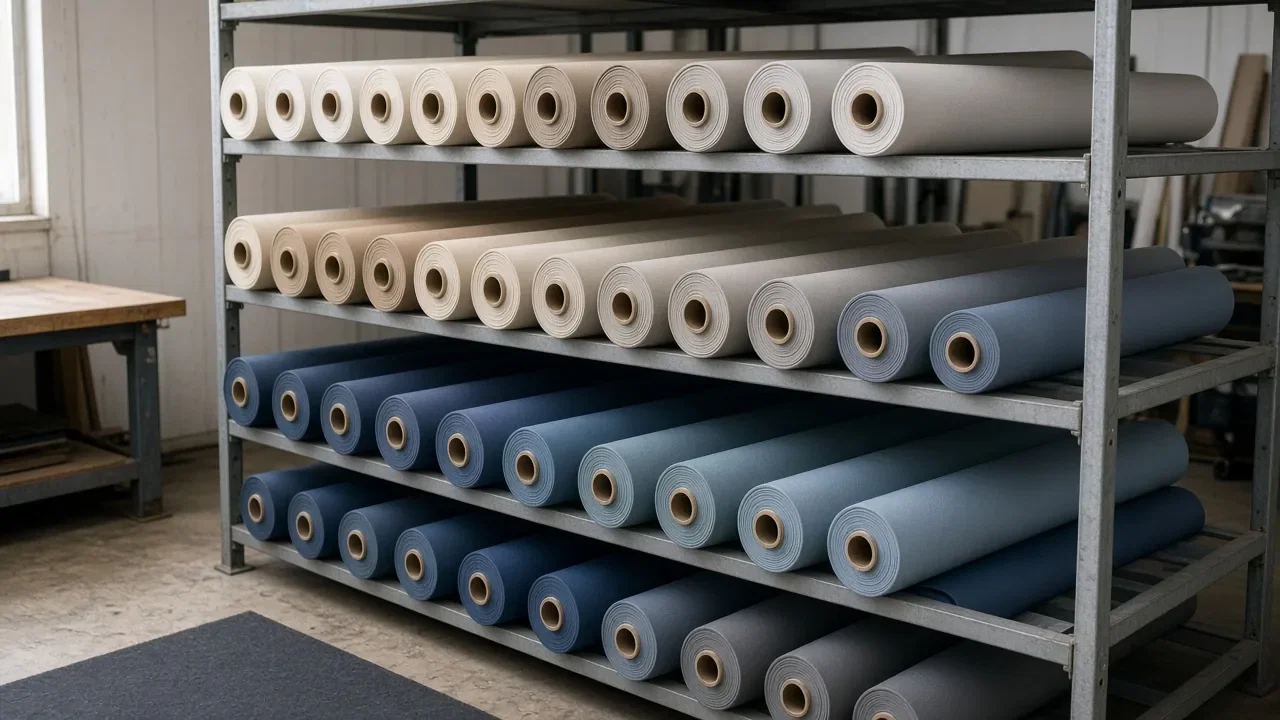
Choosing vinyl for healthcare seating can feel like learning a new language. Sample cards list abrasion results, backing types, cleaning claims, antimicrobial treatments and flammability information. Every option seems to promise durability, yet a chair that looks good in a sample book may be wrong for a busy clinic.
The best choice is not necessarily the thickest, most expensive or highest-rated material. It is the one that fits the furniture, tolerates your cleaning routine and provides an intact surface that staff can maintain. Appearance matters too, but it should follow the performance requirements rather than lead them.
For San Leandro and Bay Area healthcare offices, a thoughtful specification can help avoid early replacement and repeated disruption. Here is a practical way to compare commercial-grade vinyl for waiting chairs, stools, exam tables and other clinical seating.
Define the Application Before Comparing Samples
Start by naming where the material will be used. “Healthcare seating” includes very different conditions. An administrative office chair, a waiting room loveseat and an exam table do not receive the same contact, cleaning frequency or physical stress.
Write a short description of each piece. Include how often it is used, whether patients make direct contact with it, the kinds of spills expected and how staff clean it. Identify any exposure to sunlight, oils or unusually frequent wiping. This information helps narrow the choices before color becomes a distraction.
Separate must-haves from preferences
A required disinfectant compatibility is a must-have. A precise shade of blue is usually a preference. Setting that distinction early prevents a project from becoming attached to a material that cannot support the clinical routine.
For furniture governed by a purchasing standard or facility policy, give the upholsterer that document. Do not assume a broad “contract” or “commercial” description satisfies every requirement. Ask for documentation for the particular product and intended use.
Understand What an Abrasion Rating Tells You
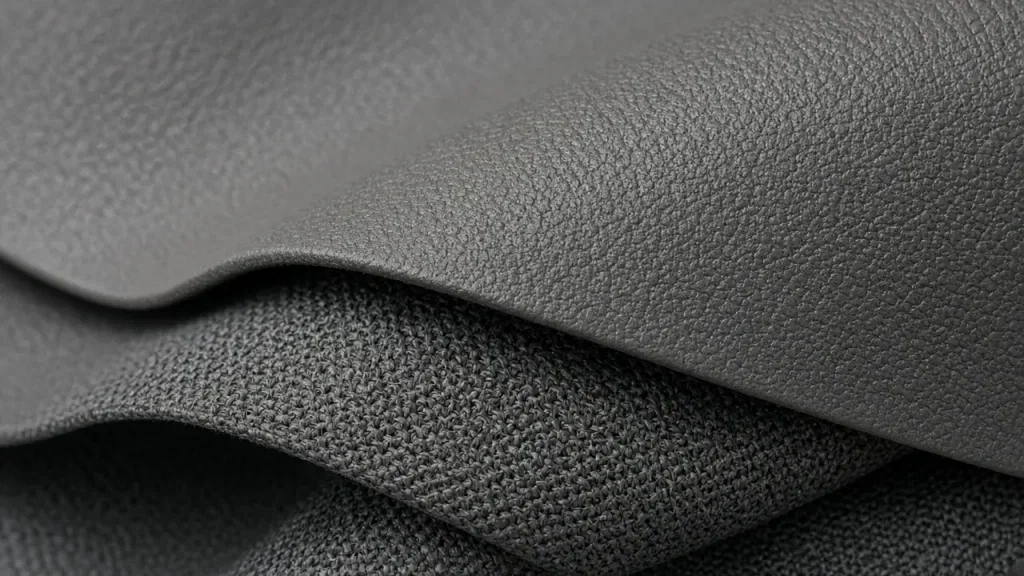
Abrasion testing evaluates how a material responds to repeated rubbing under specified laboratory conditions. It is useful information, but not a forecast of how many years a chair will last. Real furniture also encounters moisture, chemicals, sharp objects, movement and uneven loading.
Compare like with like
Two impressive-looking test results may come from different methods. Even when a method is the same, details such as the test endpoint can affect interpretation. Ask which method was used and whether the result is appropriate for the intended application.
A very high abrasion result does not make a material immune to cleaner damage. A vinyl that handles repeated rubbing well may still become brittle or sticky when exposed to the wrong product. Abrasion is one box to check, not the entire specification.
Look beyond the top line
The construction beneath the surface matters. Backing strength, tear resistance, seam performance and flexibility influence how the covering behaves on a real chair. A contoured pad may need a different balance of stretch and support than a broad, flat bench.
Ask the upholsterer whether the material is suitable for the furniture’s curves, corners and seam arrangement. A good laboratory result cannot compensate for poor fit or an unsuitable application.
Make Cleanability a Documented Requirement
The most important cleaning question is specific: can this exact material be maintained with the products and procedures used in this facility? A label that says “easy clean” or “healthcare grade” does not answer it.
Provide the names of your cleaners and disinfectants, including wipes. Ask for the manufacturer’s written compatibility and care information. Where a supplier has not evaluated a product, treat that as an unanswered question rather than a yes.
Useful questions include:
- Which named cleaning and disinfecting products have been evaluated?
- Are there restrictions on concentration or frequency?
- Is rinsing or a water wipe recommended after the required contact time?
- Which stain removers, solvents or abrasives must be avoided?
- What should staff do if the surface becomes sticky or discolored?
Do not change infection-control procedures to suit a fabric
If the required disinfectant is incompatible, find another material or consult the facility’s clinical lead about approved alternatives. Never shorten a product’s contact time or improvise a dilution simply to preserve a covering. Cleaning requirements should guide the selection.
Consider the full assembly
Even a fluid-resistant cover can be penetrated at seams, punctures and attachment points. Foam, batting and the underlying base should be assessed together. For some furniture, an additional moisture barrier may be appropriate, but it must fit the design and application.
Put Antimicrobial Finishes in Perspective
Antimicrobial claims are easy to overread. Some treatments are intended to help protect the material from certain microbial growth under specified conditions. That is not the same as showing that a chair prevents infection in a healthcare facility.
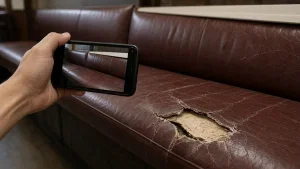
Ask what the claim covers, what was tested and what limitations apply. Avoid treating a finish as a substitute for routine cleaning, hand hygiene or an intact surface. A torn antimicrobial cover still exposes the cushion beneath it.
If two materials otherwise meet your requirements, a documented treatment may be one factor in the decision. It should not outweigh incompatible cleaning instructions, poor fit or a construction that creates difficult-to-clean crevices.
Texture, Color and Comfort Affect Daily Use
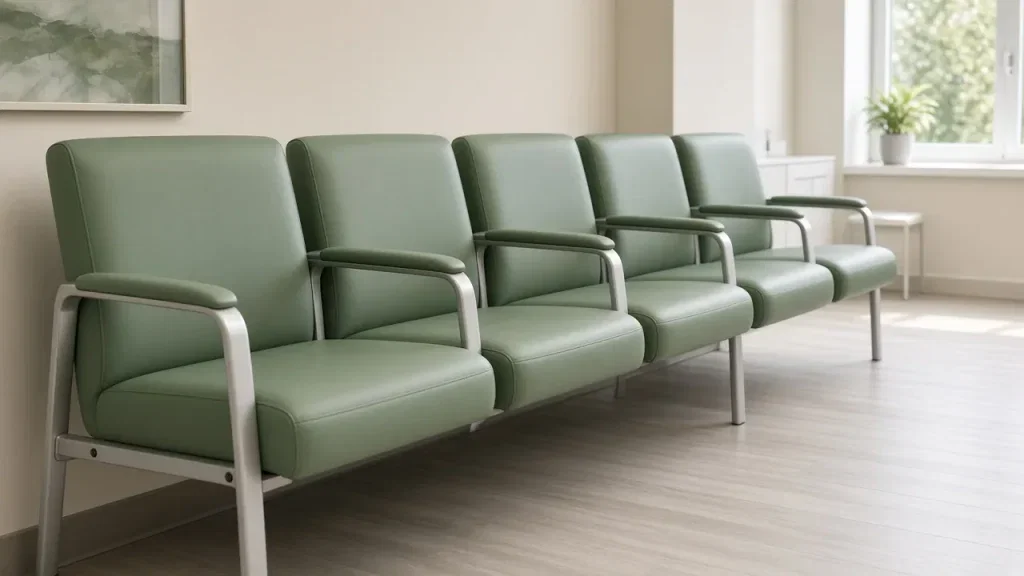
Vinyl does not have to feel stiff or look institutional. Commercial collections include softer hands, subtle grains and a wide range of colors. Compare these features with the people who sit on and maintain the furniture.
Choose a practical texture
A pronounced grain can hide minor scuffs, but a deep texture may take more effort to wipe thoroughly. Smooth surfaces make residue easier to see. Handle a sample and imagine cleaning a whole waiting room, not just a small square.
Very glossy finishes can also show wear differently from matte surfaces. Look at samples under the room’s lighting and at several angles. A material that appears calm in daylight may look shiny under overhead fixtures.
Think about color transfer and visible soil
Dark upholstery can conceal marks, while light upholstery can reveal them sooner. Either can work when staff have a reliable inspection routine. Consider contact with dark clothing and the supplier’s instructions for dealing with dye transfer.
Choose a color that coordinates with existing finishes without requiring a perfect match to every chair. A planned palette can make phased replacement easier than chasing a discontinued shade later.
Match feel to the furniture
The cover contributes to comfort, but foam and furniture geometry do much of the work. Do not expect a softer-feeling vinyl to correct a flattened cushion or an unsuitable seat shape. Assess those components separately.
Ask About Flammability Without Making Assumptions
California TB 117-2013 is associated with smolder resistance requirements for upholstered furniture materials and assemblies within its scope. It is not a general promise that furniture is fireproof. Nor does a statement about one component automatically establish every requirement for a finished piece.
Tell the upholsterer about the facility and any purchasing or fire-safety specifications that apply. Confirm the documentation needed for the project with the appropriate facility professional. Avoid selecting material solely because a sample card includes a familiar standard number.
Plan for Future Matching and Replacement
Healthcare furniture is rarely replaced all at once. A clinic may reupholster one waiting area now and add chairs or recover exam stools later. Before ordering, ask whether the selected product is part of a stable collection and how the facility should approach future matching. Dye lots can vary, and some colors are eventually discontinued.
A practical palette can reduce this risk. Choose a main color that works with several accent options, or use a deliberate combination by room or furniture type. That approach looks intentional even when one material must be substituted later. Keep a labeled sample with the furniture records so future selections can be compared against the original rather than against a faded chair.
Use Samples and a Written Selection Record
Bring shortlisted samples into the actual space. Compare them with wall colors, flooring, chair frames and lighting. Ask clinical and cleaning staff for input. Their feedback can reveal practical problems that are not obvious in a showroom.
When a decision is made, record:
- Manufacturer, collection, product identifier and color
- Intended furniture and areas of use
- Relevant performance documentation supplied
- Approved cleaning and aftercare instructions
- Any limitations discussed before ordering
This record helps when staff change or the facility adds chairs later. It also provides a starting point for investigating damage. Without it, a replacement cleaner may be used on a material that was selected for an entirely different routine.
Include Foam, Bases and Workmanship in the Quote
A material specification is only one part of a successful upholstery job. Worn foam can bottom out, damaged boards can loosen attachments and poor seam placement can create early failure points. Ask how each will be inspected and addressed.
For contoured exam or treatment pads, preserve the intended shape and clearances. For waiting chairs, check that seams, edges and arms can be cleaned easily. Ask who will approve additional work if concealed damage is found after stripping.
Leo’s Upholstery can help assess these choices through our medical upholstery services. Our commercial upholstery work also includes related office and reception furniture, making a coordinated refresh possible without treating every piece as a separate project.
Frequently Asked Questions
Is the highest abrasion rating always the best choice?
No. The test method, chemical compatibility, flexibility and suitability for the furniture all matter. A high result alone does not predict service life.
Does “healthcare vinyl” guarantee disinfectant resistance?
No. Check the exact material against your named products and care routine. Broad category labels are not a replacement for documentation.
Will an antimicrobial finish reduce cleaning work?
It should not change the facility’s cleaning and disinfection requirements. Ask what the finish is intended to protect and follow the established protocol.
Can we keep the same foam when changing vinyl?
Sometimes. Its resilience, cleanliness and fit need assessment. Covering collapsed or compromised foam does not provide a complete repair.
Choose Healthcare Vinyl With a Clear Plan
The right covering balances documented performance with daily usability. Bring the furniture details and cleaning routine together before choosing the final color, and keep the care information after installation.
Call Leo’s Upholstery at (510) 895-3632 or request a quote. Visit our shop at 1835 E 14th St, San Leandro, CA 94577. We serve East Bay and San Francisco Bay Area businesses Monday–Friday, 8 AM–4:30 PM, and Saturday, 7 AM–noon; closed Sunday.