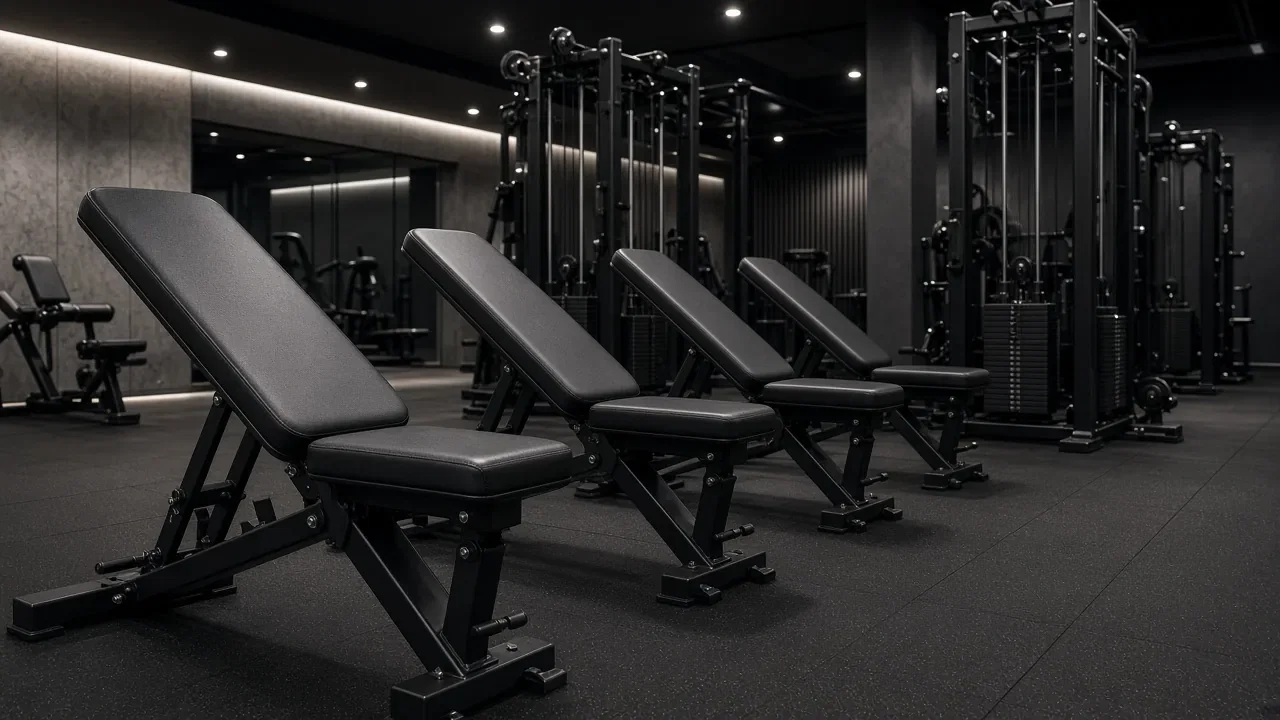
Members notice the condition of gym upholstery right away. A cracked bench pad, a strip of tape on a seat or a back pad that has flattened into the frame says something about how a facility is maintained, even when the machines work perfectly. For staff, worn pads also mean more effort at cleaning time and more questions from members.
Fitness equipment upholstery takes constant punishment. Pads are loaded with body weight, compressed under heavy sets, rubbed by clothing and wiped down repeatedly every day. It’s no surprise that vinyl and foam wear out long before most steel frames do.
The good news is that worn pads don’t usually mean replacing the equipment. Reupholstery can restore benches and machine pads with fresh foam and commercial-grade vinyl, often at a fraction of the disruption of buying new. This guide covers why pad condition matters, what to look for and how to plan reupholstery for gyms, studios, schools and workplace fitness rooms around the Bay Area.
Why Gym Pad Condition Matters
Cleanliness and hygiene
Gyms ask members to wipe down equipment after use, and staff follow cleaning routines throughout the day. Those routines depend on intact surfaces. Vinyl is designed to be wiped, but once it cracks or tears, sweat, cleaning liquid and grime can reach the foam beneath. Foam is absorbent and can’t be cleaned from the surface. Taped or patched pads add edges and adhesive that collect dirt.
Member comfort and safety
Hard, cracked vinyl edges can scratch skin. Flattened foam can leave members pressing against the plywood or steel underneath. A pad that shifts or wobbles because its base board has deteriorated can be distracting or uncomfortable during a lift. Comfortable, stable pads support a better workout experience. Any structural or mechanical concern with the equipment itself should be checked by a qualified fitness equipment technician.
Brand image and retention
A gym is selling an experience. Fresh, consistent upholstery helps a facility look cared for, while patchy, mismatched pads can make an otherwise strong gym feel tired. For many owners, reupholstery is one of the most visible improvements they can make without a renovation.
Common Signs Your Gym Pads Need Attention
Walk the floor with a critical eye and look for:
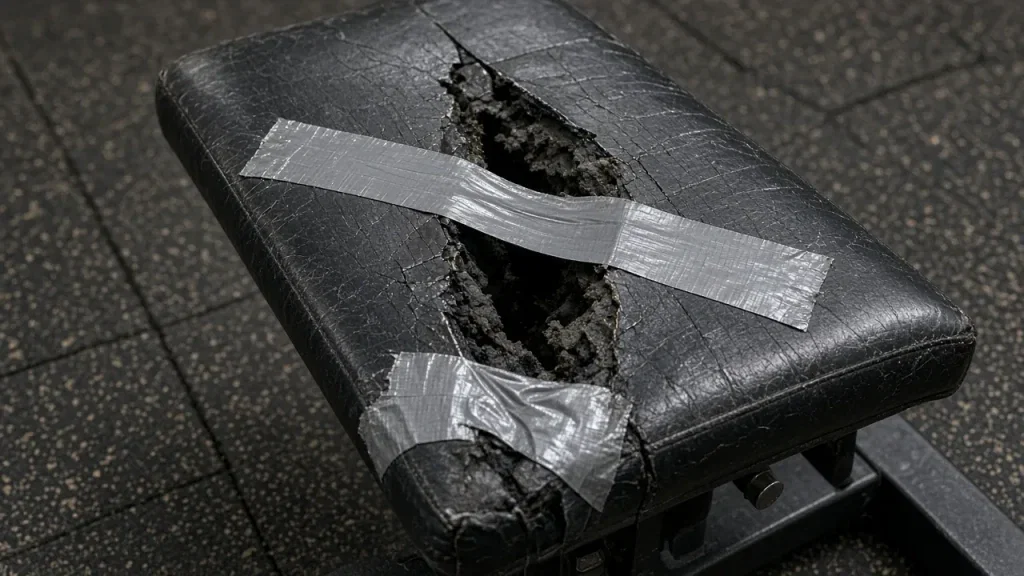
- Cracks, splits or tears in the vinyl
- Seams pulling apart, especially at corners
- Duct tape, patches or repair kits on the surface
- Foam visible through openings
- Pads that feel flat, lumpy or hard
- Sticky, peeling or faded areas
- Loose pads or damaged base boards
- Mismatched colors from piecemeal replacements
It helps to note which pieces get the most use. Flat benches, adjustable benches, leg extension and leg curl pads, preacher curl pads and seat cushions on selectorized machines often wear first.
Reupholster or Replace the Pads?
Fitness equipment manufacturers often sell replacement pads, and in some cases that is a good option. But reupholstery has advantages worth considering.
When reupholstery makes sense
- Replacement pads are expensive, back-ordered or no longer available
- You have a mix of equipment brands and want a uniform look
- The base boards are in good condition
- You want a custom color to match your brand
- You’d like to reduce waste by reusing sound components
When replacement may be better
- The base board is badly cracked or delaminated
- The pad has an unusual molded construction
- The manufacturer requires specific pads for a warranty or service agreement
An upholsterer can evaluate your pads and tell you which ones are good candidates for rebuilding.
What Goes Into Gym Equipment Reupholstery
Removing and inspecting pads
Most gym pads are attached to the frame with bolts or screws, making them fairly easy to remove. Once off, the upholsterer removes the old cover and checks the base board and foam.
Replacing foam
Gym pads need firm, supportive foam that won’t bottom out under load. Old foam that has compressed or broken down is replaced. The firmness should suit the use; a bench pad may need different support than a seat cushion.
Choosing commercial vinyl
The cover is the part members touch, so material choice matters. Look for vinyl designed for heavy commercial use and frequent cleaning. Consider:
- Abrasion resistance. Gym pads see constant friction from clothing and movement.
- Cleanability. Ask about compatibility with your facility’s cleaning and disinfecting products.
- Grip and texture. Some textured vinyls help reduce slipping, while smoother surfaces are easier to wipe.
- Color. Black is common and practical, but many gyms use brand colors for accent pads.
- Fire safety. California has flammability requirements for upholstered furniture, including TB 117-2013. Your upholsterer can help you choose suitable materials for your application.
Recovering and reinstalling
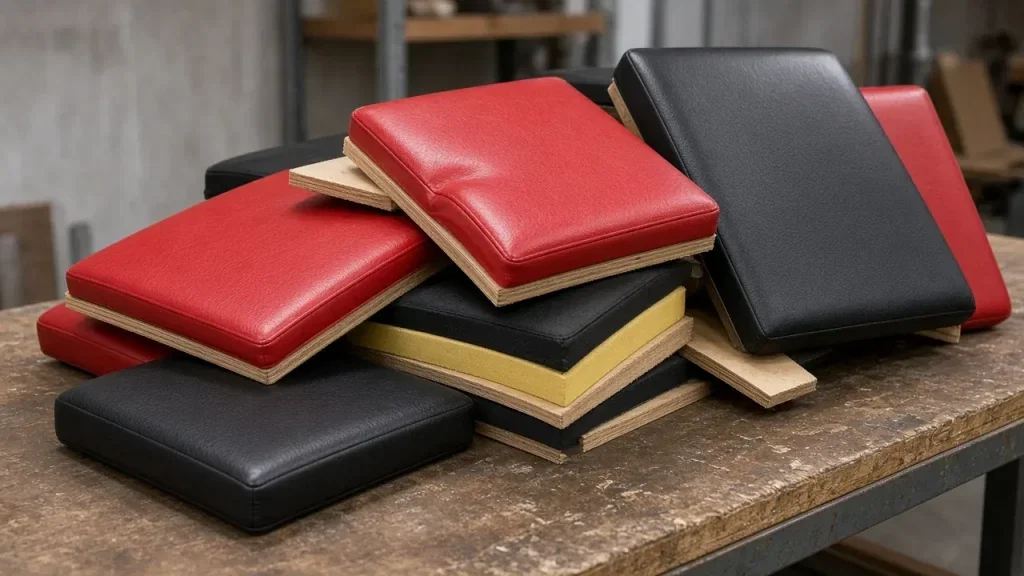
The new vinyl is stretched and fastened around the pad, with clean corners and tight surfaces. Finished pads are reattached to the equipment, ready for members.
Planning Reupholstery Without Disrupting Members
Gyms rarely have a convenient time to take equipment out of service. A few strategies help keep members happy:
- Work in phases. Rotate a few pieces at a time so the floor stays usable.
- Prioritize high-traffic equipment. Start with the benches and machines that get the most use and show the most wear.
- Schedule during slower periods. Remove pads during low-traffic hours or around planned closures.
- Communicate with members. A simple sign explaining that equipment is being refreshed turns downtime into a positive message.
- Keep spare pads. Some facilities keep a spare set of popular pads so equipment never sits idle.
Ask your upholsterer for a realistic schedule based on the number and type of pads, the condition of the base boards and material availability.
Build a Pad Inventory Before Asking for a Quote
A simple equipment list makes a large project easier to manage. Give each machine an identifier and photograph the whole machine as well as each pad. Include the underside if it can be viewed safely. Two pads that look alike from above may have different bolt locations or backing shapes.
Record which pad belongs to which machine before anything is removed. Keep its fasteners with a clear reference to the correct location, following the equipment manufacturer’s removal instructions. If removal is unfamiliar or involves guarded mechanisms, use a qualified service technician. Upholstery work should not involve improvised changes to the frame or attachment system.
Treat pad geometry as part of the equipment
More padding is not always better. A much thicker seat can change a member’s position relative to handles, pivots or adjustment points. A bench pad with very soft foam may feel comfortable at first but offer less stable support under use. Discuss the original shape and intended function before choosing foam.
The goal is to restore the pad, not redesign the machine. Preserve its mounting pattern, clearances and original dimensions unless an appropriate equipment professional approves a change. New upholstery does not increase a machine’s load rating or resolve worn cables, loose hardware or unstable frames.
Set up a clear return-to-service check
After pads are reinstalled, verify attachment and clearance according to the manufacturer’s instructions. Have staff check the surface, seams and fit, then clean it with the approved products before members use it. Record the new material and its care instructions in your maintenance file so future staff do not have to guess.
Keeping Pads in Good Shape After Reupholstery
New upholstery lasts longer with good care habits:
- Use the right cleaners. Follow the product’s directions for dilution and contact time, and confirm compatibility with the vinyl.
- Avoid harsh scrubbing. Abrasive pads and brushes can wear down the surface.
- Wipe off residue. Some cleaners and sweat can leave a film. A periodic wipe with a mild cleaner or water, as recommended, helps.
- Encourage towel use. Towels reduce direct contact with sweat and skin oils.
- Watch for sharp objects. Keys, phones, buckles and lifting accessories with metal edges can cut vinyl.
- Inspect regularly. Add pad checks to your weekly maintenance routine and address small issues before they spread.
Beyond Benches: Other Gym Upholstery
Fitness facilities often have upholstered pieces beyond workout equipment, including:
- Locker room benches
- Lobby and lounge seating
- Massage and stretching tables
- Physical therapy and recovery tables
- Reception and office chairs
Including these in the same project keeps the facility consistent and makes efficient use of scheduling.
Gym Upholstery Services in the Bay Area
Leo’s Upholstery works with gyms, studios and fitness rooms across the East Bay and greater San Francisco Bay Area from our shop in San Leandro. We reupholster benches, machine pads and facility seating with commercial-grade materials. Learn more about our commercial upholstery services and custom upholstery options.
We’ll look at your equipment, talk through materials and colors, and give you a clear quote.
Frequently Asked Questions
Can you reupholster pads from any equipment brand?
In most cases, yes. Because gym pads are usually foam over a base board, we can rebuild pads from many brands. We’ll confirm after looking at them.
Do we need to bring the pads to your shop?
Pads are usually removed from the equipment and brought to the shop for reupholstery. We can discuss the best approach for your facility.
Can you use our brand colors?
Commercial vinyl comes in a wide range of colors. We can help you choose colors that work with your brand.
How firm should the new foam be?
It depends on the pad’s use. Bench pads typically need firm support, while seat cushions may be slightly softer. We’ll recommend options for each pad.
How long will equipment be out of service?
It depends on the number of pads and material availability. We’ll work with you on a schedule that keeps your floor usable.
Refresh Your Gym Floor
Fresh gym upholstery helps members feel comfortable and confident in your facility, and it makes daily cleaning easier for your team. Instead of replacing equipment that still works, consider rebuilding the pads that members actually touch.
Call Leo’s Upholstery at (510) 895-3632 or request a quote online. Our San Leandro shop at 1835 E 14th St is open Monday through Friday from 8 AM to 4:30 PM and Saturday from 7 AM to noon. Send us photos of your pads, and we’ll help you plan the work.