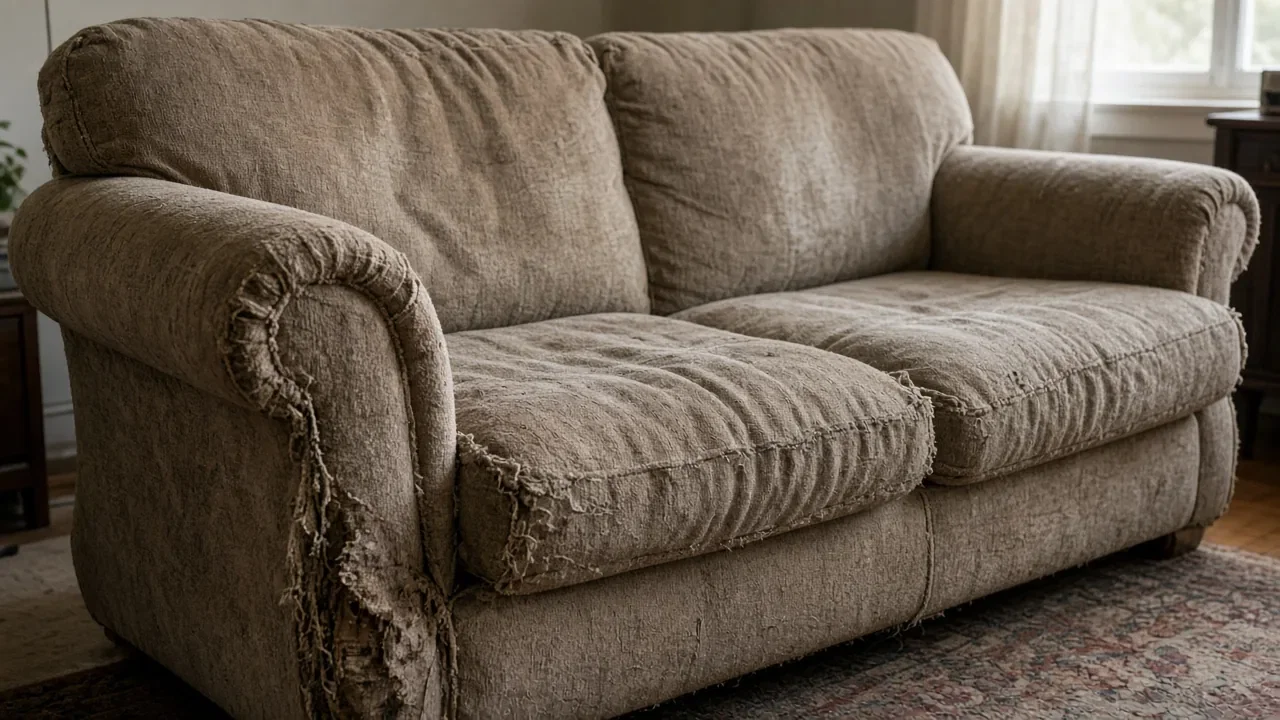
Your sofa has seen a lot. Movie nights, naps, kids jumping on the cushions, maybe a pet or two who claimed one end as their own. Now the fabric is faded, the cushions sag, and you’re wondering whether to fix it or start shopping.
It’s a fair question, and the honest answer is: it depends on what’s underneath. Some sofas are built to last for decades and are absolutely worth reupholstering. Others were never meant to be more than a few-year purchase, and putting new fabric on them doesn’t make much sense.
This guide walks through how to tell the difference, what to check before you decide, and the situations where replacing your sofa really is the better move.
Why the Frame Is Everything
When upholsterers evaluate a sofa, the first question is almost always about the frame. Fabric, foam and padding can all be replaced. The frame is the skeleton that everything else attaches to, and if it’s weak, nothing built on top of it will last.
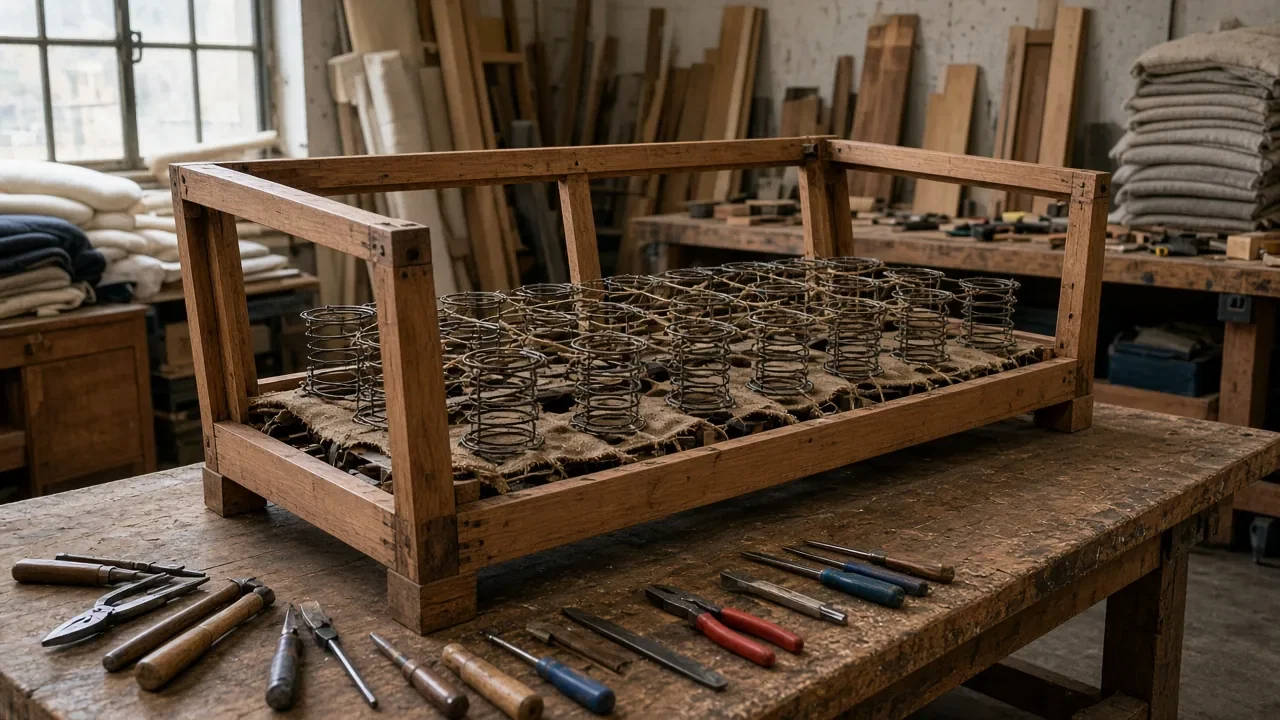
A quality sofa frame is typically made from kiln-dried hardwood, such as maple, oak, ash or beech. Kiln drying removes moisture so the wood is less likely to warp or crack over time. Joints are reinforced with corner blocks, dowels, glue and screws rather than just staples.
Lower-cost sofas often use softwoods, particleboard, plywood or engineered wood held together mostly with staples. These frames can be fine for a few years, but they tend to loosen, crack or split with use, and they don’t always hold up well to being stripped and re-stapled during reupholstery.
How to Check Your Sofa’s Frame at Home
You don’t need to take anything apart to get a good sense of your sofa’s quality. Try these simple tests:
- The lift test. Lift one front corner of the sofa a few inches off the floor. On a solid frame, the other front leg should rise quickly too. If the frame twists and the other leg stays on the floor for a while, the frame may be weak or loose.
- The weight test. Heavier sofas often (though not always) have hardwood frames. A sofa that feels surprisingly light may use lighter materials.
- Listen for noise. Creaks, cracks or squeaks when you sit down or shift your weight can mean loose joints.
- Check the arms and back. Push firmly on the arms and the top of the back. They shouldn’t wobble or flex much.
- Look underneath. Flip the dust cover back if you can, or peek under with a flashlight. You may see the frame material, corner blocks and spring system.
If you know the brand, a quick look at the manufacturer’s information can also tell you how it was built.
Springs and Suspension: The Second Big Clue
The suspension system under the seat cushions affects comfort and how well the sofa holds up. Common types include:
- Eight-way hand-tied springs. Traditional coil springs tied together by hand with twine in multiple directions. Often found on higher-end, traditionally built furniture and widely considered among the most durable systems.
- Sinuous springs (also called serpentine or zigzag springs). S-shaped wire springs that run front to back. Very common and can be quite durable when well made and properly installed.
- Webbing. Elastic or jute straps stretched across the frame. Quality varies widely; good webbing can work well, while cheap webbing can sag quickly.
Sagging seats aren’t always a deal-breaker. Springs can often be retied, replaced or reinforced during reupholstery, and webbing can be replaced. The key is that the frame needs to be solid enough to support the repair.
Signs Your Sofa Is a Good Candidate for Reupholstery
Reupholstering usually makes sense when several of these are true:
- The frame is solid hardwood and passes the lift and wobble tests.
- You love the shape, size or style. Maybe it fits your space perfectly or has classic lines you can’t find in new furniture.
- It’s well made or high-end, perhaps from a quality manufacturer or a custom builder.
- It has sentimental value, like a sofa inherited from a family member.
- The problems are surface-level: worn fabric, flat cushions, stains, or tired padding.
- You want a specific fabric that new furniture in your price range doesn’t offer.
- Vintage or mid-century pieces whose style is hard to replicate.
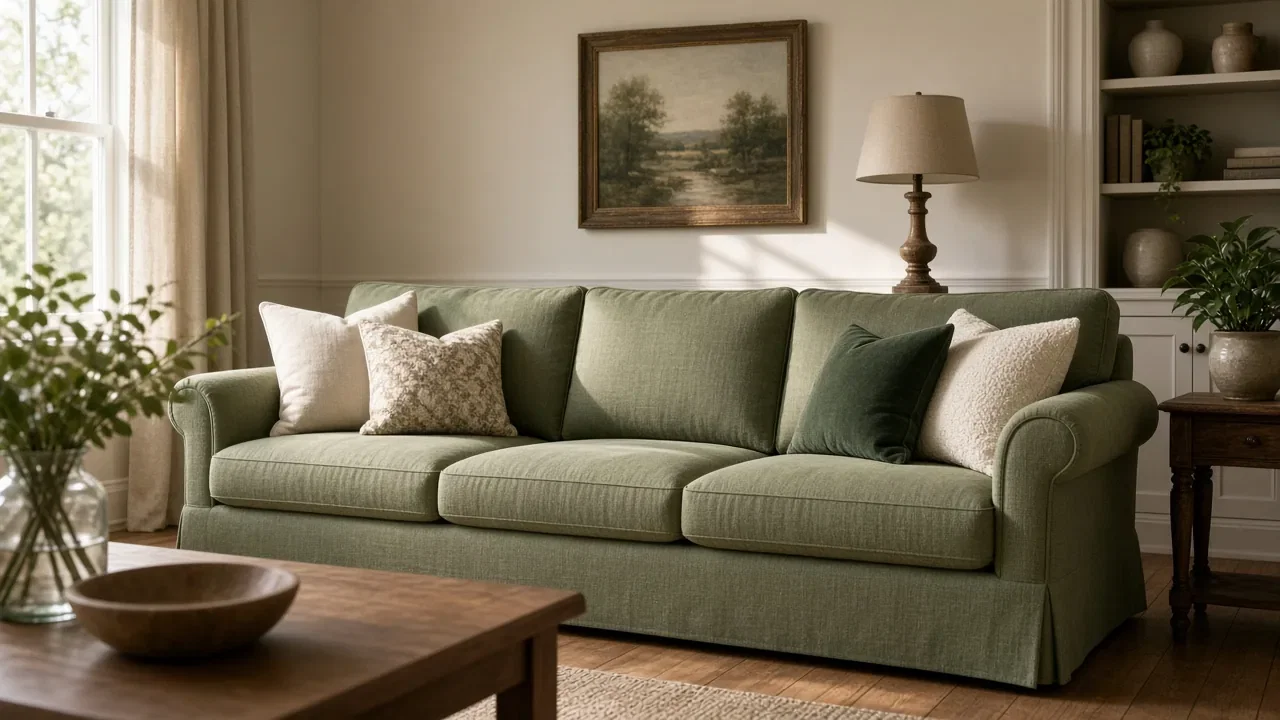
In these cases, reupholstery can give you a sofa that looks and feels new while keeping the bones you already trust. Our sofa and couch upholstery page shows more about what this process involves.
When Replacement Might Be the Better Choice
Being honest about when reupholstery isn’t worth it is part of good advice. Replacement may make more sense when:
- The frame is particleboard or very lightweight, or it’s cracked, split or badly loose.
- The sofa was inexpensive to begin with and the cost of quality reupholstery would be close to or more than a comparable new piece.
- It doesn’t fit your life anymore. If it’s too small, too big, too deep or the wrong configuration, new fabric won’t fix that.
- There’s significant water, mold or pest damage that has affected the frame or inner materials.
- It’s a sleeper or recliner with failing mechanisms that are hard to source or repair.
That said, even some of these issues can sometimes be addressed. A loose joint can be reglued. A broken rail can sometimes be repaired. If you’re unsure, it’s worth having an upholsterer take a look before you decide.
Don’t Judge by the Cushions Alone
Flat, lumpy or sagging cushions are one of the most common reasons people give up on a sofa, but they’re also one of the easiest things to fix. Cushion foam breaks down much faster than a good frame does. A sofa that feels worn out may simply need new cushion cores.
When cushions are rebuilt, you get to choose how they feel:
- Firmer foam for more support and a crisper look
- Softer foam with a fiber or down-blend wrap for a more relaxed, sink-in feel
- Higher-density foam that holds its shape longer under daily use
This is also a chance to fix things that always bothered you. If the seat always felt too deep, slightly thicker back cushions can help. If it felt too low, seat cushions can sometimes be built up a bit.
Questions to Ask Yourself Before Deciding
Sometimes the decision comes down to more than construction. A few honest questions can help:
- Would I buy this same shape and size again if I were shopping today?
- Does it fit the room and how my household actually uses it?
- Is there a story or memory attached to it that matters to me?
- Am I happy to wait a few weeks for a piece made exactly how I want it?
If most of your answers point toward keeping it, and the frame checks out, reupholstery is likely a great fit.
What Reupholstery Actually Includes
People sometimes picture reupholstery as just putting new fabric on, but a quality job usually goes deeper. Depending on the sofa, it can include:
- Stripping the old fabric and padding down to the frame
- Inspecting and repairing the frame, including regluing joints and reinforcing corners
- Retying, replacing or adding springs or new webbing
- New foam, batting and padding for seats, backs and arms
- New cushion inserts in the firmness you prefer
- New fabric, cut, sewn and fitted with welting, skirts or other details you choose
- New dust cover and, where needed, new legs or glides
This is why a reupholstered sofa can feel better than it did on the day you bought it. You’re not just changing the look; you’re rebuilding the comfort.
Comparing the Value
It’s natural to compare the cost of reupholstery with the price of a new sofa. A few things are worth keeping in mind:
- Like-for-like comparisons matter. Compare reupholstery with a new sofa of similar construction quality, not the cheapest option at a big-box store.
- You choose every detail. Fabric, cushion firmness, welting, skirt and even small changes to the arms or back are often possible.
- Less waste. Keeping a solid sofa in use keeps bulky furniture out of landfills.
- No surprises on fit. You already know it fits your room and your doorway.
The best way to understand the value for your specific sofa is to get a quote based on photos and a conversation about what you want.
Tips Before You Call an Upholsterer
To make the conversation easier, have a few things ready:
- Photos of the front, side, back and underside of the sofa
- Overall measurements (width, depth and height)
- The number of seat and back cushions
- Anything you know about its brand or history
- What bothers you most: comfort, looks, sagging, or all of the above
- Fabric ideas or inspiration photos, if you have them
Frequently Asked Questions
How can I tell if my sofa has a hardwood frame?
Try lifting one corner. A solid frame lifts evenly and doesn’t twist. Weight, sturdiness and a look underneath can give more clues, and an upholsterer can confirm when they see it.
Can you fix sagging cushions without reupholstering everything?
Often, yes. New foam and wrap for the cushions alone can make a big difference if the fabric is still in good shape.
Is it worth reupholstering a sofa from a big-box store?
Sometimes. It depends on the frame and how the sofa was built. Some are solid enough to recover, while others aren’t worth the investment.
Can I change the style when I reupholster?
Within limits, yes. New fabric, welting, skirts, cushion styles and sometimes arm or back details can change the look significantly.
Do you only work on residential furniture?
No. Leo’s Upholstery specializes in commercial work for businesses like restaurants, offices and medical practices, and we also take on residential projects for homeowners.
Ready to Find Out if Your Sofa Is Worth Saving?
If your sofa has good bones, reupholstery can bring it back to life with the fabric and comfort you want. Leo’s Upholstery in San Leandro works with homeowners across the East Bay and greater Bay Area, and we also serve businesses with commercial upholstery needs.
Request a quote online with a few photos, or call us at (510) 895-3632. We’ll give you an honest opinion on whether reupholstery makes sense for your sofa. You can also learn more about our residential upholstery services.