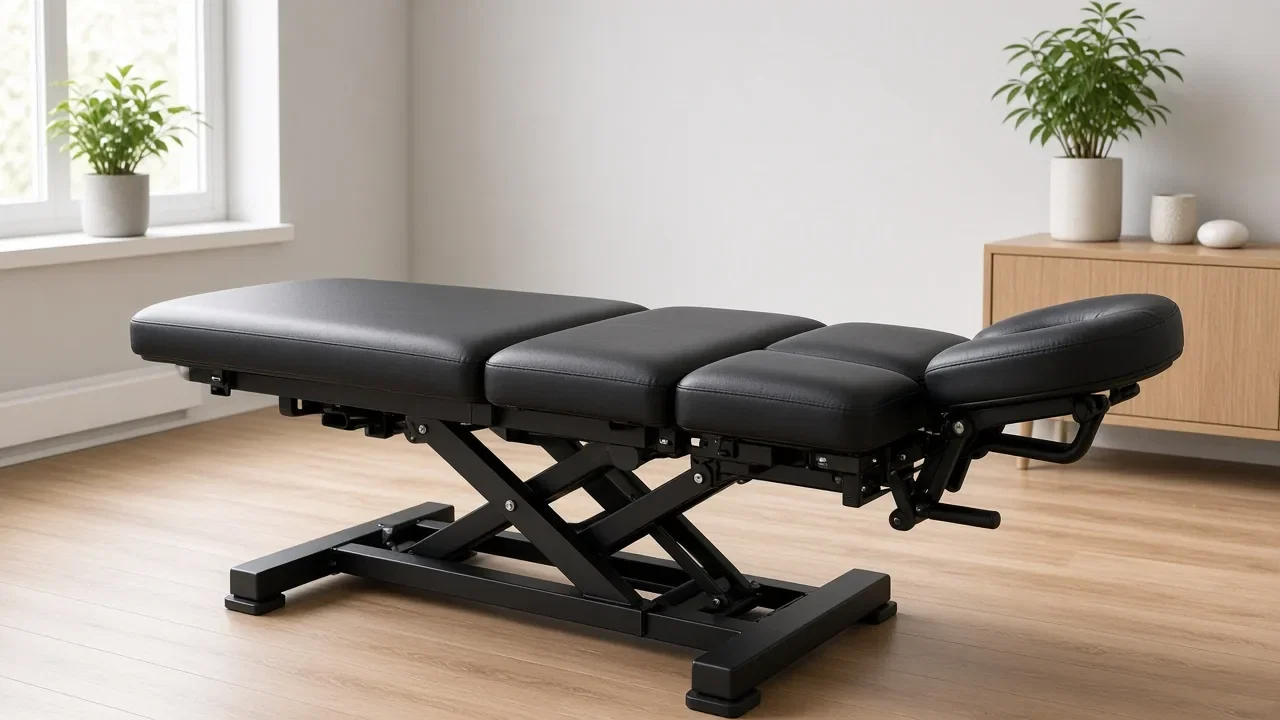
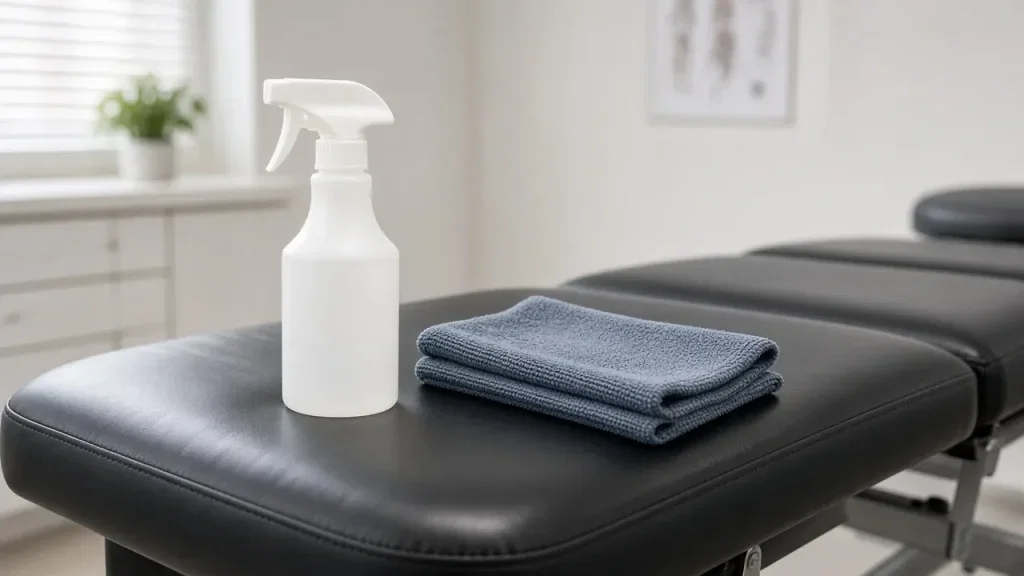
A chiropractic table can be wiped dozens of times in a busy day. The face cradle, chest pad, pelvic section and arm supports all see repeated contact, and each area has to be cleaned according to the clinic’s infection-control procedures. That is a demanding assignment for a thin covering stretched over foam.
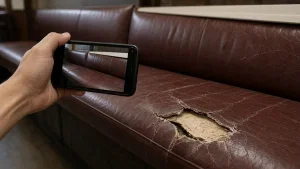
When a table starts feeling sticky, looking shiny in patches or cracking around the face opening, buying the same color again is not enough. The replacement material needs to work with your cleaning products, the table’s moving sections and the way practitioners use it. A good reupholstery project begins with those practical details, not just a swatch book.
For East Bay chiropractic offices, the goal is straightforward: a comfortable, intact surface that staff can maintain consistently. Here is how to choose table vinyl without getting distracted by vague marketing terms.
Start With the Cleaning Routine You Actually Use
Before looking at materials, write down the exact names of the cleaning and disinfecting products in your office. Include ready-to-use wipes as well as concentrates. The active ingredient alone does not tell the whole story; other ingredients, concentration and frequency can also affect a coating.
Ask the vinyl supplier for written care instructions and chemical-compatibility information for that specific product. A general claim such as “easy clean” does not confirm that the surface tolerates your chosen disinfectant. Neither does a broad description such as “medical vinyl.” You need the material and the cleaning method to work together.
Cleaning and disinfecting are different jobs
Cleaning removes soil and residue. Disinfecting uses a suitable product according to its label to reduce microorganisms on a surface. Some disinfectant labels require cleaning first when a surface is visibly dirty. Others describe a combined procedure for particular conditions.
Your clinical lead should set the protocol. An upholsterer can help identify suitable materials, but cannot substitute for the product label, the equipment manufacturer’s instructions or your infection-prevention policies. Do not weaken a disinfectant or shorten its contact time merely to protect upholstery.
Ask about residue and aftercare
Repeated wiping can leave a film that looks like material failure. Conversely, a damaged topcoat may feel sticky even after cleaning. Ask the material supplier how to distinguish the two and whether a water wipe is recommended after the required disinfectant contact time. Avoid improvised remedies until you know the cause.
What Makes Chiropractic Tables Different From Ordinary Seating?
A waiting room chair mainly carries a seated load. A chiropractic table has separate pads, moving sections, concentrated hand pressure and repeated patient repositioning. Its cover must fit these conditions without restricting the equipment.
Movement at drop sections and hinges
Upholstery cannot bridge a gap that must open or crowd a moving mechanism. Recovering should preserve clearance around drop sections, adjustment controls and hinges. The table’s original pad arrangement provides a useful starting point, but the exact model must be assessed before work begins.
Tell the shop about any unusual movements, detachable pieces or access panels. Mechanical faults should be evaluated by a qualified equipment technician rather than hidden beneath new material.
Face cradle shape and comfort
The face opening receives repeated contact and cleaning. Material needs to fit its curves without deep folds, loose edges or hard ridges. A cover that looks smooth from across the room can still be uncomfortable against a patient’s face.
Ask how seams will be placed and how the original contour will be maintained. Extra-thick foam is not automatically better; it may change the opening, support and relationship between pads. Preserve the intended geometry unless a qualified professional approves a change.
Edges and attachment points
Practitioners and patients often lean on the same edges. Those areas flex, rub and receive extra cleaning. Good patterning, sound backing boards and careful attachment matter as much as the vinyl specification. A premium material stretched over a damaged base is not a complete repair.
Compare Vinyl by Performance, Not by Thickness Alone
Thick material can feel reassuring, but it is only one part of the construction. The surface coating, backing, stretch and ability to recover around curves all matter. Ask to handle samples rather than choosing from a small screen image.
Look for a balanced specification that addresses:
- Compatibility with the clinic’s named cleaners and disinfectants
- Resistance to abrasion under an identified test method
- Tear resistance and flexibility at curved edges
- A texture staff can wipe without excessive effort
- Suitable backing and stretch for the table’s contours
- Documentation for any required flammability performance
Abrasion results need context
A high abrasion number is not a prediction of years of service. Different test methods measure wear differently, and a surface can pass a demanding rub test yet fail when exposed to an incompatible chemical. Compare results only when the method and conditions are comparable.
For chiropractic tables, chemical exposure, repeated flexing and careful installation deserve equal attention. The highest number on a sample card should not automatically win.
Be cautious with antimicrobial claims
An antimicrobial finish may be designed to protect a material from certain microbial growth under specified conditions. It does not make a table self-disinfecting, does not replace cleaning and is not a promise of infection prevention. Ask exactly what was tested and what the claim covers.
Choose a Surface Staff Can Maintain
A fine-grain or smooth surface is often practical in a treatment room because residue is easier to see and remove. Very deep embossing can look attractive but introduces texture that staff must clean thoroughly. Consider maintenance effort along with appearance.
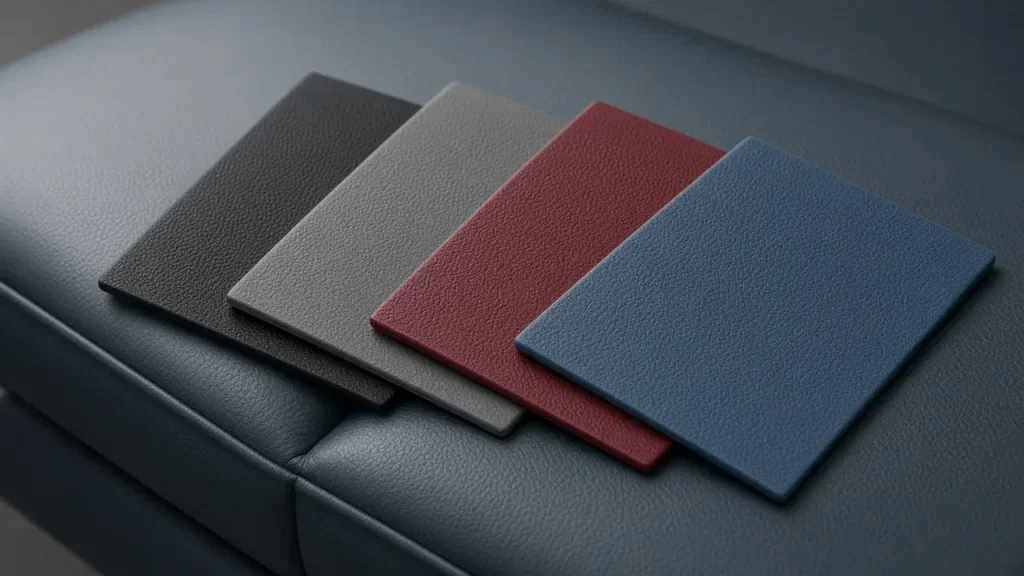
Darker colors can coordinate with equipment and conceal scuffs, but they can also hide soil. Light colors make some marks more visible while showing transfer from clothing more readily. Neither choice is inherently more hygienic. The important combination is an intact surface, compatible products and a reliable routine.
Take swatches into the treatment room. View them under the lights used during appointments and against the table frame, walls and floors. Check how the surface feels after handling, not just how the color looks.
Do Not Overlook the Foam and Pad Base
When vinyl is removed, the condition underneath becomes clear. A pad that has lost resilience, developed lumps or been exposed through a split cover may need new foam. Simply pulling fresh vinyl over a failed cushion can leave the table uncomfortable and place extra strain on the new covering.
The base also needs inspection. Loose fasteners, cracked boards and damaged attachment points can prevent a pad from sitting securely. Ask for the quote to explain how concealed damage will be handled if it is discovered during stripping.
Contaminated components require special care. Tell the shop about known fluid exposure before transporting anything. Your clinic should decide on safe handling and removal from service; an upholstery shop is not a decontamination service.
Plan the Work Before Taking Tables Offline
Chiropractic offices depend on consistent room availability. Start with photos of the complete table, every pad, the face cradle and the worn areas. Include a model identifier if available, but keep patient information out of all images.
A useful project request includes:
- Number of tables and upholstered sections on each
- Table models and whether pads are removable
- Close-ups of cracks, peeling, open seams and attachment points
- Known foam or base problems
- Exact cleaning products and the written office protocol
- Preferred work window and how many tables can be unavailable
Material selection and availability should be settled before pads come off. For several tables, discuss a phased plan that keeps some treatment capacity available. Do not assume a same-day turnaround; timing depends on the construction, shop workload and hidden repairs.
Protect the New Upholstery With Consistent Habits
After installation, keep the material’s care sheet where staff can find it. A routine is easier to follow when everyone uses the same approved products and understands the sequence. Unlabeled replacement spray bottles and occasional use of a stronger cleaner can undermine an otherwise careful plan.
Inspect high-contact areas regularly. Look around the face opening, pad corners and the edges practitioners grip. Report changes in feel as well as visible damage. Stiffness, tackiness and small cracks can appear before a seam opens completely.
Avoid abrasive pads, unapproved oils and harsh spot treatments. Keep sharp equipment away from cushion edges. Use barriers when required by the clinical protocol, while remembering that a barrier is not a repair for torn material. When damage appears, arrange an assessment rather than adding layers of tape.
Questions to Resolve Before Approving a Quote
A clear scope prevents disappointment. Confirm which pads are included, whether foam replacement is expected and who will remove and reinstall them. Ask whether your selected material has been checked against the cleaning products you supplied.
For a table with mechanical concerns, coordinate with your equipment technician first. Reupholstery can renew the patient-contact surfaces, but it cannot certify a drop mechanism, correct an unstable frame or change the table’s intended load capacity. Keep those responsibilities separate.
Leo’s Upholstery can help assess covering and cushion needs through our medical upholstery services. For related reception chairs and other business furniture, see our commercial upholstery services.
Frequently Asked Questions
Will any commercial vinyl survive constant disinfecting?
No single label guarantees that. Match the specific vinyl to the disinfectant, concentration and care routine, using the material supplier’s documentation. Frequent use makes compatibility especially important.
Can the original foam stay in place?
Possibly, if it is clean, resilient and appropriate for the pad. The condition may not be clear until the old cover is removed. Collapsed or contaminated foam should not be concealed beneath new vinyl.
Can reupholstery change how the table adjusts?
It should preserve the table’s intended movement and access to controls. Have mechanical problems assessed separately, and identify movable sections before work begins.
Is a sticky surface always caused by cleaner residue?
No. Residue and coating deterioration can feel similar. Avoid aggressive cleaning experiments and ask the material or equipment supplier for guidance.
Request a Chiropractic Table Upholstery Quote
A durable table covering starts with a realistic picture of your clinic’s daily work. Share photos, table details and your cleaning products so the material and repair plan can be considered together.
Call Leo’s Upholstery at (510) 895-3632 or request a quote. Our shop is at 1835 E 14th St, San Leandro, CA 94577, serving East Bay and San Francisco Bay Area businesses. We are open Monday–Friday, 8 AM–4:30 PM, and Saturday, 7 AM–noon; closed Sunday.